

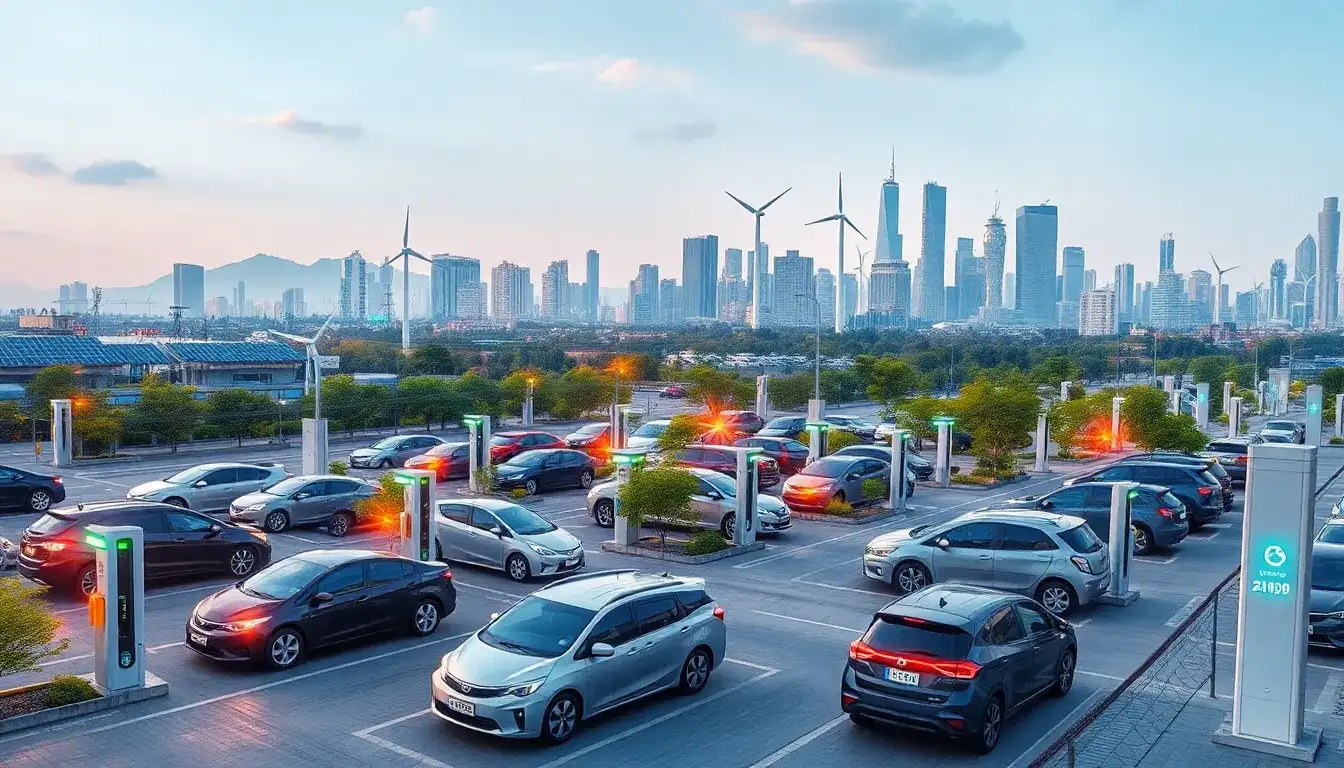
On May 28, the Hunan Provincial Development and Reform Commission officially published the “Management Measures for the Construction and Operation of Electric Vehicle Charging and Battery Swap Infrastructure in Hunan Province.” This document outlines the optimization and upgrading of existing charging and battery swap facilities to become integrated with the grid (V2G). The goal is to fully leverage the distributed mobile energy storage advantages of electric vehicle batteries and to innovate in the implementation of peak shaving and valley filling, as well as frequency regulation pilot demonstrations. This initiative will support the establishment of a new provincial power system through the construction of a virtual power plant based on the aggregation concept of electric vehicles.
The measures encourage charging and battery swap facility operators and electric vehicle users to take advantage of the time-of-use pricing policy to charge during off-peak hours. The target is to have 60% of the total social charging volume and over 80% of residential charging volume concentrated in low-demand periods by 2026, thereby improving the efficiency of public grid resource utilization.
Here are the key points from the original document:
1. General Provisions
- The first article aims to standardize investment, construction, and operation management of electric vehicle charging and battery swap infrastructure in the province, promoting high-quality development.
- The second article applies to planning, construction, acceptance, operation, safety, and supervision of charging and battery swap infrastructure within Hunan’s administrative region.
- The third article defines various types of charging and battery swap facilities, including personal charging facilities, dedicated charging facilities, public charging facilities, and battery swap facilities.
2. Construction Management
- The sixth article encourages participation from various social capital sources in building charging and battery swap infrastructure, ensuring a competitive and open market.
- The seventh article details the construction process, including project site selection, registration, electricity connection, construction, platform integration, and acceptance.
- The eighth article mandates compliance with national standards for site selection, design, and construction of facilities.
3. Acceptance Management
- The eighteenth article stipulates that after construction, the investment entity can apply for acceptance from the local power supply enterprise.
- The nineteenth article requires third-party inspection for public and dedicated charging facilities, with a report submitted to the local development and reform department within 15 working days.
4. Operation Management
- The twenty-first article establishes a commitment and public notification system for operators of charging and battery swap facilities.
- The twenty-fifth article allows operators to charge users for electricity and service fees, ensuring transparency in pricing.
5. Safety Management
- The twenty-ninth article emphasizes the importance of safety management and supervision in operations.
- The thirty-second article encourages operators to purchase various insurance types to protect consumer rights.
6. Supervision Management
- The thirty-third article outlines penalties for construction units lacking appropriate qualifications or failing to adhere to design plans.
- The thirty-sixth article highlights the role of industry associations in maintaining market order and promoting compliance among enterprises.
The measures will be effective for five years from the date of publication and are subject to interpretation by the Hunan Provincial Development and Reform Commission.
This initiative represents a significant step towards enhancing the integration of electric vehicles with the energy system, promoting sustainable energy practices, and improving the overall efficiency of the power grid in Hunan Province.
Original article by NenPower, If reposted, please credit the source: https://nenpower.com/blog/hunan-utilizes-distributed-energy-storage-from-ev-batteries-for-peak-shaving-and-frequency-regulation-pilot-demonstrations/

