

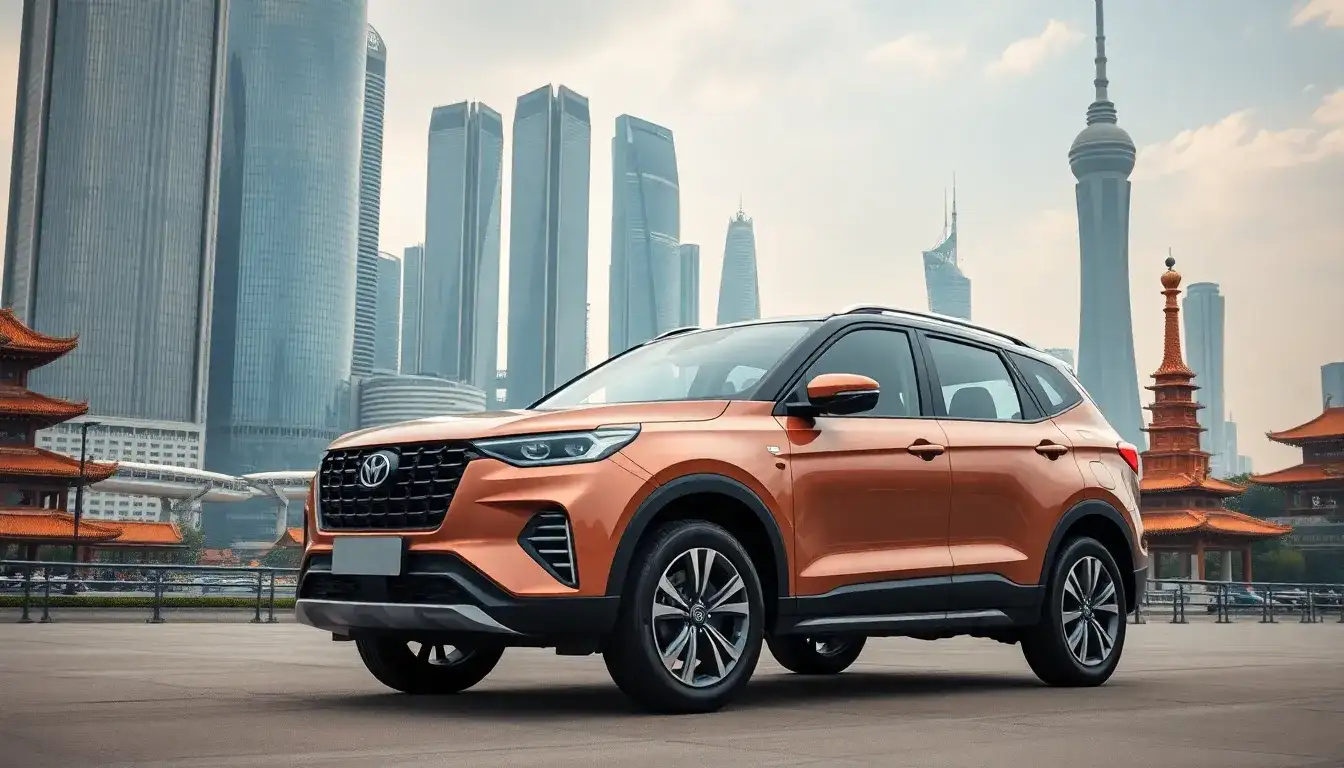
Hubei is undertaking a significant initiative that could transform your vehicle into a collector’s item! In a few years, a scene that seems fantastical could emerge in automobile museums: powerful 12-cylinder gasoline engines standing side by side with the Model X, both regarded as relics of their time.
This seemingly magical vision may not be far off. Within the extreme cold laboratory of the National New Energy Quality Inspection Center in Wuhan's Economic Development Zone, groundbreaking data is rewriting the history of automotive evolution. Dongfeng Motor's latest mass-produced solid-state battery pack has demonstrated a remarkable 92% retention of range at -30°C, with charging speeds three times faster than mainstream lithium-ion batteries. In contrast, traditional lithium batteries typically experience over a 40% decrease in range under such conditions.

Recently, new mandatory national standards for electric vehicle batteries were released. These revisions introduce additional testing protocols, including bottom impact tests and safety assessments following fast charging cycles, raising the safety requirement from “5 minutes warning before fire or explosion” to “no fire, no explosion.” Solid-state batteries, featuring non-flammable solid electrolytes, virtually eliminate these safety concerns.

Just as automobiles phased out horse-drawn carriages, the maturation of solid-state batteries will disrupt both gasoline and lithium-ion vehicles. The key to this transformative change lies in a laboratory in Wuhan that was busy on a rainy night in 2019. While some outside critics claimed Hubei had missed the new energy boat, 23 engineers at Dongfeng's technology center diligently worked to perfect material formulas, treating data as their tool and elements as their furnace in preparation for this industrial revolution.

<h2>1. A Quiet Period of Preparation</h2>
Amid external skepticism, the engineers honed their skills in the lab. The image of these 23 engineers in the lab during the downpour mirrored that of the builders from 55 years ago sketching plans in the mountainous regions of northwestern Hubei. While critics remarked that Wuhan had missed the new energy train, they failed to notice this city’s ten-year commitment to shaping its future.

On April 16, Hubei's Party Secretary Wang Zhonglin expressed strong expectations for this technological revolution at a Dongfeng company meeting aimed at promoting high-quality development: "We must focus on transformation and development to achieve a leap in new energy. We will accelerate the iteration of new energy and intelligent connected vehicle products and improve quality to seize new competitive advantages."

This aspiration is supported by breakthroughs from Huang Yunhui’s team at Huazhong University of Science and Technology, who have tackled interface challenges in solid-state batteries, achieving a deterioration rate of only one-third of industry standards at -40°C. Similarly, the Pan Mu team at Wuhan University of Technology has made strides in membrane electrode manufacturing technology, reducing platinum content to below 0.28 mg/cm², thus advancing the industrialization of fuel cells.

Just six days prior to the Secretary’s visit to Dongfeng, on April 10, Hubei's Governor Li Dianxun also conducted research on Dongfeng's new energy sector. According to Dongfeng, its solid-state cell pilot production line will be ready by 2024, and the construction of a solid-state battery pilot line is progressing quickly. Dongfeng has successfully developed a second-generation solid-state battery that can provide a driving range of 1,000 kilometers, meeting advanced industry performance and safety standards. In the realm of hydrogen fuel cell research, Dongfeng is also leading the industry.

Currently, Dongfeng has overcome barriers in fuel cell power, performance, and lifespan, producing hydrogen fuel cell stacks with capacities ranging from 20 kW to 400 kW, with over 6,000 hydrogen fuel cell vehicles sold.

Reflecting on the history of automotive development, the current electric and gasoline vehicles seem like the reigning champions. However, in a few years, looking back at the history of automotive power development, today’s lithium-ion batteries may merely be a fleeting moment, while solid-state and fuel cells could emerge as the ultimate alternatives to gasoline vehicles.

History often proves foresight at pivotal moments. By 2025, as global automakers strive to mass-produce solid-state batteries, Dongfeng will have already completed a technical reserve validated over 230,000 kilometers of real-world testing. Its established extreme cold testing protocols at -30°C are set to be included in the draft industry standards for "Safety Requirements for Solid-State Batteries Used in Electric Vehicles." Meanwhile, as the commercialization of hydrogen-powered heavy trucks is still in its infancy, vehicles equipped with the national electric power corporation's "Hydrogen Power" system have already achieved 900,000 kilometers of operation in cities like Wuhan, developing six major solution scenarios for heavy-duty transport and port logistics.

This may appear as a missed opportunity, but it is actually a testament to the resilience of China’s automotive industry, reflecting a commitment to mastering critical core technologies. As Wang Zhonglin emphasized, "We must concentrate on the development direction of new energy and intelligent connectivity, intensifying our scientific and technological efforts to achieve new breakthroughs in mastering core technologies."

<h2>2. Hubei’s Technological Edge</h2>
Earlier this month, Dongfeng Automotive Research Institute announced the successful validation of the DF30, the first domestically produced automotive-grade high-performance MCU chip, marking the beginning of automotive-grade testing, with mass production planned for next year. This chip is a collaborative effort between China Information Technology and Dongfeng, based in the Optical Valley.

<img src="chip-image.jpg" alt="DF30 MCU Chip">

A remarkable industrial symphony is unfolding across the Yangtze River, creating unparalleled supporting advantages — with the automotive valley linked to the optical valley, establishing a closed-loop ecosystem of "design in Optical Valley and manufacturing in Automotive Valley," making Wuhan the only city in the country to achieve full autonomy in automotive-grade chips.

In traditional gasoline vehicle sectors, Hubei has reached a 100% support rate; the local support rate for the new energy industry chain has surpassed 85%.

However, the real game-changer lies within the laboratories of the 108 universities in Hubei, which boast a unique innovation advantage: out of 133 universities in the province, 108 offer automotive-related majors.

The joint Intelligent Connected Research Institute established by Huazhong University of Science and Technology and Dongfeng is reducing the industrialization cycle of solid-state batteries by 50% through its pilot production line, with related patent technologies progressing towards cooperative outcomes with companies like Lantu.

The first batch of 60 master's students from Wuhan University of Technology's "National Excellent Engineer" program is currently engaged in testing automotive-grade chips and advanced driving algorithms. Meanwhile, Wuhan University's Beidou high-precision positioning technology supports the birth of the world's first city-level traffic model, compressing positioning accuracy to within 2 centimeters.

This is not merely a technical breakthrough; it represents the fundamental support and confidence for the development of China’s automotive industry. According to the "Implementation Plan for the Transformation and Development of Hubei's Automotive Industry," by 2025, the province's production capacity for new energy vehicles is expected to reach 2.5 million units, with the self-sufficiency rate for automotive-grade chips increasing to 30%, and intelligent network testing roads exceeding 2,000 kilometers.

As Wang Zhonglin stated, "We must vigorously pursue technological innovation to achieve integrated leaps. By intensifying efforts on core technologies, we can seize the opportunity for iterative breakthroughs, promoting deep integration between technological and industrial innovation."

<h2>3. Hubei’s Ambition Behind National Strategies</h2>
Amid the global reorganization of industrial chains, Hubei's strategy is rooted in the deep logic of the "dual circulation" framework. Its geographical advantage, positioned at the crossroads of the Yangtze River Economic Belt and the Belt and Road Initiative, is transforming into substantial support within the supply chain hub.

Through a closed-loop of production, academia, and research, Hubei is becoming a strategic stronghold for domestic circulation. The province is modernizing the concept of "Nine Provinces Connected," converting logistical advantages into strategic leverage: the "12-hour supply chain circle" from Wuhan to the Yangtze River Delta, Pearl River Delta, and Chengdu-Chongqing area encompasses 70% of the national new energy industrial clusters, with a local component support rate exceeding 40%.

The China-Europe Railway Express "Dongfeng" connects the Eurasian continent, compressing the automotive export cycle to just 18 days. The Yangtze River Golden Waterway integrates the Ezhou Huahu Airport and Yangluo Port, forming a "multi-modal logistics network" that includes river, sea, rail, and air transport. Hubei's logistics costs, accounting for 13.02% of GDP, are 1.38 percentage points lower than the national average, enabling a 20% reduction in the comprehensive transport costs of new energy vehicles through its interconnected logistics network.

<img src="logistics-image.jpg" alt="Logistics Network">

Additionally, Hubei's state-owned enterprises are establishing channels for lithium, cobalt, and nickel resources, while the Chuxiang Group is building a rubber trade network in Southeast Asia. The Yangtze River automotive industry platform is developing rare earth permanent magnet production bases in Central Asia.

This physical convergence leads to the evolutionary closure of the industrial ecosystem. Under the "Chain Leader System" of Hubei's new energy vehicle industry, the automotive valley is leveraging the 7nm automotive-grade chip design capabilities of Chip Engine Technology and forming rapid verification mechanisms with Dongfeng. Dongfeng’s assets, worth 470.7 billion, are creating a scale advantage — the commercial, passenger, and military markets are all integrated, with last year’s sales of 800,000 new energy vehicles forming market momentum that is being coordinated through various bases in Shiyan, Xiangyang, and Wuhan, creating a rare trillion-level automotive industry ecosystem in the country.

While some regions continue to worry about "supply chain disruptions," Hubei's closed-loop of production, academia, and research is providing a model for global supply chain reconstruction.

<h2>4. In Conclusion: Hubei’s Long-Term Strategy</h2>
In an era where capital markets chase short-term returns, Wuhan has chosen a path of counter-consensus: rejecting the "contract manufacturing for growth" model, even amidst the decline of new energy subsidies, redirecting 3 billion yuan of fiscal investment towards long-term technologies such as embodied intelligence; remaining cautious against "false prosperity," while other cities expand charging stations, it quietly lays the groundwork for a "vehicle-road-cloud" system to pave the way for advanced autonomous driving.

This choice is deeply rooted in the legacy of the builders of the Second Automobile Manufacturing Plant (Dongfeng's predecessor), who faced extreme conditions in the early construction stages in 1969 and accomplished industrial miracles with the most primitive tools — using winches to transport and install heavy stamping equipment across cliffs.

In a temporary workshop built in Lushi, engineers used winches to manually calibrate engines with precision of 0.01mm; this "winch precision" remains the soul of Dongfeng's quality system to this day. This spirit is now manifesting even stronger energy in the new era: in 2024, the Dongfeng Mengshi M-Terrain off-road vehicle will feature an intelligent winch system equipped with millimeter-wave radar perception and AI traction dynamic distribution.

This choice also reflects a unique cultural advantage, as generations of party and state leaders have high hopes for Dongfeng. Across Hubei, from provincial to grassroots levels, there is a collective commitment to treating the "affairs of Dongfeng as their own." As Wang Zhonglin has emphasized, "Supporting Dongfeng's development is Hubei's responsibility and obligation."

Dongfeng is not a small leaf or a little boat; it is a giant ship, unafraid of storms!

As the global industry faces "overcapacity anxiety," Hubei demonstrates through three generations of continuity that the key to becoming a powerhouse in the automotive sector lies not in current sales figures, but in the vibrant codes in laboratories, the chemical compounds refined in the rain, and the trillion-yuan industrial blueprint outlined in the "14th Five-Year Plan for Hubei's Automotive Industry."

As Li Keqiang, an academician of the Chinese Academy of Engineering and director of Tsinghua University's National Key Laboratory for Intelligent Green Vehicles and Transportation, stated at last month's "2025 Commercial Vehicle Industry Development Conference" in Shiyan, "The automotive industry must not only build vehicles but also cultivate ecosystems and shape the future." On this land that has birthed the spirit of "daring to take the lead," the resonance of scale, innovation, support, logistics, and cultural advantages is quietly transforming the automotive industry in China and even the world.
Original article by NenPower, If reposted, please credit the source: https://nenpower.com/blog/hubeis-ambitious-plan-for-the-future-your-vehicle-may-soon-be-considered-an-antique/

