

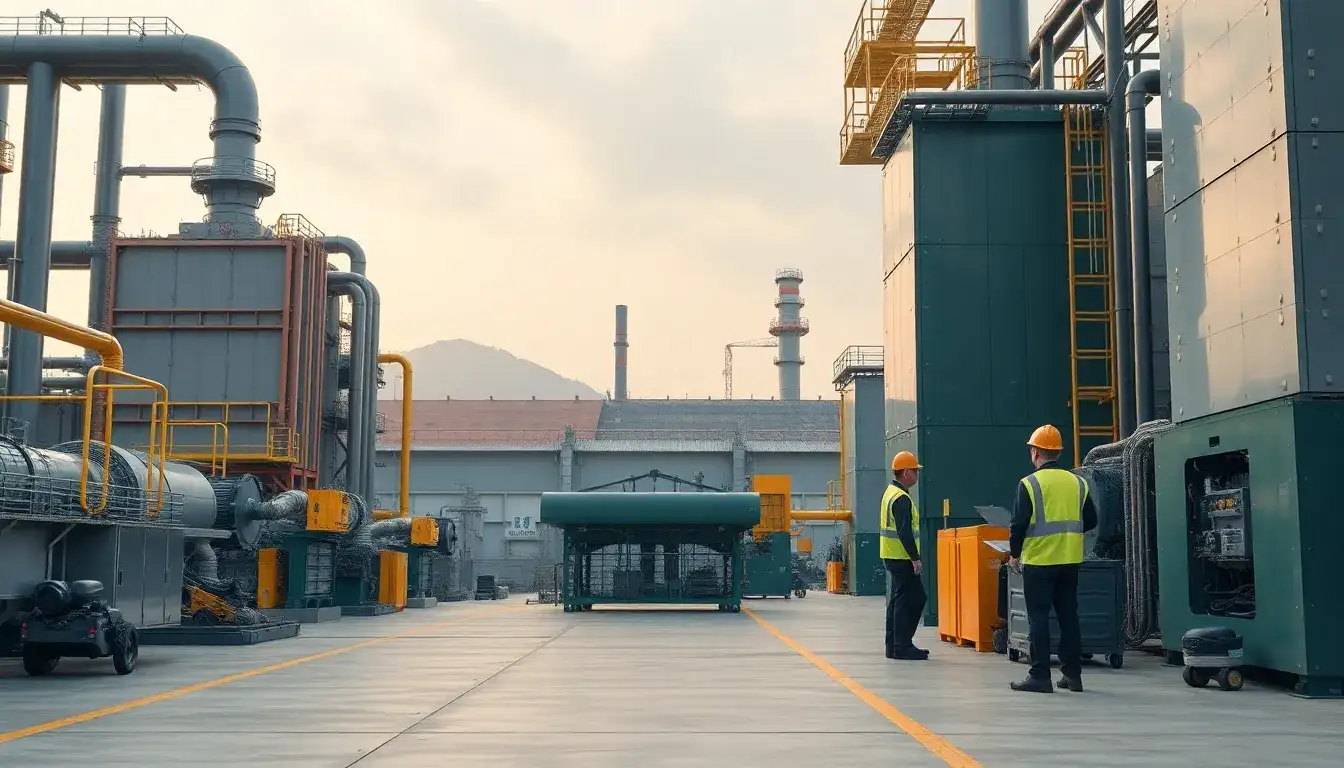
Hubei’s 30,000-Ton Power Battery Recycling Project Unveiled
=========================================================
**Discoveries About Us Tools Reports ASX Options Mining News**
**By John Zadeh on June 29, 2025**
### Power Battery Recycling Market Growth: What’s Behind the Boom
The power battery recycling industry in China is experiencing remarkable growth, with large-scale projects emerging across various provinces. This expansion reflects the nation’s strategic effort to establish a circular economy in the clean energy sector while addressing growing environmental concerns regarding battery disposal.
### The Circular Economy Imperative
Battery recycling has become an urgent necessity as the first generation of electric vehicle batteries approaches the end of their lifespan. Industry projections indicate that China will generate over 2.5 million tons of retired lithium-ion batteries by 2030, presenting both an environmental challenge and an economic opportunity.
Environmental regulations are a significant factor driving this recycling boom. The Ministry of Industry and Information Technology in China has introduced increasingly stringent guidelines for battery manufacturers, mandating the establishment of recycling networks and traceability systems for their products. The recently announced funding plan for Guangzhou in 2025 emphasizes structured government support for the “echelon use and recycling of retired power batteries,” which encourages private sector investment in this area.
Additionally, resource security concerns are propelling the growth of recycling. China’s push for supply chain resilience emphasizes the strategic importance of recovering critical minerals domestically, rather than depending on unstable international markets. Dr. Li Wei, a battery materials specialist at the China Renewable Energy Institute, notes, “Battery recycling isn’t just environmentally sound—it’s becoming economically essential as material costs fluctuate and supply chains face disruption.”
### The Hubei 30,000-Ton Project: A Game Changer
At the forefront of China’s recycling expansion is the groundbreaking 30,000-ton waste lithium battery recycling project in Hubei province. This facility marks a significant advancement in the processing and recovery of battery materials. According to the Environmental Impact Assessment initiated by the Yichang City Ecology and Environment Bureau, the project boasts five advanced intelligent production lines that utilize automation and smart management systems. This technological sophistication allows for the precise separation of valuable materials while reducing environmental impact.
The facility’s smart systems enable real-time monitoring of resource recovery rates, energy consumption, and emissions, creating unprecedented efficiency in the recycling process. This data-driven approach is expected to set new benchmarks for the industry nationwide.
**Key project highlights:**
– 30,000-ton annual processing capacity for waste lithium batteries
– Five automated production lines with smart management systems
– Advanced material separation technology for higher recovery rates
– Estimated recovery of over 3,000 tons of lithium compounds annually
– Projected to create approximately 200 specialized technical positions
The environmental benefits extend beyond mere waste reduction. By recovering materials such as lithium, cobalt, and nickel, the project is anticipated to lower the carbon footprint associated with mining and waste management solutions by an estimated 60-70% when compared to primary extraction.
### Major Battery Recycling Projects Emerging Nationwide
The Hubei project is just one component of a broader expansion in recycling capacity throughout China. Several other significant projects are either underway or nearing completion:
– **Jiangxi LFP Cathode Material Recycling Expansion:** This facility is upgrading from a 3,000-ton to a 10,000-ton annual capacity for lithium battery electrode material recycling with a 210 million yuan investment. It will also introduce a 200-ton annual capacity sodium-ion cathode production line, showcasing how recycling facilities are adapting to new battery chemistries.
– **Hegang City’s Two-Phase Development:** This 120 million yuan project adopts a comprehensive approach to battery recycling, with Phase I focusing on 6,000 tons/year whole battery processing and Phase II adding 12,000 tons/year for electrode scrap handling. This dual-phase strategy allows the facility to maximize resource recovery across the battery lifecycle.
– **Hubei’s 68,000-Ton LFP Black Mass Recycling Facility:** This facility, with an investment of 2 billion yuan, is nearing operational status and will have an annual recycling capacity of approximately 43,800 tons of LFP black mass, along with the capability to produce 25,000 tons of high-quality LFP cathode material.
Additional projects are also in development, including a 220-million-yuan facility in Fujian province designed to process 25,000 tons of waste LFP materials annually and a 50-million-yuan recycled black mass production line in Suzhou with a 3,000 tons/year capacity.
### Innovative Technologies Reshaping Battery Recycling
The rapid growth of the industry is being driven by technological innovation, with several cutting-edge approaches being implemented:
– **MIDR Low-Carbon Direct Recycling:** A pilot project in Tianjin is testing MIDR (Mechanically Initiated Direct Recycling) technology, which seeks to separate cathode materials from end-of-life LFP batteries using minimal energy and chemical processing. This method preserves the crystal structure of cathode materials and could reduce energy usage by up to 70% compared to traditional recycling methods.
– **Integrated Recycling and Production Systems:** Fujian’s recycling project exemplifies the trend toward integrated systems, producing market-ready materials rather than intermediate products. This facility will generate multiple outputs, including recovered cathode materials, high-purity aluminum, copper fractions, electrolyte components, and graphite for potential energy storage applications.
### Government Support Driving Industry Growth
Policy support is crucial for accelerating the development of battery recycling infrastructure. Guangzhou’s Industry and Information Technology Bureau recently unveiled its 2025 funding plan, which specifically targets demonstration projects for the echelon use and recycling of retired power batteries.
The regulatory landscape for battery recycling is also evolving, with rigorous Environmental Impact Assessments being conducted on all projects mentioned in this article. Public notification requirements ensure transparency in the development process, while standardization of technical specifications for various recycling methodologies clarifies the framework for investors and operators.
### Economic Opportunities in the Recycling Value Chain
The scale of investment in battery recycling underscores the economic potential of the sector:
– **Value Recovery Analysis:** Modern recycling processes can recover 95-98% of cobalt and nickel, 70-80% of lithium, and nearly 100% of copper and aluminum, among other materials. Depending on chemistry and recovery efficiency, a ton of recycled battery black mass can yield materials worth between $3,000 and $7,000.
– **Investment Landscape:** The diversity of investments across the highlighted projects indicates the sector’s maturity, ranging from large-scale integrated facilities to targeted technology pilots. This variety provides entry points for different types of investors and fosters innovation across the battery metals investment value chain.
### Technological Innovation Beyond Recycling
Battery recycling is not only enhancing material recovery but also driving broader technological advancements:
– **Research and Development Initiatives:** The establishment of dedicated R&D centers for regenerated LFP test cells illustrates how recycling is fostering innovation in battery design and testing.
– **Process Optimization Research:** Efforts to improve energy efficiency and advanced sorting technologies are yielding benefits beyond recycling, including advancements applicable to primary production.
– **Integration with Battery Manufacturing:** As recycling scales, battery manufacturers are adjusting their designs to facilitate easier disassembly and material recovery, creating a virtuous cycle of innovation.
In conclusion, the burgeoning battery recycling industry in China is poised to play a crucial role in the transition toward sustainable energy solutions, driven by technological advancements and robust government support.
Original article by NenPower, If reposted, please credit the source: https://nenpower.com/blog/hubei-launches-30000-ton-power-battery-recycling-initiative-paving-the-way-for-industry-transformation/

