

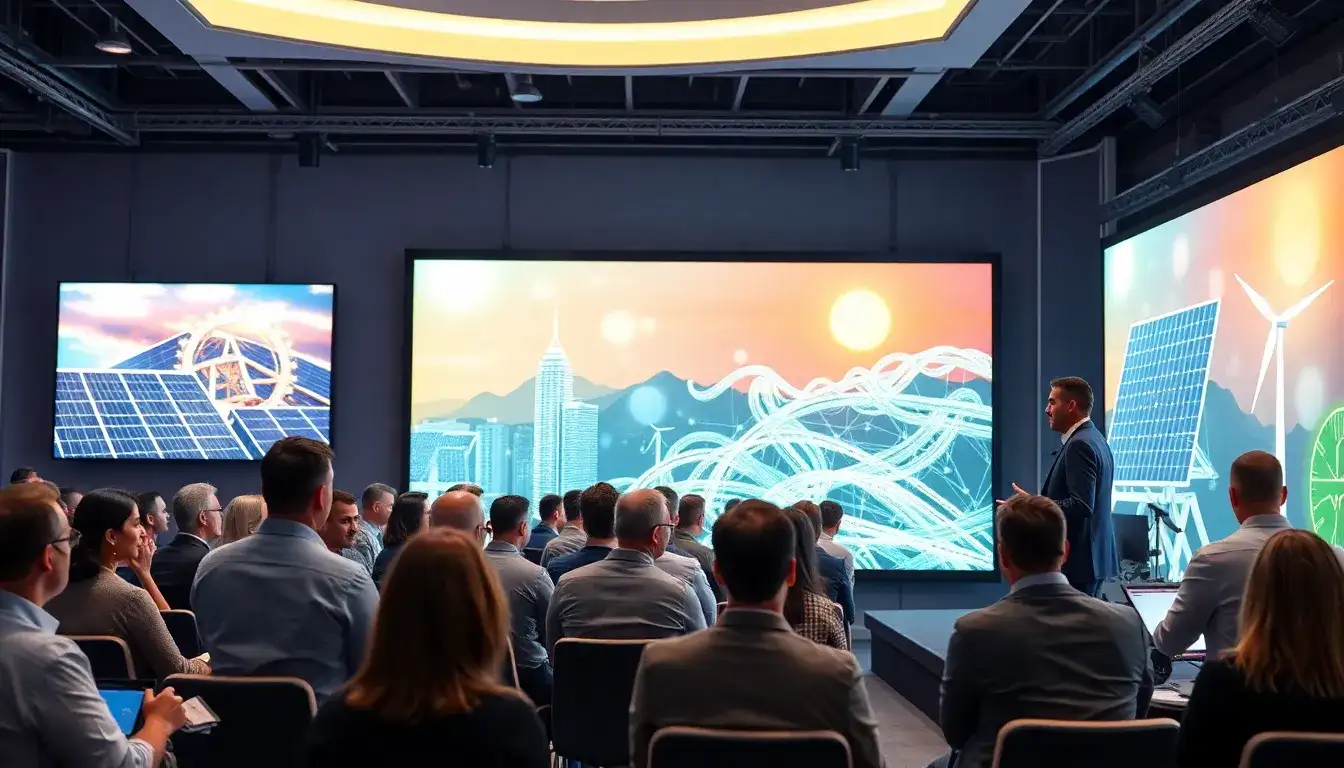
On May 22, the first stop of the 2025 Huawei China Digital Energy Innovation Summit, themed “Co-creating High Quality, Smartly Winning High Value,” was successfully held in Changzhou, Jiangsu. The summit attracted industry partners, experts, and business leaders from across the country to focus on integrated development pathways for industrial and commercial energy systems, digital empowerment for green low-carbon transformation in parks, and joint promotion of high-quality industrial development and collaborative value creation in a new era of green intelligence.
Focusing on High Quality and Building Value Consensus
Tong Chunping, a second-level inspector from the Jiangsu Provincial Development and Reform Commission, stated in his speech that Jiangsu is leading efforts to adjust its energy structure under the “dual carbon” goals, achieving significant results in green low-carbon transformation. Moving forward, there will be a strong push for technological innovation and a steadfast commitment to developing new energy productivity, treating the construction of low (zero) carbon parks as a key component of the new power system. This aims to shift from “source following load” to an integrated interaction of “source, grid, load, and storage,” taking the lead in blending technological and industrial innovation.
Lei Guangyou, Vice President of Huawei Digital Energy, emphasized that safety and quality are the foundations of sustainable development in the energy sector and are the primary considerations for customers. Huawei Digital Energy continuously focuses on technology and product quality, adhering to a “quality first, quality wins” strategy and driving high-quality development in the new energy industry through continuous technological innovation and superior products and services.
Currently, the new energy industry has entered a new phase of comprehensive marketization and high-quality development. Cai Lingyu, Head of Huawei’s Digital Energy Strategy and MKT Department, noted in his presentation that the entire industry should adhere to a long-term perspective, leveraging technological innovation to propel high-quality development. In this regard, Huawei proposed five value propositions: 1) building sustainable development capabilities that span industry cycles; 2) developing reliable quality products that traverse the product lifecycle; 3) nurturing continuous innovation capabilities based on core technologies; 4) constructing a four-dimensional safety system from component and product autonomy to network and system security; and 5) establishing a ubiquitous service system that creates value for customers.
Integrated Source, Grid, Load, and Storage: Empowering Low-Carbon Transformation in Parks
In response to the “new era of low-carbon cities,” Huawei has integrated over 30 years of accumulated digital technology with innovations in power electronics, developing a “1+4+X” solution for low-carbon cities, empowering urban low-carbon transformation through digitalization.
Cai Xu, Head of Huawei’s Commercial Power Supply and Storage Integration Department, highlighted that Huawei’s commercial energy integration solutions achieve extreme safety and long-term benefits, enabling low-carbon transformation in parks. On the energy source side, the focus is shifting from pure solar to a fusion of solar and storage, enhancing the proportion of green energy consumption, optimizing overall cycle returns for commercial solar and storage; on the grid side, the goal is to provide better power quality, more reliable supply, and stronger capacity to support enterprises’ high-quality electricity use; on the load side, the “solar storage charging + grid integration technology” reduces the impact of megawatt supercharging on the grid while improving overall returns; and energy storage is enhanced with the first wind-liquid intelligent cooling energy storage cabinet, achieving higher efficiency and reliable long-term returns of over 10%.
The system-level active safety solutions ensure the sustainable development of energy use in parks. Additionally, Huawei collaborates with partners to provide a “comprehensive energy/virtual power plant” management system for parks, using cloud-edge-end architecture and AI technology to help investors and owners achieve visible, manageable, and cost-effective energy solutions.
In Changzhou, the Wucheng Benchmark Demonstration Park has adopted Huawei’s commercial energy integration solution and comprehensive energy management platform, deploying 1.28 MW of solar power and 2.15 MWh of storage, along with a full liquid-cooled supercharging system. The comprehensive energy management platform achieves precise matching of energy demands through “source, grid, load, and storage” collaboration, participating in the ancillary services market and enhancing overall returns.
Xia Wei, General Manager of Jiangsu Huadian Energy Sales Co., Ltd., mentioned that Huawei Digital Energy provides a complete solution for Wucheng Technology Park, which is expected to generate 1.7 million kWh of green electricity annually, achieving nearly 100% self-consumption through solar and storage synergy. The charging stations consume about 800,000 kWh annually, with green electricity covering 40% of the total electricity use, resulting in a reduction of 40 tons of CO2 emissions and effectively alleviating carbon reduction pressures in the park. Additionally, the cost per kWh is optimized, with an AI-driven increase of 10% in overall returns, reducing energy costs for the park.
During the conference, Huawei’s commercial energy integration solution and the Wucheng benchmark demonstration park were officially launched, achieving 100% green energy consumption, long-term benefits, and extreme safety, supporting enterprises in their green, low-carbon, and high-quality development.
Benchmark Practices Realized: Achieving Value Co-creation
Charging infrastructure, as a crucial component of integrated transportation energy infrastructure, plays a key role in the development of the national strategies for “new energy vehicles” and “new power systems.” In light of these opportunities, developing high-quality charging infrastructure focused on ultra-fast and fast charging can provide a superior experience for green travel.
Huang Gang, General Manager of Changshu Luting Energy Service Co., Ltd., pointed out that the new energy vehicle industry is experiencing explosive growth, with market penetration and ownership rates continuing to rise. Predictions indicate that charging demand will grow tenfold in the next decade. Huawei’s full liquid-cooled supercharging solution will assist stations in achieving a “stacked light and storage” model (solar + storage), combining both green efficiency and economic benefits.
He emphasized that Luting Energy collaborates closely with Huawei to integrate solar storage and power electronics technologies. Under Huawei’s strong brand influence and efficient operational support, the station’s efficiency has significantly improved, exceeding the surrounding average by 195%. In the future, they will leverage Huawei’s robust technology and computing power to empower solar storage charging stations, using big data analysis to find optimal matching models for electricity prices, charging volumes, solar installations, and storage capacities, and flexibly applying energy management systems to enhance overall returns.
Zhai Baogen, Senior Vice President of Xiangjiang System Engineering Co., Ltd., noted that the national AI+ strategy continues to advance, with an increasing emphasis on independent innovation. Intelligent computing has become the main engine of industry development, and data center solutions are building the foundation for the digital world, empowering various sectors. Xiangjiang has partnered with Huawei for over a decade to create competitive products and solutions, successfully implementing benchmark projects such as the Yangzhou Mobile Data Center and Zhangjiagang Rural Commercial Bank Data Center, consistently providing high-quality services to clients.
Huawei Digital Energy, leveraging its technological expertise in intelligent photovoltaics, charging networks, and data centers, collaborates with local partners to support Jiangsu’s dual carbon goals in a favorable industrial ecosystem.
The conference also featured a collaboration ceremony for integrated source, grid, load, and storage projects, a city-wide charging network and heavy truck project collaboration, and a UPS supply project for the Port City Intelligent Manufacturing Big Data Industrial Park. This cooperation marks a commitment from all parties to deepen collaboration, integrate advantageous resources, and jointly promote industrial upgrades, achieving more efficient and sustainable value creation.
Original article by NenPower, If reposted, please credit the source: https://nenpower.com/blog/huawei-launches-successful-first-stop-of-the-2025-china-digital-energy-innovation-summit/

