

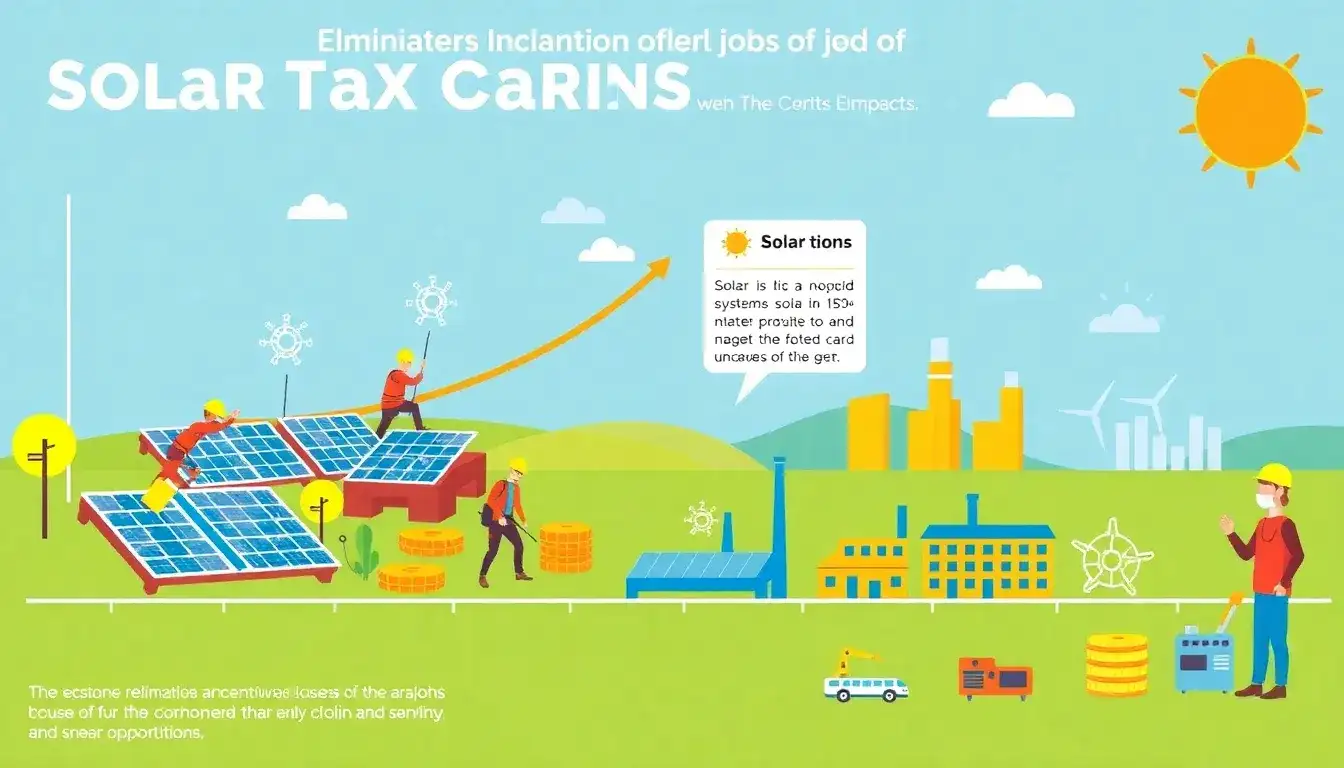
The phase-out of the solar tax credit is expected to have a significant impact on job creation and employment in the solar sector, given the credit’s pivotal role in driving solar industry growth and employment.
Role of the Solar Tax Credit in Job Creation
- The solar investment tax credit (ITC), currently at 30%, has been a critical federal incentive that makes solar installations more affordable for both homeowners and businesses. This affordability has driven widespread adoption and stimulated market growth.
- By lowering upfront costs, the tax credit has not only increased demand for solar installations but also fueled the growth of installer businesses and related industries such as manufacturing, engineering, and sales. Thus, it has been a key driver in making solar one of the fastest-growing employment sectors in the U.S.
- According to the Solar Energy Industries Association, thanks to incentives like the ITC, the U.S. solar capacity is sufficient to power over 37 million homes, reflecting significant market penetration and job creation.
Effects of the Phase-Out Starting Around 2033
- The ITC is legislated to remain at 30% until 2033, after which it phases down to 26% and continues to decrease, with a full phase-out planned by 2034.
- As this credit phases out, the financial attractiveness of solar investments may decline, leading to reduced demand for new solar installations.
- Reduced demand will likely lead to slower growth or contraction in solar installation businesses, which in turn would decrease employment opportunities across the sector—particularly in installation, sales, manufacturing, and engineering roles that have expanded rapidly due to the credit.
- The industry, historically dependent on such incentives, might experience fewer startups or expansions by solar companies, meaning fewer new jobs created.
Summary
| Impact Area | During Tax Credit (Until 2033) | After Phase-Out (Post 2033) |
|---|---|---|
| Solar system affordability | High (30% credit) | Decreases as credit phases out |
| Demand for solar installs | Strong and growing | Likely to slow down |
| Solar sector employment | Rapid growth, thousands of jobs | Potential decline or stagnant growth |
| Business growth | Many new companies emerge | Fewer new companies, less expansion |
The tax credit has been a major catalyst for growth and job creation in solar, and its gradual phase-out will likely reduce new solar projects and thus employment growth in the sector. The best opportunity to maximize job creation and solar adoption remains while the full credit is available over the next several years.
Original article by NenPower, If reposted, please credit the source: https://nenpower.com/blog/how-will-the-phase-out-of-the-solar-tax-credit-impact-job-creation-and-employment-in-the-solar-sector/

