

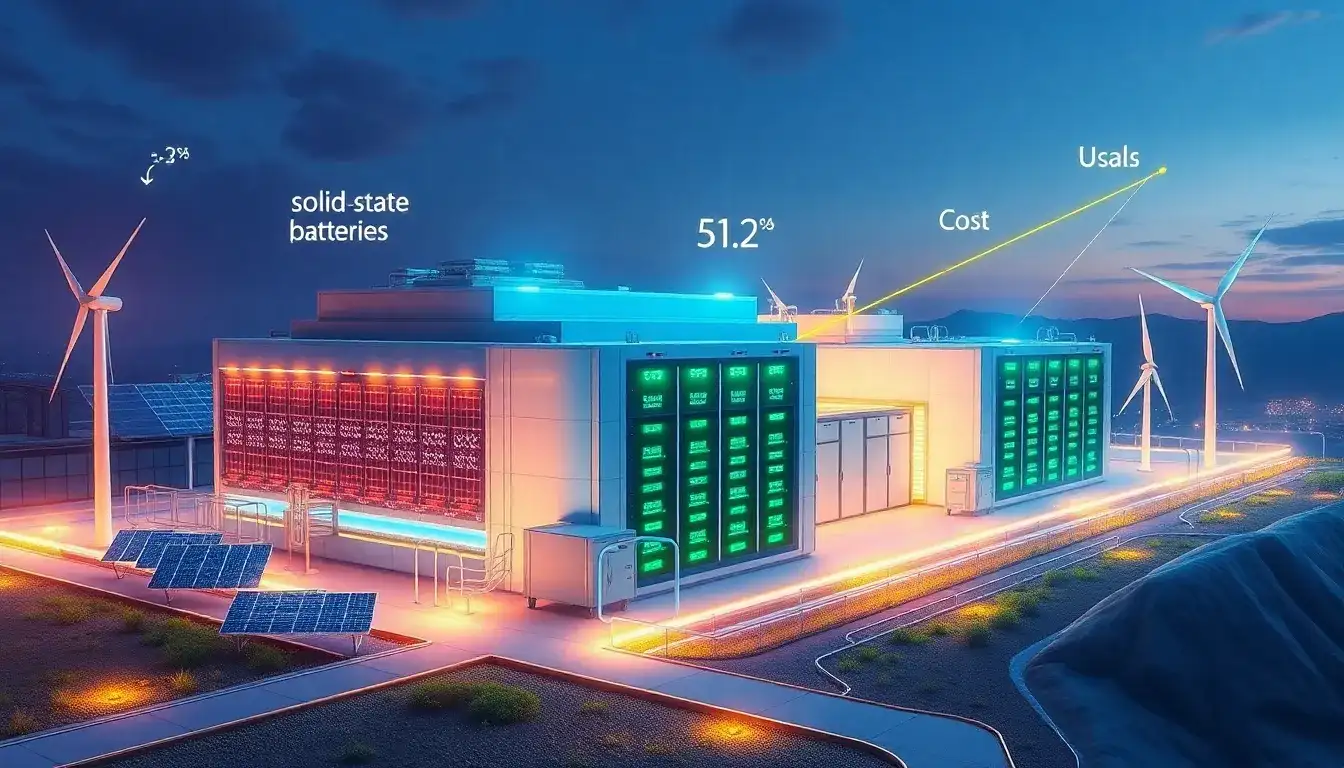
Solid-state batteries have the potential to significantly impact the cost of utility-scale energy storage, though their current higher cost presents a barrier. Here’s a breakdown of their potential and challenges:
Cost Implications
- Initial Costs: Solid-state batteries are currently more expensive than traditional lithium-ion batteries, with costs ranging from $400 to $800 per kWh as of 2024. This higher initial cost could increase the upfront expense of utility-scale energy storage systems.
- Future Cost Reductions: However, projections suggest that the cost per kilowatt-hour for solid-state batteries could drop to $75-100 by 2030 as manufacturing scales up. This would make them a more competitive and cost-effective option for utility-scale applications.
- Long-Term Savings: Despite higher initial costs, solid-state batteries offer advantages such as longer lifespans and higher efficiency, which can lead to lower total cost of ownership (TCO) and operational expenses over time.
Technical Advantages and Environmental Impact
- Higher Energy Density: Solid-state batteries offer higher energy density, allowing them to store more energy per unit of volume or weight, which can lead to more efficient use of space in utility-scale applications.
- Environmental Benefits: They are more environmentally friendly due to reduced hazardous materials and potential for recycling, which may lower environmental compliance costs and appeal to eco-conscious investors.
Impact on Utility-Scale Energy Storage
- Adoption Barriers: The primary barrier to widespread adoption is the current high cost of solid-state batteries relative to lithium-ion batteries. However, as technology improves and production scales up, significant cost reductions are anticipated.
- Future Potential: Companies like Toyota, QuantumScape, and Samsung are investing heavily in solid-state battery research and development. This investment signals a strategic move toward market dominance and suggests that the technology could become a standard in utility-scale energy storage by the end of the decade.
Overall, while solid-state batteries currently pose higher costs, their long-term benefits and potential for cost reduction make them a promising candidate for reducing the cost of utility-scale energy storage in the future.
Original article by NenPower, If reposted, please credit the source: https://nenpower.com/blog/how-will-solid-state-batteries-impact-the-cost-of-utility-scale-energy-storage/

