

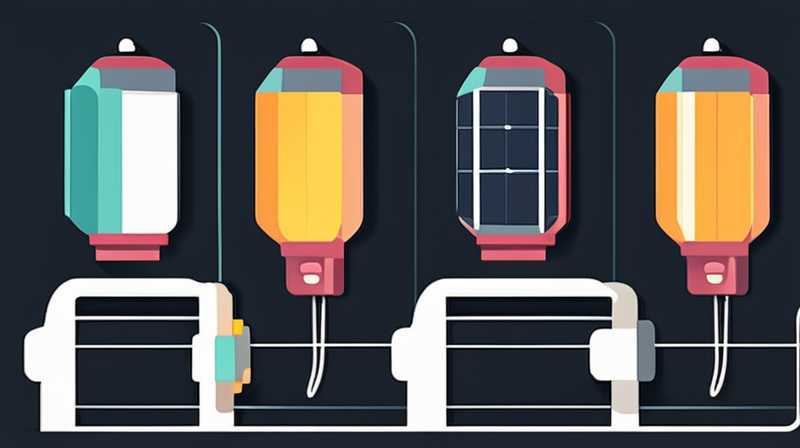
To illuminate a lamp using a solar panel, one must understand essential aspects such as 1. Selecting the appropriate solar panel type, 2. Choosing a suitable battery for energy storage, 3. Understanding the wiring needs, and 4. Ensuring proper placement for maximum sunlight exposure. For an in-depth explanation, focusing particularly on solar panel selection, factors like power output, efficiency, and compatibility with the lamp’s requirements should be considered. A solar panel’s efficiency directly influences how well it can convert sunlight into usable electricity, impacting the overall performance of the lighting system.
1. SELECTING THE APPROPRIATE SOLAR PANEL TYPE
When embarking on the journey of harnessing solar energy to light a lamp, the selection of the solar panel is pivotal. Various types of solar panels exist, including monocrystalline, polycrystalline, and thin-film solar panels. Each type offers unique benefits and constraints that cater to different needs and applications.
Monocrystalline solar panels are known for their high efficiency and compact size. Due to their design, they can convert a significant portion of sunlight into electricity, sometimes exceeding 20% efficiency. This characteristic makes them suitable for situations where space is limited and maximum power output is desired. They are constructed from a single crystal structure, which optimizes electrical conductivity and, consequently, performance.
On the other side, polycrystalline solar panels, while slightly less efficient—typically around 15-17%—offer a more cost-effective solution. These panels are made from multiple crystal structures, which can lead to a bulkier design. Their affordability makes them attractive for larger installations where budget is a prominent consideration, despite their lower efficiency rates.
Thin-film solar panels represent another alternative, often lauded for their flexibility and lightweight characteristics. Though they generally exhibit lower efficiency, often around 10-12%, their versatility can be advantageous in specific scenarios. For instance, they can be integrated into unconventional surfaces, making them a unique option for certain lighting setups.
Subsequently, the choice of solar panel should align with the intended application, considering space availability, budget restraints, and desired efficiency. Understanding these factors is essential for ensuring the optimal performance of the solar-powered lamp.
2. CHOOSING A SUITABLE BATTERY FOR ENERGY STORAGE
Once the solar panel type has been selected, the next significant consideration is the battery for energy storage. A proper battery ensures that energy harnessed from the sun is available for use even when sunlight is not present, such as during the night or on cloudy days. Several types of batteries are suitable for solar applications, including lead-acid, lithium-ion, and nickel-cadmium batteries.
Lead-acid batteries are among the most commonly used in solar energy systems. They are relatively inexpensive and well-established technology, with two main categories: flooded and sealed. Flooded lead-acid batteries require regular maintenance, while sealed varieties offer hassle-free operation due to their closed design. Despite their cost-effectiveness, they tend to have shorter lifespans compared to other battery types and are heavier, which might limit usage in certain installations.
In contrast, lithium-ion batteries have surged in popularity within solar systems due to their longer lifespan and improved energy density. These batteries can last for up to 10 years or more, providing consistent performance. Additionally, they can be discharged to a lower depth than lead-acid without significant damage. Although they come at a higher initial price, their efficiency and durability often warrant the investment for those looking for long-term solutions.
Nickel-cadmium batteries serve as another option, particularly known for their robust performance in extreme temperatures. However, they are less commonly used due to higher environmental impact and relatively more expensive production costs compared to lithium-ion alternatives.
When selecting a battery, factors such as capacity, depth of discharge, and compatibility with the chosen solar panel must be carefully evaluated. The goal is to create a cohesive system that ensures reliable energy storage for the lamp operation.
3. UNDERSTANDING THE WIRING NEEDS
Wiring is a crucial component in the successful integration of solar panels and batteries with the lamp. Proper wiring ensures that energy flows seamlessly from the solar panel to the battery and ultimately to the lamp. Understanding the gauge and type of wiring needed is essential to optimize performance and safety.
Choosing the appropriate gauge of wire is vital as it influences the efficiency of energy transmission. Thicker wires, represented by a lower gauge number, can reduce resistance and power loss. For most solar applications, using 10 AWG (American Wire Gauge) or 12 AWG wire is typically recommended, ensuring that adequate power is delivered from the solar panel to the battery and then to the lamp.
Wiring configurations can vary depending on the setup. For instance, connecting multiple solar panels in series or parallel affects voltage and current output. In a series connection, the voltage adds up while the current remains the same, which may be suitable when additional voltage is required for specific lamps. Conversely, in a parallel connection, the current adds up with voltage remaining constant, enhancing the overall current supplied to the lamp. Understanding these configurations is fundamental for optimizing energy input to ensure sufficient lighting.
Moreover, the incorporation of fuses and circuit breakers is crucial in wiring systems. These components serve as safety measures to protect against overcurrent situations that could potentially damage the solar panel, battery, or lamp. Proper installations must have these elements to create a safe, reliable environment for solar energy utilization.
4. ENSURING PROPER PLACEMENT FOR MAXIMUM SUNLIGHT EXPOSURE
To maximize the efficiency of a solar-powered lamp, proper placement of both the solar panel and lamp is essential. The positioning impacts how effectively the panel can capture sunlight and ensure sufficient energy for lighting.
Finding an optimal location for the solar panel involves several considerations. It should be installed in an area that receives direct and unobstructed sunlight throughout the day. Trees, buildings, and any other structures can create shadows that reduce solar exposure significantly, impacting overall performance.
A solar panel’s angle is also an important factor to consider. Ideally, it should be tilted according to the geographical location to capture the maximum amount of sunlight throughout different seasons. There are various guidelines available that suggest precise angles based on latitude, which can help achieve better results.
Equally important is the placement of the lamp itself. It should be positioned to effectively distribute light where it is most needed while ensuring security against theft and damage. Moreover, environmental factors, including wind and rain, should also be pondered, particularly for outdoor installations.
By taking into account the placement of both components, one can significantly enhance the overall performance and effectiveness of the solar-powered lighting system. Understanding the interplay between solar energy absorption and light distribution is key to achieving a successful outcome.
FREQUENTLY ASKED QUESTIONS
WHAT SIZE SOLAR PANEL DO I NEED FOR A LAMP?
When determining the appropriate size of a solar panel for a lamp, several variables must be taken into account, particularly the power consumption of the lamp, hours of operation, and average sunlight availability in your region. To begin, ascertain the wattage required by the lamp. For example, if the lamp operates at 10 watts and runs for 5 hours each night, the total energy requirement would be 50 watt-hours per day (10 watts x 5 hours).
Next, consider the average solar insolation—the amount of solar energy received per square meter per day—specific to your location. Depending on the region, this value can vary significantly. If your location receives approximately 5 hours of effective sunlight per day, the solar panel must be able to produce sufficient energy to meet the lamp’s nightly requirements.
In this scenario, calculate the necessary wattage of the solar panel by dividing the daily energy requirement by the amount of sunlight received. Therefore, in this instance, 50 watt-hours divided by 5 hours equals a required output of 10 watts from the solar panel. However, it is advised to choose a slightly larger panel to accommodate for losses due to inefficiencies, leading to the recommendation of a minimum 15-watt solar panel to ensure reliability throughout varying weather conditions.
HOW LONG DO SOLAR PANELS LAST?
The lifespan of solar panels is a significant consideration when investing in solar energy solutions. On average, most solar panels come with a warranty ranging from 25 to 30 years, indicating that they are designed to function proficiently for at least this duration. However, it’s essential to understand that the performance of solar panels will gradually decline over time.
Typically, well-maintained solar panels can maintain around 80-90% of their original efficiency after 25 years. This performance decrement can vary based on factors including quality, installation, and environmental conditions. Higher-end panels may experience less degeneration than their lower-priced counterparts, making it crucial to assess quality prior to purchasing.
Regular maintenance, including cleaning and inspection, plays a vital role in prolonging the lifespan of solar panels. Dust, leaves, and debris can accumulate on the surface, obstructing sunlight and impacting energy output. Furthermore, ensuring that installations are free from shading and physical damage can contribute to the optimal performance of solar panels throughout their lifecycle.
Ultimately, while solar panels are a long-term investment, making informed choices about their selection and care can significantly enhance their longevity and effectiveness.
CAN SOLAR POWER LAMPS WORK ON CLOUDY DAYS?
The efficacy of solar power lamps during cloudy days is a common concern among potential users. While it is true that solar panels generate less energy in overcast conditions, they still produce some electricity in these situations. Solar panels rely on sunlight, but they can capture indirect sunlight, allowing them to function under various weather conditions, including cloudy days.
The extent to which a solar panel can operate on cloudy days depends significantly on the thickness of the clouds and geographic location. In regions where sunlight is consistently available, even through clouds, solar panels can still gather an adequate amount of energy to charge the batteries.
To ensure reliability during cloudy or rainy days, incorporating a properly sized battery system becomes crucial. Efficient energy storage ensures that even when solar output decreases, sufficient electricity remains available for lamp operation. Having a capacity designed to account for several cloudy days can significantly enhance the reliability of solar-powered lamps.
Moreover, advancements in solar technology, such as the use of bifacial solar panels, can improve performance in less-than-ideal conditions by capturing diffuse sunlight. While solar lamps may not be as effective as on sunny days, proper planning in terms of battery capacity and panel placement can enable them to function adequately during cloudy periods.
Investing in solar technology for lamp lighting constitutes a commendable initiative towards energy sustainability. Through careful evaluation of crucial components—solar panel type, battery selection, wiring configuration, and placement—one can establish a comprehensive system that utilizes sunlight effectively for illuminating lamps. Attention to these details enhances the overall functionality and reliability of solar-powered lighting solutions. With growing concerns around energy consumption and environmental impact, the transition to solar power emerges as not only a sound choice but an imperative one, driving forward the cause for a sustainable future. Ensuring proper integration of solar lighting systems represents a meaningful step not only in harnessing renewable energy but also in contributing positively towards a greener planet.
Original article by NenPower, If reposted, please credit the source: https://nenpower.com/blog/how-to-use-a-solar-panel-to-light-a-lamp/

