

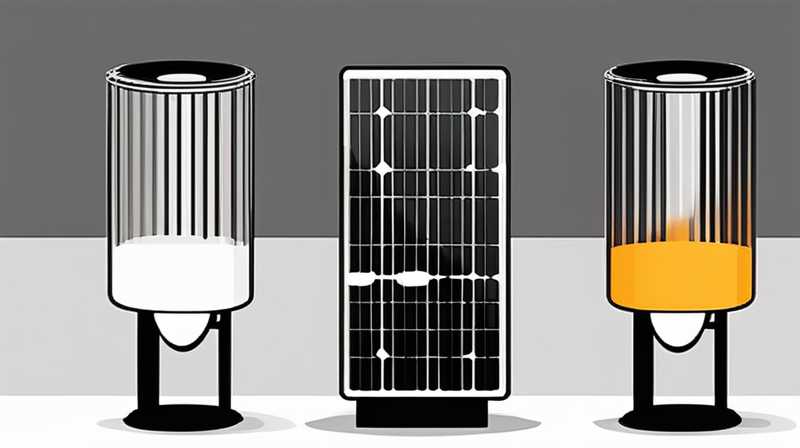
To connect a small table lamp to solar energy, follow these essential steps: 1. Select a solar panel compatible with the lamp’s power requirements, 2. Use a charge controller to prevent battery overcharging, 3. Connect a rechargeable battery to store solar energy, 4. Establish proper wiring between the solar panel, battery, and the lamp. Detailed consideration of energy efficiency is crucial; using LED bulbs can significantly enhance performance.
1. SELECTING THE SOLAR PANEL
In the journey toward harnessing solar power for a table lamp, the most critical step revolves around selecting the appropriate solar panel. Solar panels differ in wattage, efficiency, and size, necessitating careful evaluation based on the lamp’s specifications and usage frequency. For instance, a table lamp requiring 5 watts will benefit from a solar panel specifically rated above this threshold, generally ranging from 10 to 20 watts.
Moreover, understanding solar energy conversion efficiency is vital. Some panels absorb sunlight better than others, which can be particularly important for regions that may experience variable weather conditions. A higher-quality solar panel enables consistent energy supply, reducing the chance of the lamp running out of power prematurely. When looking at options, monocrystalline and polycrystalline panels often yield the best results due to their superior energy conversion rates.
2. UTILIZING A CHARGE CONTROLLER
After selecting the solar panel, the integration of a charge controller becomes paramount in solar energy systems. This device regulates the voltage and current coming from the solar panel, ensuring that the battery charges appropriately without exceeding its capacity. Overcharging a battery can lead to reduced lifespan, overheating, and potential hazards.
Charge controllers come in various types, including PWM (Pulse Width Modulation) and MPPT (Maximum Power Point Tracking) chargers. PWM controllers are generally more affordable and suitable for basic setups, while MPPT options provide enhanced efficiency, especially in larger or more advanced installations. It’s advisable to choose a charge controller that matches the voltage level of both the solar panel and the battery. Utilizing a suitable controller not only improves the overall efficiency of the system but also prolongs battery life, making it a beneficial component in a solar-powered lamp setup.
3. CONNECTING THE BATTERY
Upon acquiring both a solar panel and a charge controller, the next pivotal step in this process involves connecting a rechargeable battery. The battery acts as an energy reservoir, storing excess energy generated during sunny hours for use when sunlight is scarce. Selecting an appropriate battery is crucial; options may include lead-acid, lithium-ion, or NiMH types, with lithium-ion typically offering higher energy density and longer cycles.
Understanding the voltage ratings of the battery is critical as well. For a small table lamp, a 12V battery is common, but some configurations may support lower voltage systems, making it essential to match the battery’s output with the solar panel and charge controller. Proper wiring and safety measures should be observed during the connection process to prevent short circuits or incorrect polarity. A well-connected battery maximizes the efficiency of the entire system, ensuring the lamp remains powered effectively.
4. WIRING BETWEEN COMPONENTS
The intricate aspects of wiring between the solar panel, battery, and lamp demand careful attention to detail. Establishing a clear understanding of polarity is fundamental. All connections should adhere to a specific sequence: first, connect the battery to the charge controller, then the solar panel to the controller, and finally, connect the lamp to the battery.
Additionally, ensure that all wiring is adequately insulated and secured. Poor connections or exposed wires can lead to shorts or failures in the system, posing safety risks. As a precaution, using connectors that prevent reverse polarity is highly recommended. The wiring gauge should also match the current load requirements; using wires that are too thin may result in overheating and voltage drop. Taking these precautions can ensure a seamless flow of energy from the solar panel to the lamp, fostering a reliable solar-powered lighting solution.
5. CHOOSING THE LAMP
Selecting the proper table lamp is equally essential in this solar energy endeavor. Notably, the wattage and energy efficiency of the lamp can significantly influence performance. Energy-efficient options, such as LED bulbs, consume less power and provide output comparable to traditional incandescent bulbs but with increased longevity and efficiency.
Furthermore, the lamp’s design should accommodate solar-powered specifications. Consideration of whether the lamp can be modified for direct solar connections or requires additional components is crucial. It’s advisable to verify that the lamp is adequately placed to maximize exposure to sunlight if it includes panels. The right lamp choice not only impacts energy consumption but also enhances the aesthetic appeal of the living space while utilizing renewable energy.
FREQUENTLY ASKED QUESTIONS
HOW LONG DOES IT TAKE TO CHARGE A SOLAR BATTERY?
Charging a solar battery largely varies based on multiple factors, including the solar panel’s wattage, sunlight availability, and the battery’s current charge level. Typically, a fully exposed solar panel can generate sufficient power to fully charge a battery within 4 to 8 hours during peak sunlight conditions. However, reduced sunlight, overcasting weather, and the battery’s capacity can prolong the charging duration.
For example, a 12V battery rated at 100Ah coupled with a 100W solar panel may take close to a day to reach a full charge in less than optimal sunlight. It is imperative to assess the specific conditions and adjust expectations accordingly. Additionally, having a charge controller with dual indications of power and battery levels can provide a clearer picture of charging status and efficiency.
CAN I USE ANY BATTERY FOR SOLAR APPLICATIONS?
Utilizing just any battery for solar applications is highly discouraged; rather, choosing batteries specifically designed for solar energy systems is pivotal. Traditional automotive batteries, for instance, tend to provide high cranking power but are not built for deep-discharge cycles, which are common in solar applications. As a result, using such batteries can lead to poor performance and reduced lifespan.
For solar setups, deep-cycle batteries designed with the ability to be discharged regularly and charged efficiently are most suitable. Options such as AGM (Absorbent Glass Mat) and lithium-ion batteries are commonly used for solar applications due to their stability and longevity. Thorough knowledge of the battery type ensures an optimal performance, reliability, and a dependable power supply for your solar-powered table lamp.
WHAT MAINTENANCE IS REQUIRED FOR A SOLAR POWERED LAMP?
Maintenance of a solar-powered lamp is usually minimal compared to conventional lighting. However, certain routine checks can greatly enhance its performance. One primary aspect involves keeping solar panels clean from dust and debris, as accumulations can significantly reduce energy absorption. A gentle water rinse and soft brush can suffice in cleaning panels effectively.
In addition, inspect the wiring connections and battery periodically to ensure they are secure and free from corrosion. If advanced monitoring systems are employed, evaluate battery health indicators regularly to manage any potential issues before they escalate. Adaptation of these simple practices can not only prolong the lifespan of the lamp but also maintain its efficiency in energy production.
FINAL THOUGHTS
Successfully connecting a small table lamp to solar energy not only promotes sustainability but also represents an innovative approach toward energy independence. Careful selection of each component in the system plays a critical role in its overall efficacy. Prioritize compatibility between the solar panel, charge controller, battery, and lamp to avoid complications. Pay close attention to the specifics of solar panel power ratings, battery types, and charge regulation techniques to ensure optimal functioning. Additionally, engage in proactive routines for maintenance and inspection to empower the longevity and reliability of your solar setup. As technology advances and solar efficiency improves, embracing such systems can ultimately lead to remarkable reductions in electricity costs while simultaneously contributing to environmental conservation. As such, establishing a solar-powered table lamp is not just a practical decision, but also a testimony to a commitment toward a sustainable, energy-efficient future, ultimately contributing to broader energy independence.
Original article by NenPower, If reposted, please credit the source: https://nenpower.com/blog/how-to-connect-a-small-table-lamp-to-solar-energy/

