

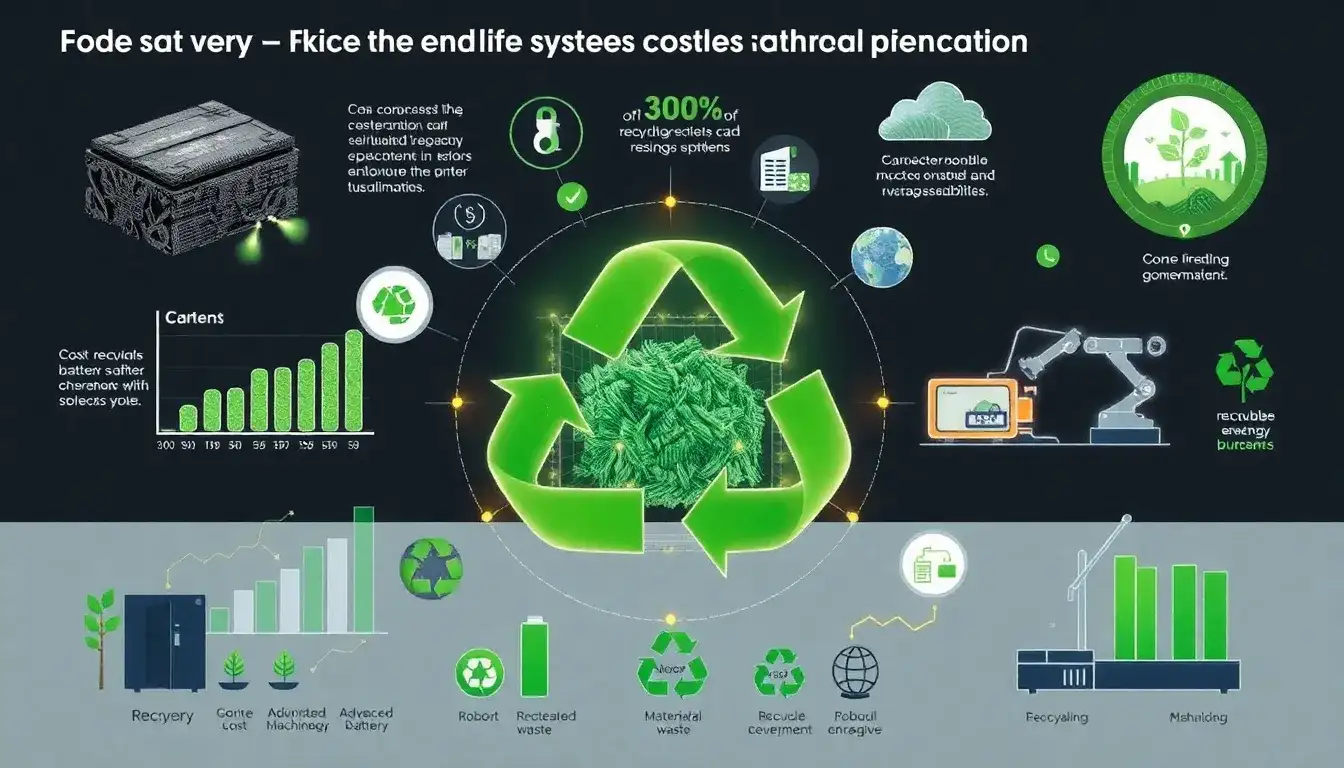
End-of-life (EOL) and recycling costs for Battery Energy Storage Systems (BESS) are significant and represent a substantial liability that is often overlooked during the initial planning stages of a project. These costs include several components:
- Battery Removal and Disassembly: This involves disconnecting, dismantling, and removing battery modules from the site, which can be labor-intensive and costly, especially for remote locations.
- Packaging and Transportation: Lithium-ion batteries are classified as hazardous waste, requiring special packaging and handling procedures. Transportation costs can vary greatly depending on distance and regulations.
- Recycling and Disposal: Recycling lithium-ion batteries is complex due to their diverse materials, which must be separated during processing. Costs vary by battery chemistry, with cobalt content playing a crucial role in determining economic viability.
Key Factors Influencing Costs:
- Battery Chemistry: Different chemistries affect recycling costs and recoverable materials, such as lithium iron phosphate (LFP) and nickel-manganese-cobalt oxide (NMC).
- Distance to Recycling Facilities: Transportation costs increase with longer distances.
- System Design and Complexity: Ease of disassembly impacts labor costs.
- Jurisdictional Regulations: Compliance with local waste management regulations can add costs.
Estimated Costs:
- For a 10 MWh BESS, total costs for removal, transportation, packaging, and recycling can surpass $474,000, depending on several factors.
- A general breakdown for a smaller system might include:
- Dismantling and Packaging: 30% of total costs
- Transportation: 25%
- Recycling and Disposal: 45%
Recommendations:
- Incorporate EOL costs into the initial planning and budgeting phases of BESS projects.
- Consider the use of decommissioning bonds to ensure financial responsibility for future costs.
- Support the development of more efficient recycling technologies to reduce future liabilities.
Original article by NenPower, If reposted, please credit the source: https://nenpower.com/blog/how-significant-are-end-of-life-and-recycling-costs-for-bess/

