

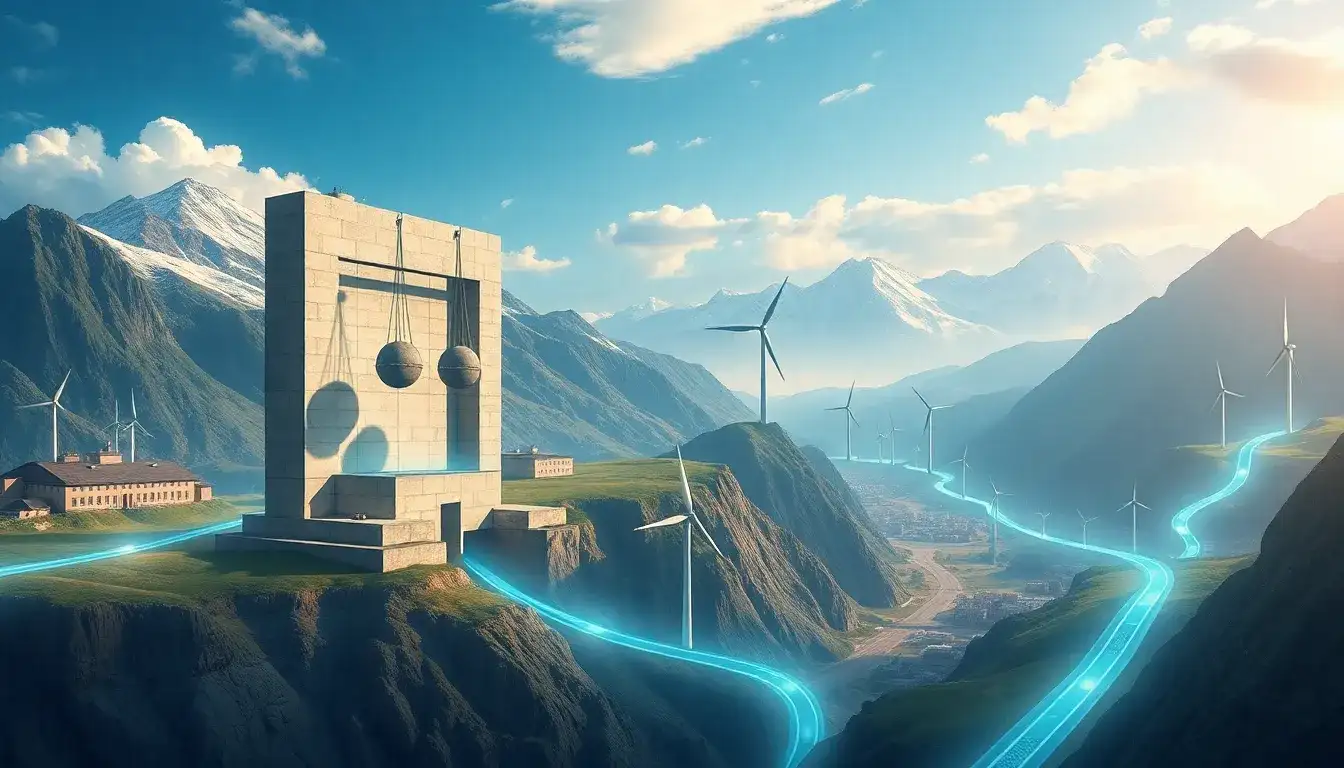
Gravity-Based Energy Storage Systems
Gravity-based energy storage systems offer a promising and scalable solution to global energy storage needs, particularly as the demand for renewable energy sources continues to grow. Here’s an overview of the scalability and potential applications of gravity energy storage technologies.
Overview of Gravity-Based Energy Storage
Gravity energy storage works by converting excess renewable energy into gravitational potential energy. This is achieved by lifting heavy objects (such as concrete blocks or water) to a height using surplus energy, and releasing the stored energy when needed by lowering these objects to drive turbines that generate electricity.
Types of Gravity Energy Storage Systems
- Pumped Hydro Energy Storage (PHES): This is the most prevalent form of gravity storage, accounting for about 90% of global energy storage capacity. It involves pumping water uphill to a reservoir and releasing it to generate electricity. While efficient, it is limited by the geographical availability of suitable sites and typically offers lower round-trip efficiencies (around 70%) due to water evaporation and other losses.
- Solid Gravity Energy Storage (SGES): This emerging technology uses solid materials to store energy. It can be implemented in various configurations, such as using cranes to lift concrete blocks in a tower structure, known as Tower Solid Gravity Energy Storage (T-SGES), or simpler systems that lower a single mass (S-SGES). SGES has advantages over PHES, including better scalability, geographical adaptability, and higher energy density.
- Innovative Systems: Companies like Energy Vault have developed systems that integrate gravity energy storage into modular, scalable designs that can be built in various environments without significant geographical constraints. These systems are projected to achieve high round-trip efficiencies (around 83-85%) and lower costs compared to traditional lithium-ion battery systems.
Scalability and Global Energy Needs
Gravity-based energy storage systems can potentially address several challenges related to energy supply and demand:
- Flexible Site Selection: Unlike pumped hydro systems that require specific topographies, gravity energy storage can be implemented in various settings, including urban environments and repurposed industrial sites (like old oil wells).
- Long Lifespan and Low Maintenance: Gravity energy systems tend to have longer operational lifetimes (over 35 years) and require less maintenance compared to chemical batteries, which degrade over time. This longevity translates to lower lifetime costs, making them attractive for large-scale applications.
- Environmental Benefits: With no reliance on toxic materials or critical minerals necessary for traditional batteries, gravity-based systems minimize environmental impact, avoiding harmful chemical reactions and reducing waste concerns.
Limitations and Challenges
While there are significant advantages, several challenges remain:
- Initial Setup Costs: The capital investment for constructing gravity energy storage installations can be high, posing a barrier to entry in some markets.
- Regulatory Hurdles: Navigating the regulatory environment for the installation and operation of large-scale energy storage facilities can be complex and may delay deployment.
- Technical Development: Continued research and innovation are vital to optimize designs, improve efficiencies, and reduce costs for gravity energy systems to be fully competitive with other storage solutions.
Conclusion
In summary, gravity-based energy storage systems represent a scalable and promising solution for global energy needs. Their ability to provide long-term storage, geographic flexibility, and environmental sustainability makes them potential key players in balancing the intermittent nature of renewable energy. As ongoing research, pilot projects, and supportive policies advance, gravity energy storage could significantly contribute to a more resilient and sustainable energy future.
Original article by NenPower, If reposted, please credit the source: https://nenpower.com/blog/how-scalable-is-gravity-based-energy-storage-for-global-energy-needs/

