

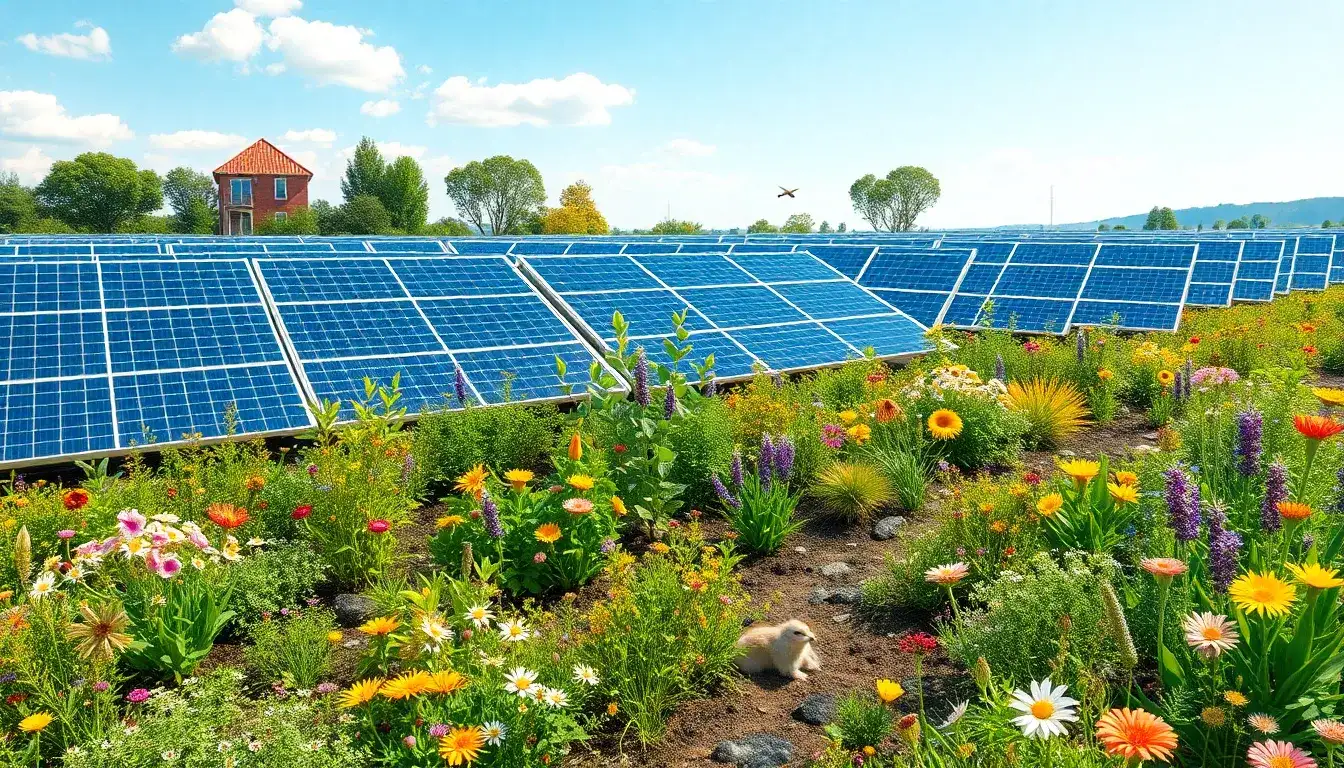
Biodiversity metrics at solar farms can improve relatively quickly, often within a few years, provided that deliberate habitat-friendly management practices are implemented.
Speed of Biodiversity Improvement
- Studies have shown that within less than 5 years, rapid increases in biodiversity metrics can be observed at solar energy facilities. For example, total insect abundance has been documented to triple, and native bee populations have increased up to 20-fold during this timeframe. Additionally, flowering plants and overall plant species diversity have increased markedly within the same period.
- Another study comparing solar farms with control plots (previously arable land) found that solar farms with wildflower meadow reseeding showed significant increases in biodiversity indicators such as herbs, bumblebees, and butterflies. This improvement was evident in a relatively short timeframe after establishing solar farms and associated land management.
Factors Influencing Rate of Improvement
- The greatest biodiversity gains occur when solar farm land is actively managed with conservation in mind. Practices like conservation mowing, grazing, removal of arisings (cut vegetation), and creating a variety of habitats are key to boosting biodiversity quickly.
- Solar farms installed on lower-grade agricultural land present enhanced opportunities for biodiversity improvements because baseline biodiversity is often low, allowing for more noticeable gains upon habitat restoration or enhancement.
- The lifespan of solar panels (typically 25-30 years) provides a long-term opportunity to maintain and improve biodiversity through ongoing management, monitoring, and adaptive practices. Establishing standardized ecological monitoring enables rigorous tracking of biodiversity changes year on year.
Potential for Significant Gains
- Some case studies have demonstrated the potential for solar farms to achieve biodiversity net gains of up to 70%, far exceeding current standards, by optimizing panel layout, integrating multiple habitat types, and mitigating negative impacts such as light pollution.
- Strategic pre-application consultations and explicit biodiversity criteria in planning policies can help maximize biodiversity outcomes during solar farm development, accelerating positive effects.
Summary Table: Biodiversity Improvement at Solar Farms
| Timeframe | Key Biodiversity Changes | Influencing Factors |
|---|---|---|
| < 5 years | – Tripling insect abundance – 20x increase in native bees – Increase in flowering plants |
Habitat-friendly management, wildflower meadows, conservation mowing/grazing |
| 2-3 years (early data) | Positive trends in birds, mammals, invertebrates | Standardized monitoring, proactive land management |
| Long term (25+ years) | Sustained biodiversity net gains up to 70% possible | Panel layout optimization, habitat integration, light management, policy support |
In conclusion, biodiversity metrics at solar farms can improve quickly—often within 5 years—when good land management is employed. The scale of improvement depends on habitat enhancement practices, site conditions, and supportive policy frameworks to ensure solar farms serve as multi-functional landscapes supporting both clean energy and biodiversity conservation.
Original article by NenPower, If reposted, please credit the source: https://nenpower.com/blog/how-quickly-can-biodiversity-metrics-improve-at-solar-farms/

