

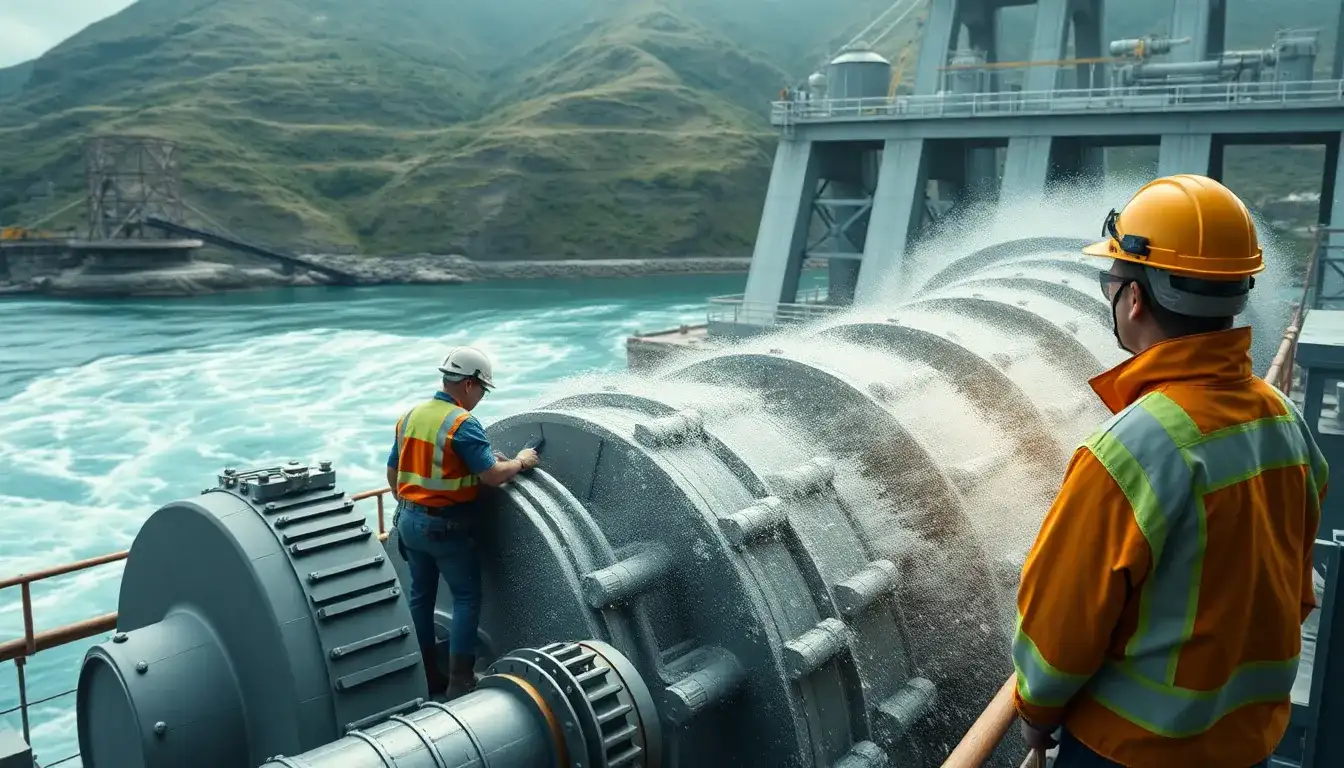
The turbine runners in pumped hydroelectric systems should be inspected at varying frequencies depending on their mode of operation and maintenance schedules:
- For pump-turbine runners that operate in both pumping and generating modes, inspections should be conducted approximately once every two years. This more frequent inspection is due to the dual operational stresses on the runner.
- More generally, comprehensive inspections of turbine components, including runners, are recommended at the time of major machine overhauls, which typically occur not less than once every six years. These inspections cover visual checks, ultrasonic testing for cracks, looseness checks, and verification of fasteners.
- Initial inspections when a new turbine is placed into operation are advised after about 1,500, 4,000, and 8,000 hours of operation to monitor early wear or damage. For pump-turbines, ongoing inspection frequency may vary based on operating experience, particularly if problems such as blade cracking or seal wear are detected.
- The timing of cavitation repairs, which relate to damage to runners and other parts, varies widely depending on the severity and progression of damage, plant owner’s maintenance philosophy, and operating conditions. Some plants conduct repairs at every inspection or only when damage reaches a critical threshold (typically around 1/8 inch depth).
In summary, the key inspection interval for turbine runners in pumped hydroelectric systems is approximately every two years when operating in both modes, supplemented by more thorough inspections every six years or aligned with major outages. Additional early-life and condition-based inspections are also performed depending on operating experience and specific damage issues.
Original article by NenPower, If reposted, please credit the source: https://nenpower.com/blog/how-often-should-the-turbine-runners-in-pumped-hydroelectric-systems-be-inspected/

