

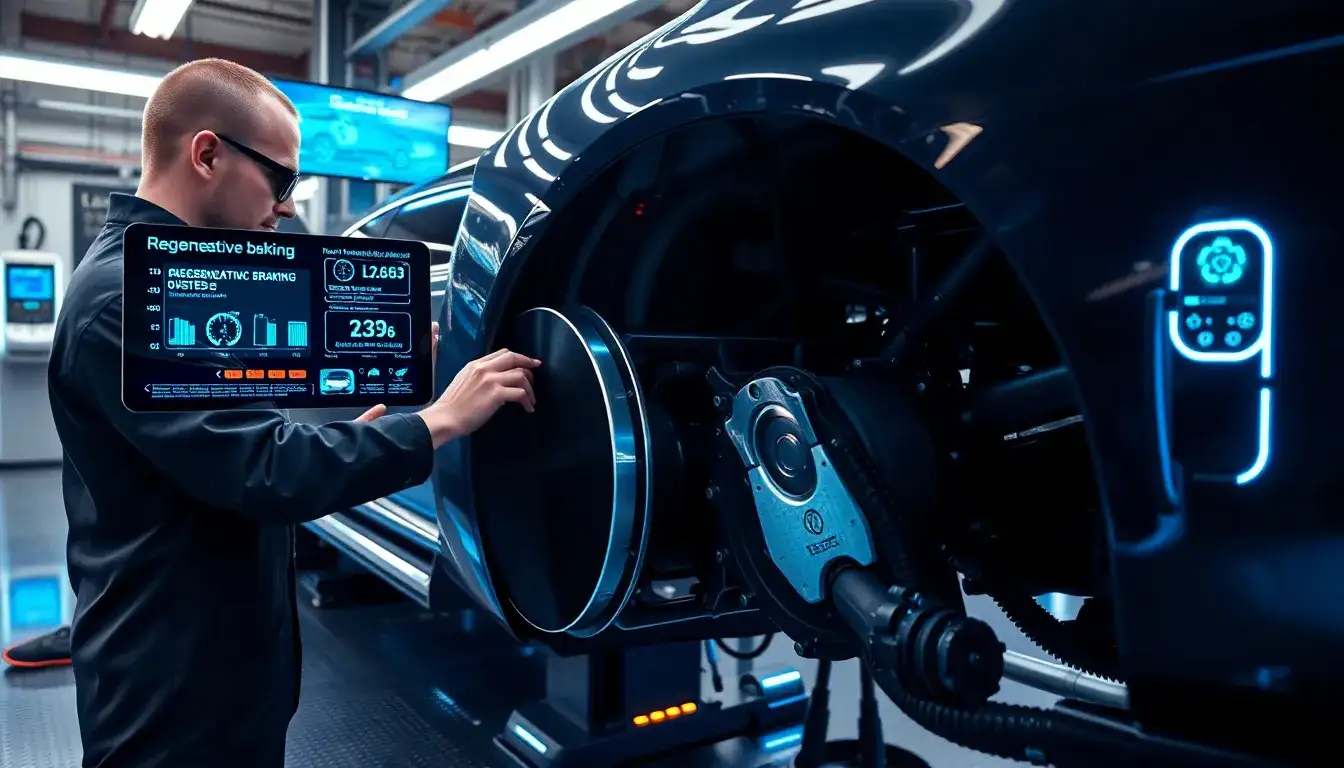
The regenerative braking system should be inspected as part of regular brake system maintenance, typically during comprehensive EV system checks or annual services. While regenerative braking itself may require less frequent direct maintenance since it lacks friction parts, its related components—such as brake pads, rotors, brake fluid, and electric motor parts—still need regular inspection to ensure safe and optimal performance.
Key recommended inspection intervals and practices include:
- Professional inspections of brake pads every 12,000 to 15,000 miles, as advised by Tesla for their vehicles, along with an annual comprehensive brake service that includes cleaning, lubrication, and checking for corrosion or rust, especially in environments with road salt.
- Routine inspection of wiring, connections, and electric motor components involved in regenerative braking as part of the overall EV system check, which is typically done annually or according to manufacturer guidelines.
- Regular inspection and lubrication of friction brake components despite reduced usage due to regenerative braking, to prevent rusting, corrosion, and disuse-related issues.
- Brake fluid level checks and replacements following manufacturer recommendations, since electric and hybrid vehicles still use hydraulic brake systems alongside regenerative braking.
In summary, regenerative braking system inspections are generally incorporated into the overall brake system maintenance schedule, often conducted annually or every 12,000–15,000 miles, depending on the vehicle manufacturer and usage conditions. Regular inspection of both the electric and traditional friction components ensures safe and reliable brake performance.
Original article by NenPower, If reposted, please credit the source: https://nenpower.com/blog/how-often-should-the-regenerative-braking-system-be-inspected/

