

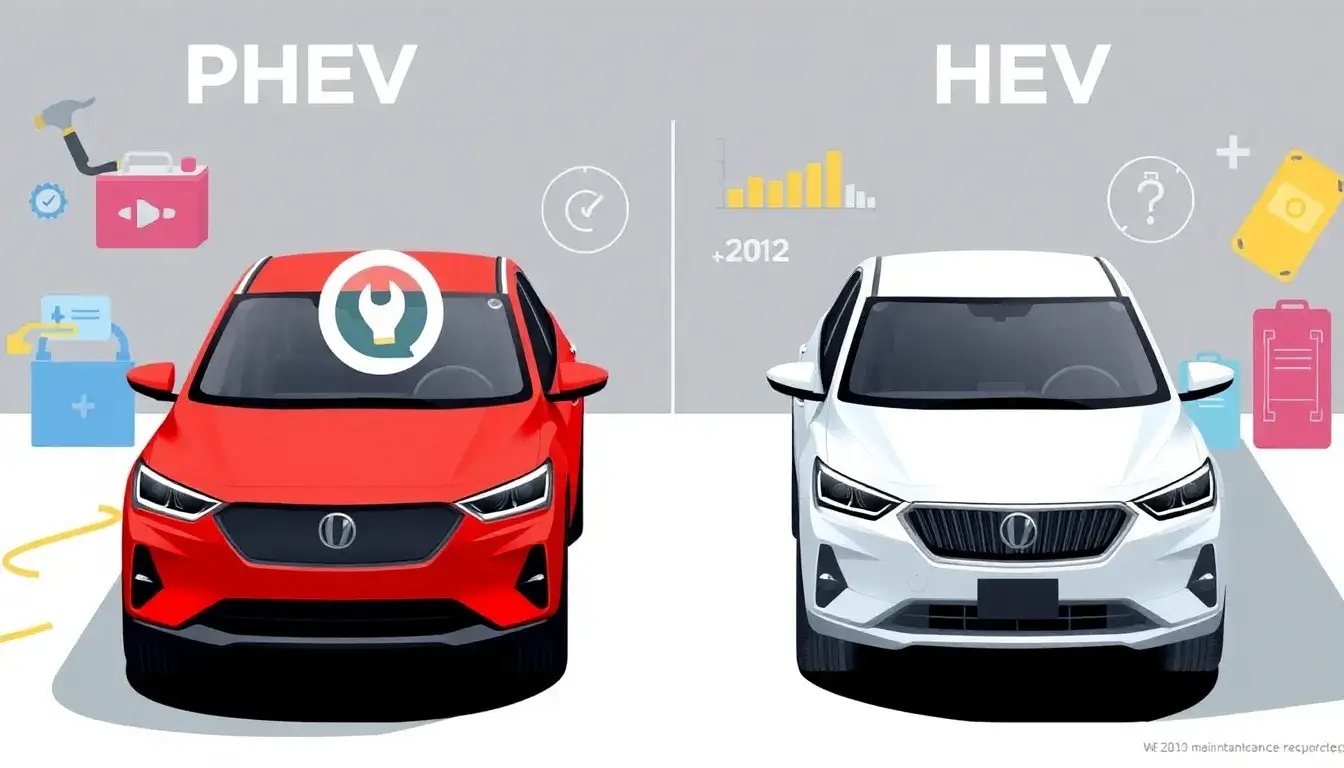
Plug-in hybrid electric vehicles (PHEVs) and hybrid electric vehicles (HEVs) have similar battery maintenance requirements, as both use lithium-ion or nickel-metal hydride batteries designed for minimal upkeep. However, key differences arise due to battery size and usage patterns:
- Routine Checks:
Both PHEVs and HEVs require regular hybrid system inspections (e.g., battery health, coolant levels) during standard servicing intervals, typically every 10,000–12,000 miles or 12 months. Unlike EVs, PHEV/HEV batteries rarely need standalone maintenance outside these scheduled checks. - Usage Impact:
- PHEVs face more frequent charge cycles due to larger batteries (often 10–50+ kWh) and plug-in charging, which could theoretically accelerate degradation. However, modern PHEVs include safeguards to prevent overcharging.
- HEVs rely on smaller batteries (1–2 kWh) charged via regenerative braking, resulting in shallow charge cycles that generally prolong battery life.
- Warranty Coverage:
Most manufacturers provide 8–10 year/100,000-mile battery warranties for both types, reflecting similar durability expectations when properly maintained.
Practical Comparison:
| Feature | PHEV | HEV |
|---|---|---|
| Battery Use | Frequent charging cycles (daily plug-in use) | Shallow cycles (engine/braking only) |
| Maintenance | Same hybrid checks as HEVs | Identical routine inspections |
| Degradation | Slightly higher risk due to deeper cycles | Lower risk from conservative cycling |
In practice, both require identical maintenance frequency, but PHEVs may demand closer monitoring of charging habits (e.g., avoiding frequent DC fast charging) to match HEV longevity.
Original article by NenPower, If reposted, please credit the source: https://nenpower.com/blog/how-often-do-phevs-need-battery-maintenance-compared-to-hevs/

