

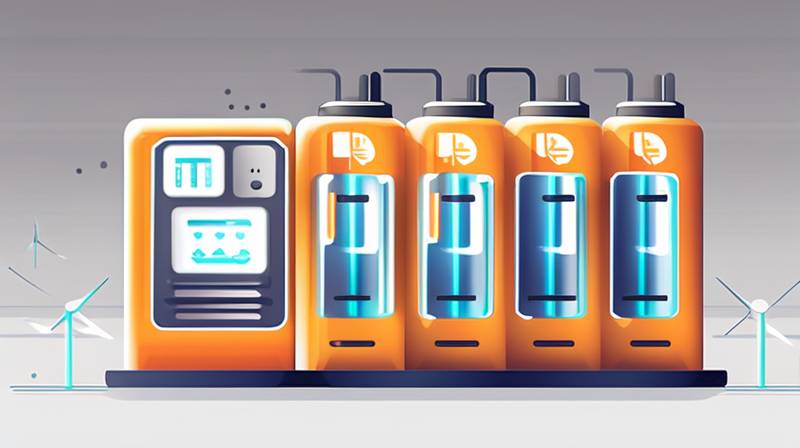
To determine the expenses associated with new energy storage, one must consider several critical factors: 1. Technology type, which influences initial investments and maintenance, 2. Scale of deployment, as larger systems benefit from economies of scale, 3. Geographic location, where costs can vary due to infrastructure and resource availability, 4. Market conditions, where fluctuating demand impacts pricing. Consideration of these elements reveals that costs can range significantly, often from $200 to over $1,200 per kilowatt-hour. This extensive range necessitates a thorough analysis of individual project parameters to accurately estimate total expenditure.
UNDERSTANDING ENERGY STORAGE TECHNOLOGIES
The landscape of energy storage has evolved drastically over the past few years, driven by the growing demand for renewable energy integration. Numerous technologies are available for energy storage, and each comes with distinct characteristics that can substantially affect costs. Lithium-ion batteries, flow batteries, and compressed air energy storage (CAES) represent just a few of the available options, and understanding their functionalities and economic implications is vital.
Lithium-ion batteries have gained overwhelming popularity for several reasons, including their high energy density, efficiency, and declining manufacturing costs. Historically, prices for lithium-ion systems have experienced a downward trend, primarily attributed to improvements in production processes and increased competition. This technology’s costs usually range from $300 to $700 per kilowatt-hour, varying based on factors such as capacity, longevity, and application. Subsequent applications, from residential use to grid-level solutions, can lead to asymmetrical cost structures, which must be examined in depth to ascertain total expenditures.
In contrast, flow batteries offer a different approach, employing liquid electrolytes to facilitate energy storage. While these systems tend to have longer lifecycles and better scalability, their costs are often higher, ranging from $500 to $1,200 per kilowatt-hour. The trade-off lies primarily in performance versus longevity. Therefore, when assessing the costs of energy storage technologies, one must consider both the initial and operational expenses over the life cycle of the system.
THE IMPACT OF DEPLOYMENT SCALE ON COST
The scale at which energy storage systems are deployed significantly influences the overall expenditure involved in their implementation. This principle aligns with the concept of economies of scale, where larger projects benefit from reduced costs per unit due to efficiencies gained during production, installation, and integration.
Small-scale installations, particularly those for residential purposes, often encounter higher relative costs because they lack the advantages associated with high-volume manufacturing and centralized logistical efficiencies. When evaluating costs for household energy storage, prices can escalate to around $800 per kilowatt-hour or more. This expense typically encompasses not only the batteries themselves but also installation, maintenance, and ancillary equipment necessary to ensure optimal performance.
Conversely, commercial and utility-scale energy storage projects can reduce their overall costs significantly. Prices for larger systems tend to range from $200 to $500 per kilowatt-hour, vastly improving the cost-effectiveness of deployment. These projects benefit from advanced logistical strategies, bulk purchasing, and streamlined integration processes. Consequently, stakeholders must carefully analyze and compare project scales to derive a precise understanding of energy storage costs.
LOCATION AND ITS INFLUENCE ON COST
Geographic factors play a pivotal role in determining energy storage costs, influenced by variables such as local labor rates, installation challenges, material availability, and regulatory frameworks. For instance, projects situated in urban environments may incur higher costs due to increased labor demands and logistical complexities.
In rural areas, costs may be more favorable due to lower labor expenses and potentially fewer regulatory hurdles. However, project developers must consider the trade-offs involved, including the proximity to existing energy infrastructure and the distance required to transmit energy to end-users. Consequently, the cost of energy storage systems can bounce between $200 and $800 per kilowatt-hour based on location and associated logistical considerations.
In addition, local policies can either enhance or obstruct energy storage projects through various incentives, tax credits, or tariffs. States with strong renewable energy targets and supportive legislation may enable lower costs through grants and incentives. Conversely, regions lacking in regulatory support may face stiffer challenges that can inflate project costs significantly.
Properly assessing geographical factors and local conditions is crucial, as this analysis can contribute significantly to understanding the total cost of energy storage systems and guiding investments into viable deployments.
MARKET DYNAMICS AND THEIR ROLE IN COST
The energy storage market is heavily influenced by the prevailing economic landscape and fluctuating demand for storage technologies. Market conditions play a significant role in shaping the pricing structures of energy storage, driven by changes in supply, demand, technological advancements, and shifting investments.
Market competition is also a considerable factor. As more players enter the energy storage sector, technology advancements and decreasing manufacturing costs often result in overall lower pricing for consumers. However, periods of high demand can lead to price spikes, guided by limited supply or supply chain disruptions. For instance, certain countries experienced surging lithium prices in recent years, resulting in upward pressure on energy storage costs that manufacturers had to navigate.
Global supply chains and geopolitical factors can also influence the cost of energy storage technologies. Fluctuations in raw material prices have become more pronounced, with significant choke points in the supply chain threatening availability. Such dynamics necessitate thorough market analyses to accurately forecast energy storage costs amidst changing conditions.
Recognizing these intricate market dynamics—ranging from competition and demand to supply chain vulnerabilities—equips stakeholders with the insights required to make informed investment decisions and effectively manage cost expectations.
LONG-TERM OPERATION AND MAINTENANCE EXPENSES
While initial installation costs are crucial to understanding total energy storage investments, ongoing operational and maintenance expenses often account for a substantial fraction of the overall costs over time. These expenses vary dramatically based on the technology utilized and the system’s design, potentially adding 20-30% to total costs over the system’s operational lifecycle.
For lithium-ion batteries, maintenance costs may be relatively low; however, replacing these systems frequently due to degradation can lead to significant expenses. Considerable wear and tear on components, particularly in harsher climates or from high cycling rates, necessitates careful monitoring and management to prolong lifespan. Project owners must account for these factors when considering long-term costs.
Contrastingly, flow batteries and other technologies, while more durable, often involve more complicated maintenance processes or specialized personnel, which can offset some of their initial advantages. By evaluating the total cost of ownership—including repair, maintenance, monitoring technologies, and personnel costs—project developers can create a comprehensive understanding of the energy storage expenditure landscape.
Understanding the long-term costs of energy storage technologies is essential for accurate budgeting and investment decisions. Stakeholders must adopt rigorous planning and forecasting methodologies to ensure sustained financial viability throughout the systems’ operational life.
CONSIDERATIONS FOR POLICYMAKERS AND INVESTORS
Final assessments of energy storage costs must occur within a broader context, incorporating policy implications and investment considerations that influence the sector’s growth trajectory. Energy storage not only serves as a crucial element in achieving renewable energy goals but also significantly impacts electricity markets and grid stability.
Policymakers must balance regulatory frameworks with market realities, ensuring that supportive measures do not inadvertently lead to oversupply or deteriorating prices. At the same time, investors require clarity regarding policies, incentives, and potential returns on investment, which can significantly guide their decisions moving forward.
In a broader economic context, understanding the social and environmental benefits of investing in energy storage can help justify higher initial costs for sustainable practices. Enhancing public understanding of these technologies can bolster demand and streamline adoption, resulting in reduced long-term costs through enhanced economies of scale.
Ultimately, collaboration between stakeholders—spanning regulators, private investors, and energy developers—is paramount for fostering an environment conducive to energy storage innovation. Responsible investments, coupled with judicious policy measures, can effectively guide the energy storage sector into a new, sustainable paradigm.
FREQUENTLY ASKED QUESTIONS
WHAT ARE THE MAIN FACTORS INFLUENCING ENERGY STORAGE COSTS?
Several key factors shape the expenses associated with energy storage technologies. Initially, the chosen technology type comprises significant implications for costs; lithium-ion and flow batteries, for instance, differ vastly in initial pricing and lifecycle expenses. Furthermore, the scale of deployment influences expenditures; larger installations often benefit from economies of scale, resulting in reduced costs per unit. Geographical location also has a notable impact, with variations in local labor rates, infrastructure, and regulations leading to differences in pricing.
Market dynamics—such as supply and demand, geopolitical considerations, and technological advancements—further complicate cost structures. For investors and decision-makers, understanding these multidimensional aspects is critical to making informed choices. Long-term operational and maintenance expenses should also not be overlooked, as they significantly contribute to the total cost of ownership over the system’s lifespan. This comprehensive understanding equips stakeholders to develop strategies that optimize financial returns while ensuring efficient energy management.
IS ENERGY STORAGE WORTH THE INVESTMENT?
Determining the worth of investing in energy storage systems requires careful consideration of multiple factors, including financial, environmental, and social benefits. At a foundational level, energy storage supports the integration of renewable resources, optimizing efficiency and reliability within the energy grid. This capability lowers costs associated with heat and power generation, providing positive returns for consumers and utilities alike.
Further, the advancing popularity of energy storage technologies, coupled with decreasing costs, signals a promising investment opportunity. Many systems exhibit significant potential for long-term savings—particularly when considering fluctuations in energy prices, voltage regulation, and demand response. Moreover, regulatory frameworks increasingly favor clean energy investments, and government incentives smooth out initial costs for project developers.
While initial investments may appear daunting, sustainable practices and investments in energy storage technology can yield substantial returns over time. Ultimately, a thorough analysis of specific project parameters is essential to ensure that stakeholders recognize the long-term value associated with energy storage investments.
HOW DO ENERGY STORAGE SYSTEMS COMPARE TO OTHER ENERGY SOURCES?
When evaluating energy storage systems against traditional energy sources, it is crucial to analyze various metrics, including efficiency, cost-effectiveness, and environmental impacts. Energy storage technologies excel in flexibility and adaptability, enabling power providers to harness energy from renewable sources effectively.
In contrast, fossil fuels, while historically economically favorable, incur rising operational costs and regulatory pressure amid an ongoing transition towards cleaner energy solutions. Traditional energy generation methods face challenges related to emissions, resource depletion, and fluctuating market conditions that create uncertainty for stakeholders.
Furthermore, energy storage systems facilitate enhancements in grid resilience, enabling power distribution during outages or peak demand periods. As energy markets continue to evolve, a diversified approach that incorporates both energy storage and renewable solutions stands as a strategic imperative. The interplay between these technologies is increasingly becoming the cornerstone of future energy landscapes, compelling stakeholders to explore innovative solutions that optimize financial outcomes and sustainability.
In closing, the examination of new energy storage costs encompassing various dimensions underscores the complexity of financial assessment in this evolving sector. The pivotal factors influencing expenditures—technological type, scale of deployment, geographic influences, market conditions, and long-term operational considerations—each interplay to shape the overall cost landscape. A thorough understanding of these aspects allows stakeholders to make informed decisions that align with both economic and environmental goals.
Moreover, ongoing advancements in energy storage technologies demonstrate promise for reducing costs further while contributing to greater sustainability. Investors must remain attuned to market trends and policy implications that may influence the future of energy storage. By placing an emphasis on collaboration between stakeholders and harnessing the benefits of energy storage systems, the energy landscape can shift towards a more sustainable future.
Continued innovation and supportive policies will play an essential role in advancing energy storage technologies, ultimately powering smart, efficient, and environmentally responsible energy solutions. As such, energy storage not only represents a financial consideration but an essential element of a broader transition towards clean energy across the globe.
Original article by NenPower, If reposted, please credit the source: https://nenpower.com/blog/how-much-does-new-energy-storage-cost/

