

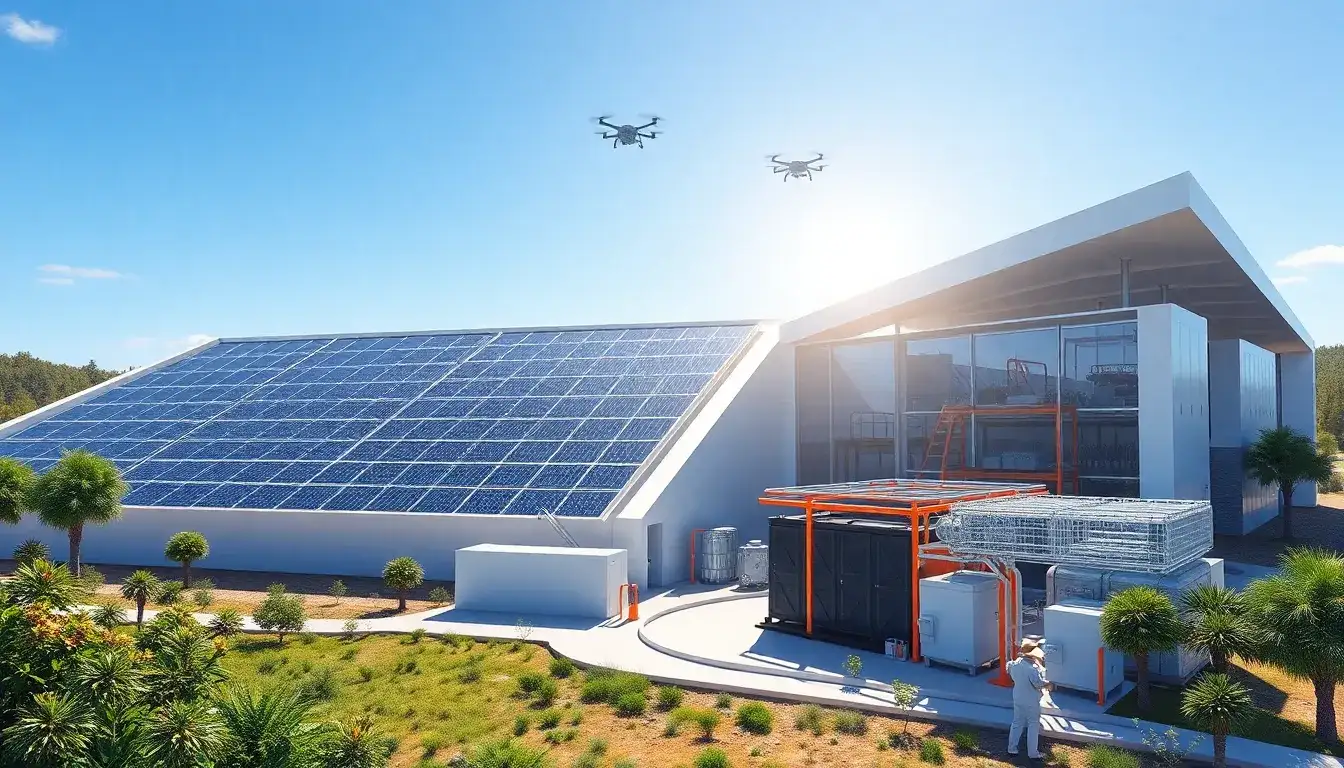
Bifacial solar panels can potentially influence the design of future energy storage facilities in several ways, leveraging their unique capabilities:
Advantages and Design Considerations
Increased Energy Output
- Higher Energy Yield: Bifacial panels can generate 10-30% more energy than traditional monofacial panels, depending on installation conditions. This increased energy output can lead to more efficient charging of energy storage systems, potentially reducing the size or number of storage units needed.
- Efficient Use of Space: In space-constrained sites, such as urban rooftops, bifacial panels can produce more energy per unit area, allowing for more efficient use of available space for solar and storage systems.
Enhanced Durability and Longevity
- Durable Design: The dual-glass construction of bifacial panels enhances durability against environmental stressors, potentially leading to longer lifetimes and reduced maintenance costs for integrated solar-storage facilities.
- Vertical Installation: The option to install bifacial panels vertically reduces accumulation of debris like snow, which can obstruct energy generation. This could simplify maintenance routines for storage facilities integrated with these panels.
Design Innovations
- Integrated Systems: Future energy storage facilities might incorporate bifacial solar panels in innovative ways, such as integrating thermal energy storage solutions like PV/PCM (Photovoltaic/Phase Change Material) systems. These could improve overall system efficiency by combining energy generation with thermal storage capabilities.
- Optimized Mounting Systems: Designing mounting systems for bifacial panels to minimize rear shading could become a standard practice in energy storage installations. This could involve narrower support rails and strategically placed vertical supports to optimize energy capture.
Financial and Technical Implications
- Financial Efficiency: Improved energy yields can lead to better levelized costs of energy (LCOE), making bifacial solar panels an attractive option for new constructions. This financial advantage could facilitate the adoption of more sophisticated energy storage technologies.
- Technical Synergies: The enhanced performance of bifacial panels, particularly in high albedo environments, could prompt further innovations in energy storage solutions tailored to these conditions, such as integrating solar with battery storage to optimize energy supply in snowy regions.
Overall, the integration of bifacial solar panels into energy storage facilities can drive more efficient, cost-effective, and technologically advanced systems that maximize renewable energy production.
Original article by NenPower, If reposted, please credit the source: https://nenpower.com/blog/how-might-bifacial-solar-panels-influence-the-design-of-future-energy-storage-facilities/

