

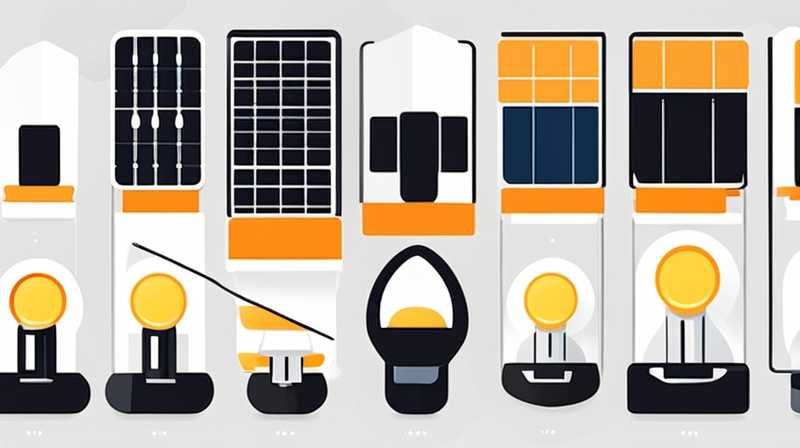
There are six primary types of solar lights, each designed for specific purposes: 1. Solar pathway lights, 2. Solar spotlights, 3. Solar flood lights, 4. Solar string lights, 5. Solar wall lights, 6. Solar garden lights. Each type contains unique features tailored to various outdoor needs, allowing users to choose according to their requirements. Among these types, the solar pathway lights can be elaborated on in detail. These fixtures help illuminate walkways or gardens and are designed to withstand diverse weather conditions. They come equipped with motion sensors and energy-efficient LED bulbs, providing convenience and safety. Their installation typically requires no professional assistance, making them accessible for most homeowners seeking an eco-friendly lighting solution.
TYPES OF SOLAR LIGHTS
1. SOLAR PATHWAY LIGHTS
Solar pathway lights are an essential addition to outdoor spaces, providing illumination for walkways and gardens. These lights, usually staked into the ground, serve a dual purpose: enhancing the aesthetic appeal of landscapes and ensuring safety during nighttime. Homeowners often choose solar pathway lights for their energy efficiency, as they rely on solar energy, reducing electricity costs significantly.
The functionality of solar pathway lights often includes features such as ambient glow and automatic on/off sensors. During the day, these fixtures absorb sunlight through built-in solar panels, storing it in rechargeable batteries. When darkness falls, the lights automatically illuminate, guiding foot traffic and highlighting landscaping elements. This feature not only enhances visibility but also adds an element of security, deterring potential intruders. Furthermore, the versatility of solar pathway lights allows homeowners to select from a variety of styles, including modern, traditional, or whimsical designs, catering to diverse aesthetic preferences.
2. SOLAR SPOTLIGHTS
Highlighting architectural features, trees, and other focal points in the yard, solar spotlights are powerful lighting options. Their adjustable beams allow users to direct light precisely where it is needed most. This feature transforms ordinary outdoor spaces into captivating environments, making solar spotlights ideal for homeowners who take pride in their landscaping.
Equipped with advanced LED technology, solar spotlights provide bright illumination while maintaining energy efficiency. The design of these lights often includes motion sensors, which enhance their functionality by turning on automatically when motion is detected. This aspect not only conserves battery life but also provides improved security by illuminating areas that may otherwise remain in darkness. The easy installation process typically does not require extensive equipment or professional help, making these lights an accessible option for anyone looking to enhance their outdoor environment.
3. SOLAR FLOOD LIGHTS
Solar flood lights offer versatility and robust lighting capabilities, suitable for both security and decorative purposes. These lights are characterized by their ability to emit a wide spread of light, making them ideal for illuminating large areas. Commonly found in backyards, driveways, and commercial properties, solar flood lights are an essential component for maintaining safety and visibility during nighttime.
The installation of solar flood lights usually occurs at elevated positions to maximize coverage. These fixtures come with adjustable settings, allowing users to customize brightness levels according to their specific needs. Advances in solar technology have led to the creation of flood lights equipped with high-capacity batteries, enabling them to provide illumination for extended periods even during cloudy conditions. Additionally, many models now include remote control options, allowing users to adjust settings from afar, enhancing convenience and functionality.
4. SOLAR STRING LIGHTS
A popular choice for parties, celebrations, or creating a cozy atmosphere, solar string lights feature a series of small bulbs strung together. These lights can be draped across outdoor seating areas, patios, or gardens, adding warmth and charm to various events. Their versatility makes them well-suited for both permanent installations and temporary decorations, adapting to the user’s needs and preferences.
Solar string lights operate using solar panels integrated into the design, absorbing sunlight during the day to power the bulbs at night. Many models offer various light modes, including steady, flashing, or twinkling, providing different ambiance options. The simplicity of their installation, requiring only a suitable hanging location without the need for wiring, makes them a favorite among homeowners. Pairing aesthetic appeal with functionality, solar string lights help create inviting environments for gatherings and family get-togethers.
5. SOLAR WALL LIGHTS
Ideal for entrances, garages, or patios, solar wall lights provide integrated lighting solutions for exterior walls. These fixtures enhance safety by illuminating entry points while adding decorative elements to the facade of a home. Available in a variety of designs, solar wall lights cater to different architectural styles, ensuring that homeowners can find the perfect match for their specific needs.
Most solar wall lights are designed with built-in solar panels that collect energy during the day. They become functional at night, casting a soft glow over the surrounding area and facilitating ease of access for occupants returning home. Additionally, many solar wall lights come equipped with motion sensors, enhancing their security aspects by turning on automatically when detecting movement. The ability to illuminate essential locations without extensive wiring or electricity needs makes solar wall lights a practical and appealing choice.
6. SOLAR GARDEN LIGHTS
Emphasizing aesthetics, solar garden lights play a vital role in accentuating garden features such as flowers, shrubs, and landscaping elements. These lights come in various styles, including decorative fixtures that resemble lanterns or sculptures. Their primary function is to illuminate garden pathways, ensuring safety, while simultaneously enhancing the beauty of outdoor spaces.
Solar garden lights utilize energy-efficient technologies, often featuring premium LED bulbs that emit vibrant light. Similar to other solar lighting solutions, these fixtures store absorbed energy during daylight hours, illuminating as the sun sets. Their diverse designs allow for creative customization of outdoor spaces, letting homeowners express their personal style while maintaining functional lighting. The growing popularity of solar garden lights reflects an increasing awareness of sustainability and energy conservation in today’s gardening practices.
FREQUENTLY ASKED QUESTIONS
HOW DO SOLAR LIGHTS WORK?
The operation of solar lights revolves around the conversion of sunlight into electricity, which then powers the light source. Each solar light is outfitted with a solar panel, typically composed of photovoltaic cells that capture sunlight and convert it into electric current. During daylight hours, these panels absorb solar energy and utilize it to recharge batteries stored within the fixture. This stored energy is what powers the light source during the evening.
Moreover, most solar lights are equipped with light sensors that detect changes in ambient light levels. As the sun sets and darkness falls, these sensors signal the light to turn on automatically. Depending on the design, solar lights may also include features such as motion detection, allowing them to illuminate bright bursts when movement is detected. This functionality enhances both aesthetics and security for outdoor spaces, making solar lights a practical choice for homeowners.
WHAT ARE THE BENEFITS OF USING SOLAR LIGHTS?
The utilization of solar lights offers numerous advantages that contribute to their growing popularity among homeowners and businesses alike. First and foremost, solar lights are an eco-friendly alternative to conventional electric lighting, harnessing renewable energy from the sun. This not only reduces reliance on fossil fuels but also decreases electricity bills, contributing to long-term savings over time.
Another significant benefit lies in the simplicity of installation. Unlike traditional electrical systems requiring extensive wiring, solar lights typically involve minimal setup, often only requiring staking into the ground or mounting at desired locations. Additionally, solar lights require little to no maintenance over their operational lifespan. With advancements in solar technology, many models now feature durable designs that withstand various weather conditions, providing reliable performance throughout the year. These benefits reinforce the growing transition towards renewable energy sources in residential and commercial lighting solutions.
CAN SOLAR LIGHTS WORK IN CLOUDY CONDITIONS?
Solar lights do function effectively in cloudy or overcast conditions, but their performance may not reach the levels achieved during bright, sunny days. During periods of limited sunlight, solar panels still capture diffuse light, enabling them to recharge batteries, albeit at a slower rate. Consequently, users can expect solar lights to operate adequately, even when sunshine is intermittent.
However, the duration and intensity of illumination may be reduced on days when extensive cloud coverage exists. To enhance the performance of solar lights in less-than-ideal weather conditions, it is recommended that users consider fixtures with higher battery capacity and efficient solar panels. These advanced models retain energy more effectively, allowing for prolonged operation even when sunlight is abated. Thus, while solar lights can continue functioning under cloudy circumstances, selecting superior models designed for such conditions can ultimately improve their reliability and performance.
FINAL THOUGHTS
The variety of solar lights available on the market caters to a wide range of outdoor lighting needs. By understanding the unique characteristics of each type—solar pathway lights, solar spotlights, solar flood lights, solar string lights, solar wall lights, and solar garden lights—homeowners can make informed decisions to enhance their outdoor environments. The benefits of solar lighting extend beyond mere illumination, promoting sustainability, energy savings, and convenience.
Choosing solar lighting options is not just a retrofit; it’s a commitment to environmentally friendly practices that contribute positively to the planet’s health. By utilizing renewable energy from the sun, solar lights reduce reliance on conventional electricity sources and minimize overall carbon footprints. Additionally, their versatility enables users to create personalized lighting designs that reflect individual styles while ensuring safety and security during nighttime hours.
In a world increasingly focused on sustainability and energy efficiency, solar lights stand as a beacon of innovation in outdoor lighting technology. As research and development continue to advance, it is likely that solar lighting will become even more effective and accessible. Investing in solar lights not only enhances the beauty and functionality of outdoor spaces; it also aligns with broader efforts toward achieving a sustainable future. Overall, embracing solar lighting can transform outdoor areas into inviting, well-lit environments, providing enjoyment and safety for years to come.
Original article by NenPower, If reposted, please credit the source: https://nenpower.com/blog/how-many-types-of-solar-lights-are-there/

