

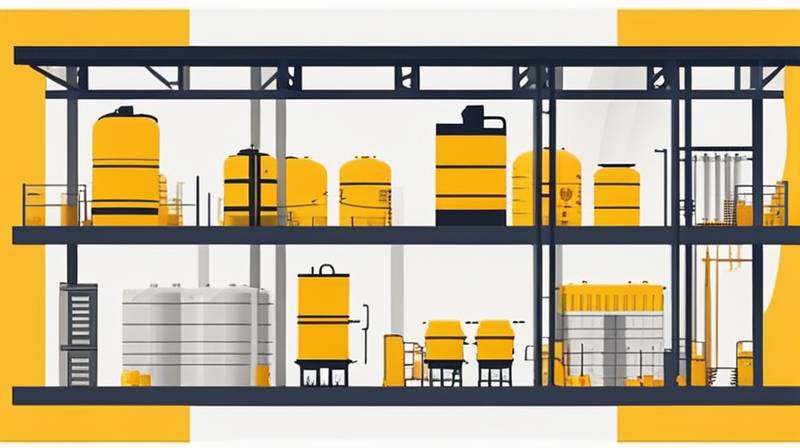
The yellow storage tank can store approximately 10,000 tons of liquid, varying based on specific material and design aspects. Additionally, engineering assessments must confirm the tank’s integrity, ensuring safety and compliance with regulatory standards. Factors influencing storage capacity include physical dimensions, material composition, and the substance contained within.
UNDERSTANDING STORAGE TANKS
In the realm of industrial storage solutions, the yellow storage tank stands out due to its significant capacity, various applications, and structural nuances. The tank’s ability to store a whopping 10,000 tons reflects not only its utility but also the engineering precision involved in its construction. The initial consideration when evaluating storage tanks is physical size, which plays a crucial role in determining the overall storage capacity. The larger the tank, the greater quantity of liquid it can ultimately accommodate. However, it’s vital to note that storage capacity does not solely depend on size but also involves a variety of technical and operational specifications.
Another pivotal aspect about these tanks is that they are often constructed using materials engineered specifically for durability and efficient storage. The structural integrity of the yellow storage tank is paramount; thus, factors such as wall thickness, the type of metal or composite used, and the tank’s shape must align with industry standards. This ensures that the tank can securely contain substances without risk of leakage, ensuring both safety and environmental protection.
FACTORS AFFECTING STORAGE CAPACITY
MATERIAL COMPOSITION
When discussing storage tanks, material composition is a key determinant influencing their capacity. These tanks can be constructed from various materials, each with unique properties that affect both storage capability and environmental compliance. For instance, steel, known for its strength, is a preferred material for constructing large storage tanks. Steel tanks can effectively contain high volumes of liquids critical in industrial processes.
However, versatility in materials also introduces options such as fiberglass, which is resistant to corrosion and often utilized for chemical storage. The choice of material significantly affects the tank’s overall weight capacity, impacting how much can be stored without risking structural failure. Each material’s characteristics also dictate operational protocols – for example, fiberglass tanks may require different handling methods compared to metal counterparts. Thus, understanding materials helps clarify how many tons a yellow storage tank can feasibly accommodate and under what conditions.
TANK DIMENSIONS AND CONFIGURATION
Moreover, the dimensions and configuration of a yellow storage tank are instrumental in discerning its capacity for liquid storage. Parameters such as the tank’s radius and height are fundamental calculations in determining volume. Typically, engineers use the formula for the volume of a cylinder ( V = πr^2h ) to calculate capacity, where ( r ) represents the radius and ( h ) designates height. Modifications in either dimension can drastically alter total liquid capacity.
Moreover, the tank’s configuration can vary significantly based on its intended use. For example, whether utilizing a vertical or horizontal arrangement impacts how contents are stored and accessed. Each design influences flow rates, potential evaporation losses, and maintenance access. Therefore, a meticulous understanding of tank dimensions and layout is essential for optimizing storage capabilities and operational efficiency.
REGULATORY COMPLIANCE AND SAFETY STANDARDS
ENVIRONMENTAL REGULATIONS
Regulations governing tanks’ storage capacities stem from stringent environmental regulations designed to prevent substance spillages and potential hazards. Tanks widely utilized in petroleum or chemical industries may be subjected to additional scrutiny since they can harbor toxic materials that pose significant environmental risks. Regulatory bodies often mandate that tank systems be equipped with secondary containment features designed to capture potential leakages.
Ensuring compliance with these regulations is a substantial obligation for industries engaged in large-scale storage. Tanks must undergo periodic inspections and risk assessments to confirm safe handling procedures are in place. Non-compliance can lead to severe financial consequences, potential shut-downs, and disproportionate environmental damage. Therefore, understanding and adhering to these regulations is essential for maximizing operational efficiency while safeguarding environmental integrity.
STRUCTURAL INTEGRITY
In addition to complying with environmental regulations, maintaining structural integrity is vital to ensure safe tank operation. The weight of the stored substance can exert significant pressure on the tank’s walls, necessitating meticulous engineering familiar with the expected loads. Engineers often evaluate the tank’s design against industry standards to address factors like reinforcement, corrosion resistance, and installation methods to withstand such pressures.
Common practice involves conducting regular inspections and stress tests on storage tanks. Inspections may include evaluating weld integrity, assessing wall thickness, and verifying that safety equipment functions correctly. These assessments are vital to extend a tank’s operational lifespan and prevent catastrophic failures, thus securing its reliability. Proper maintenance coupled with rigorous inspections guarantees a system that can sustain the substantial weight of 10,000 tons of stored liquid while prioritizing safety.
TECHNOLOGICAL INNOVATIONS IN STORAGE TANKS
ADVANCED MONITORING SYSTEMS
The advent of advanced monitoring systems has revolutionized how industries manage storage tanks. Innovations enable continuous real-time data collection concerning fill levels, temperature variations, and potential leaks. Such technology aids operators in proactively addressing concerns before they escalate.
By implementing Internet of Things (IoT) sensors, operators gain actionable insights into the storage environment. These sensors relay critical information instantaneously, allowing for informed decision-making and timely interventions. Technology-integrated monitoring considerably reduces manual inspections and augments operational efficiency, particularly for massive tanks holding significant volumes of liquid.
SMART TANKS
Emerging as an important trend, smart tanks incorporate automation and artificial intelligence to provide optimal storage solutions. Smart tanks facilitate remote monitoring and control, minimizing human intervention while enhancing safety. Leveraging AI algorithms enables predictive maintenance, ensuring any required repairs or adjustments occur before safety concerns arise.
Also, integrating communication technology enhances operational transparency. Operators can access comprehensive data directly from their devices, streamlining communication channels. As industries adapt to the fourth industrial revolution, the role of technology in evolving traditional practices remains indispensable for optimizing tank storage and enhancing safety protocols.
BEST PRACTICES FOR TANK MANAGEMENT
CONSISTENT MAINTENANCE REGIMES
To achieve operational excellence, implementing consistent maintenance regimes within tank management protocols is crucial. Proper maintenance not only extends the lifespan of the storage tank but also significantly mitigates the risks of leaks or structural failures. Routine inspections, coupled with systematic cleaning and upkeep, ensure facilities operate within prescribed safety standards.
These regimes may include meticulous assessments of the tank’s exterior and interior, evaluating protective coatings, and addressing corrosion at early stages. Establishing a robust maintenance routine aligns with best practices, facilitating a sustainable operational framework that efficiently addresses the challenges associated with extensive liquid storage.
EMPLOYEE TRAINING AND AWARENESS
In the quest for optimal storage tank management, emphasizing employee training and awareness cannot be overstated. Personnel must possess adequate knowledge about tank operational principles, safety practices, and emergency response protocols. Regular training sessions that emphasize handling procedures and hazard recognition empower employees to contribute actively to workplace safety.
Ultimately, a knowledgeable workforce can operate within defined safety limits, effectively minimizing accidents and ensuring compliance with operational standards. Cultivating a culture of safety awareness fosters an environment where employees understand their roles and responsibilities regarding just how much liquid the yellow storage tank can hold.
FREQUENTLY ASKED QUESTIONS
WHAT ARE THE ADVANTAGES OF USING YELLOW STORAGE TANKS?
Yellow storage tanks are celebrated for their robust construction and significant capacities, often reaching up to 10,000 tons. Their vibrant color also plays a role in safety protocols, making them easily identifiable on industrial sites. The tanks often use advanced materials designed for longevity and minimal environmental impact. Additionally, their capacity fosters greater operational efficiency, reducing the need for frequent refills and thereby allowing companies to focus on core tasks.
Furthermore, the construction typically adheres to stringent industry regulations, minimizing environmental contamination risk. The integration of monitoring technology also enhances operational flow, ensuring accurate data on liquid levels and tank integrity. Collectively, these advantages position yellow storage tanks as a preferred choice for industries requiring extensive liquid storage capabilities.
HOW CAN REGULATORY COMPLIANCE BE ENSURED IN STORAGE TANK OPERATIONS?
Regulatory compliance within storage tank operations necessitates a multifaceted approach, emphasizing several key components. Initiating a comprehensive risk assessment becomes essential, followed by a commitment to adhering to pertinent federal and state regulations governing storage tanks. This process generally includes equipment specifications for the construction and installation of tanks, detailing material quality standards, and required safety features.
Additionally, regular inspections play a role in verifying compliance status. These inspections might involve examining tanks for damage, leak detection testing, and ensuring that containment systems function effectively. Maintaining accurate records of inspections, maintenance, and any operational modifications creates an audit trail. This supports accountability and enhances regulatory adherence while demonstrating a commitment to environmental stewardship, ultimately fostering trust with stakeholders and regulatory agencies.
WHAT SHOULD BE CONSIDERED WHEN SELECTING A STORAGE TANK?
When selecting a storage tank, various factors must be evaluated to ensure optimal performance and safety. Size is a primary factor, where calculations must align with operational needs and projected storage volumes, recognizing that yellow tanks can hold up to 10,000 tons. Additionally, consideration of the material composition is vital; choosing corrosion-resistant materials or durable composites guarantees longevity and reduces failure risks.
Moreover, evaluating local regulations becomes imperative as compliance with operational standards often varies by jurisdiction. It is also crucial to assess environmental factors influencing tank management, such as proximity to sensitive areas. This ensures that chosen tanks meet not only functional requirements but also support sustainable and responsible operational practices.
The storage capacity of a yellow tank, approximately 10,000 tons, represents more than just a number. It embodies a complex interplay between engineering, various material choices, and environmental compliance which dictates operations across numerous industries. Factors influencing this capacity include design, regulatory standards, and technological enhancements that ensure a safe and efficient storage process. Ultimately, diligent planning ensures that these tanks serve their vital functions while safeguarding both personnel and the environment effectively.
Original article by NenPower, If reposted, please credit the source: https://nenpower.com/blog/how-many-tons-can-the-yellow-storage-tank-store/

