

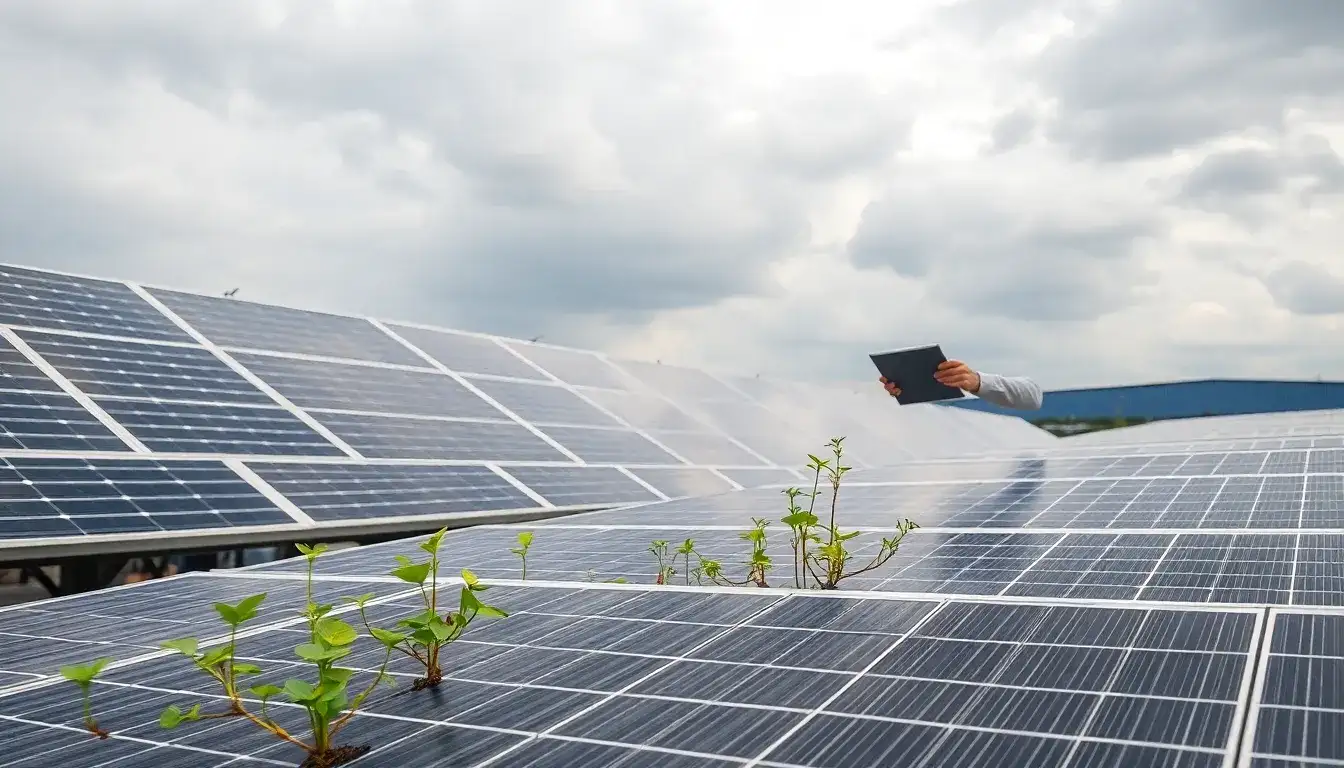
In the face of significant changes in the photovoltaic (PV) industry, LONGi Green Energy is strategizing to effectively leverage its “BC” technology. As the PV sector enters a cyclical downturn in 2024, LONGi, like many others, is experiencing losses. However, Chairman Zhong Baoshen believes that major crises can act as catalysts for transformation. Early in 2023, LONGi issued a warning about excess PV production capacity and outlined a series of countermeasures. By adjusting its production expansion pace, enhancing new technology research and development, and initiating a “streamlined management” approach, the company successfully mitigated the price impacts of overcapacity. By the first quarter of 2025, LONGi reported a significant reduction in losses. Founder Li Zhenguo noted that 2025 would be the year of ramping up BC production capacity, positioning LONGi to emerge ahead in the industry recovery.
In 2024, the PV sector faced substantial challenges, with upstream silicon material prices collapsing, midstream silicon wafer and cell costs falling below production levels, and downstream module markets reaching saturation. This resulted in persistent price declines across the entire supply chain, exacerbating asset impairment crises due to overcapacity. Furthermore, an increase in patent litigation among PV companies indicated a growing competitive atmosphere. Many companies reported significant losses, and compared to the previous year, LONGi’s revenue fell by 36.23%, transitioning from profit to loss.
“This has been the most challenging year since our IPO,” stated Chairman Zhong Baoshen in a letter to shareholders. However, he emphasized that “major crises are the best catalysts for transformation.” In 2024, based on thorough reflection and analysis, the company decisively initiated deep transformations in product offerings, cost structures, and production investments. While the HPBC 2.0 production line achieved full operational status with a 97% battery yield and scaled shipments to five major global markets, the “streamlined management” approach optimized the organizational structure, reducing costs and increasing efficiency while creating space for new technology development and capacity expansion.
These adjustments have already yielded positive results. In the first quarter of 2025, LONGi reported a revenue of 13.652 billion yuan, with significantly reduced losses. As signs of an industry cycle turnaround began to emerge, LONGi’s deep technological foundation and proactive strategic positioning suggest it could be among the first to recover from the industry’s downturn.
While the entire industry is experiencing widespread losses, LONGi’s foresight in planning has set it apart. In early 2023, when the PV industry was thriving due to policy incentives and technological innovations, LONGi raised alarms about overproduction capacity, prompting widespread debate. Less than a year later, a market downturn ensued, leading to a price war and collective losses across the PV sector. Recognizing this challenge early, LONGi took proactive measures, including adjusting its production expansion pace to counter market shocks.
LONGi’s initial strategy of scaling back capacity expansion was initially met with skepticism. However, as the 2024 TOPCon capacity launches led to market saturation and profit margins were squeezed, some competitors were forced to delay or halt their TOPCon capacity projects, highlighting the value of LONGi’s foresighted adjustments. By preemptively managing production capacity, LONGi successfully avoided the price impacts associated with overcapacity and preserved strategic flexibility for future growth.
Additionally, LONGi has intensified its R&D efforts to establish a competitive advantage in BC technology. In September 2023, LONGi committed to developing BC solar cells as a key product line. Through ongoing investments in R&D and industrialization, it has built strong barriers in the BC technology domain. Notably, in October 2024, LONGi’s HPBC 2.0 module achieved a record efficiency of 25.4%, breaking a 36-year monopoly held by overseas brands on the efficiency of crystalline silicon modules. By the end of 2024, LONGi had secured 3,342 authorized patents, including over 400 related to BC cell technology.
LONGi’s HPBC 2.0 production line is fully operational with a battery yield of 97%. Thanks to its high-efficiency products, strong global distribution channels, and brand reputation, the HPBC 2.0 modules have secured significant orders in markets across China, Europe, the Middle East and Africa, the Asia-Pacific region, and Latin America, with total BC product shipments exceeding 17GW in 2024. By the end of 2025, LONGi anticipates its HPBC 2.0 battery and module production capacity will reach 50GW each.
As a further indication of market trends, several mainstream module manufacturers began releasing their own BC module products starting in 2024. On the management front, LONGi implemented a “streamlined management” initiative, optimizing its organizational structure to eliminate inefficiencies and reduce internal friction. By embracing digital transformation, LONGi reduced labor requirements on the production side while enhancing operational efficiency. In 2024, operating costs were 76.44 billion yuan, a 27.54% decrease year-on-year, with management expenses dropping to 3.43 billion yuan from 4.915 billion yuan in 2023. This reduction in operational costs has allowed for greater investment in new technologies and expansion, enabling quicker strategic adjustments amid industry challenges.
As LONGi navigates the serious supply-demand imbalance in the PV industry, the company’s early risk assessment and proactive adjustments have begun to show signs of stabilization. Despite the harsh market conditions that caught many off guard, including LONGi, Chairman Zhong Baoshen acknowledged that while the management team anticipated market declines in 2023, organizational inertia delayed necessary adjustments to capital expenditures and budgets until the second quarter of 2024.
However, with its strategic foresight, LONGi is now signaling a potential recovery. Financially, LONGi maintains a debt ratio below 60%, compared to the 70%-80% range typical of many competitors. As of 2024, LONGi’s cash reserves totaled 53.157 billion yuan, with cash and cash equivalents at 50.948 billion yuan, ensuring robust funding for ongoing R&D and market expansion efforts. LONGi has received high ratings for financing capability from PV ModuleTech for several consecutive years and continues to lead the industry in financial health metrics.
On the product and market front, LONGi achieved silicon wafer shipments of 108.46GW (with 46.55GW in external sales) and battery module shipments of 82.32GW in 2024. Its innovative products, including the Tai Rui silicon wafer and HPBC 2.0 modules, have been widely recognized for their value. LONGi leads the market share in centralized markets in China and Europe, while emerging markets like the Middle East and Africa saw a 76% increase in module sales, and sales in Pakistan surged by 136% year-on-year.
Additionally, LONGi is exploring new business ventures, including the “He Mei Village” comprehensive development model in Shaanxi, successfully executing 20 demonstration projects, and delivering its first large-scale hydrogen energy project to the overseas market, achieving significant orders in Europe. In 2025, LONGi plans to optimize its production structure, focusing resources on upgrading and replacing HPBC 2.0 advanced production lines, targeting a battery yield of approximately 97%. With cost reduction strategies underway, LONGi expects significant decreases in HPBC 2.0 production costs. By the end of 2025, LONGi aims to achieve silicon wafer shipments of 120GW and module shipments of 80-90GW, with BC module shipments expected to account for over a quarter of total output.
Li Zhenguo indicated that BC technology could reach a maturity level of approximately 80%, with room for further optimization. However, major bottlenecks have been resolved, allowing for large-scale promotion within the industry. He emphasized that 2025 would mark the year of ramping up BC production capacity, while the true impact of BC products would be realized in 2026, with increasing effectiveness over time.
Despite ongoing uncertainties in the industry and an incomplete market reshuffling process, LONGi’s strong technological foundation and ample financial reserves position it well to be among the first to recover from the industry’s downturn. In the first quarter of 2025, the company recorded revenues of 13.652 billion yuan, with significantly narrowed losses, signaling a potential turning point for the business.
Original article by NenPower, If reposted, please credit the source: https://nenpower.com/blog/how-longi-green-energy-is-navigating-the-solar-industry-downturn-with-strategic-innovations/

