

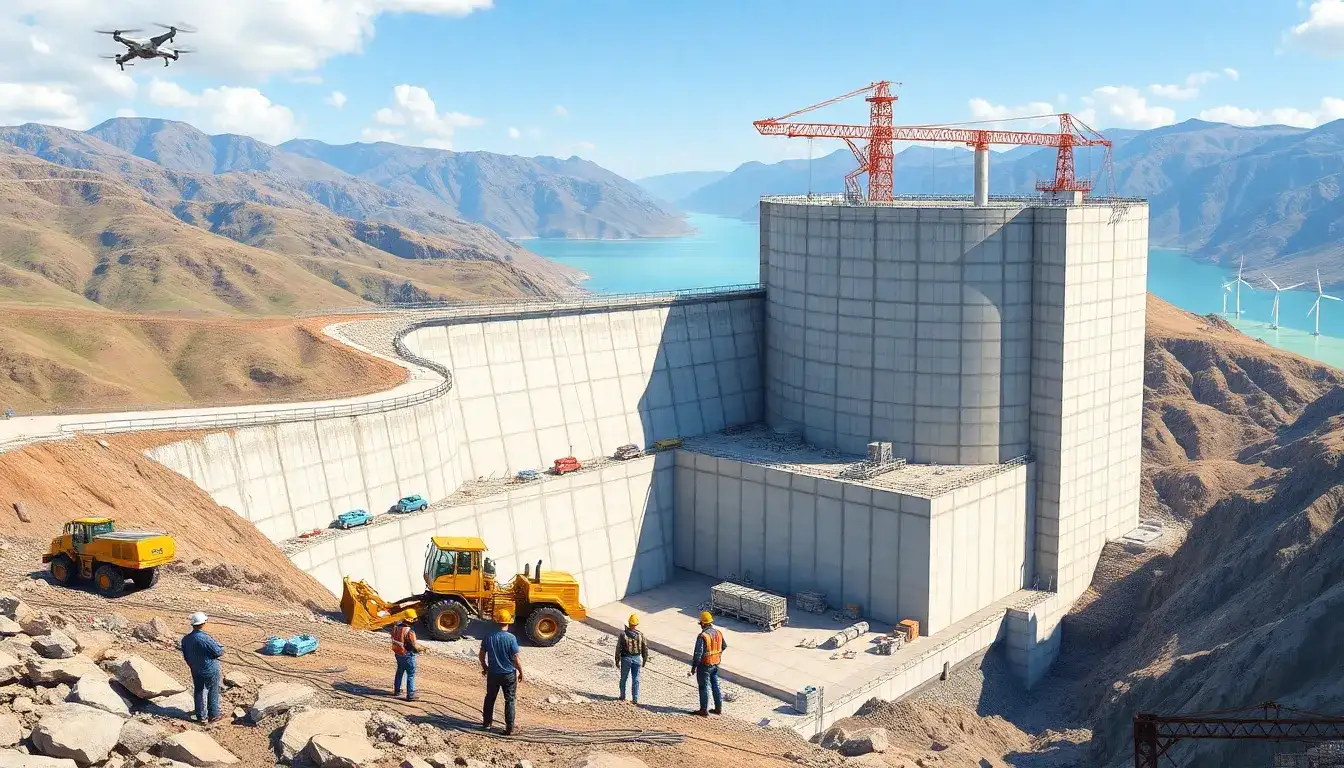
The typical construction duration for a pumped hydro storage (PHS) plant is about 4 to 5 years. This timeframe applies to large-scale projects designed to leverage economies of scale and provide substantial energy storage capacity.
However, the overall development timeline for a PHS project can be significantly longer, especially in locations like the United States, where regulatory approval is required. For example, obtaining a Federal Energy Regulatory Commission (FERC) license can take a minimum of 5 years, and often much longer depending on environmental and regulatory complexities. There is an expedited 2-year licensing process option under certain conditions, but this requires a well-developed project proposal and sufficient existing data.
A real-world example is the Salt River Project’s planned pumped storage facility, which aims to begin construction in 2027 with an expected online date in 2033, reflecting about 6 years for construction after several years of feasibility and permitting processes. This matches the typical 4 to 5 year construction estimate once regulatory and planning phases are completed.
Summary:
- Construction time: Approximately 4 to 5 years for the physical build of large PHS plants.
- Regulatory licensing: At least 5 years in the U.S. (FERC), possibly longer; expedited options exist but are conditional.
- Total development timeline: Can exceed 10 years when including planning, permitting, and construction phases, as evidenced by projects targeting operation around 6 years after construction start.
This highlights that while the actual building phase is a few years, the overall project timeline including regulatory and environmental approvals is considerably longer.
Original article by NenPower, If reposted, please credit the source: https://nenpower.com/blog/how-long-does-it-typically-take-to-build-a-pumped-hydro-storage-plant/

