

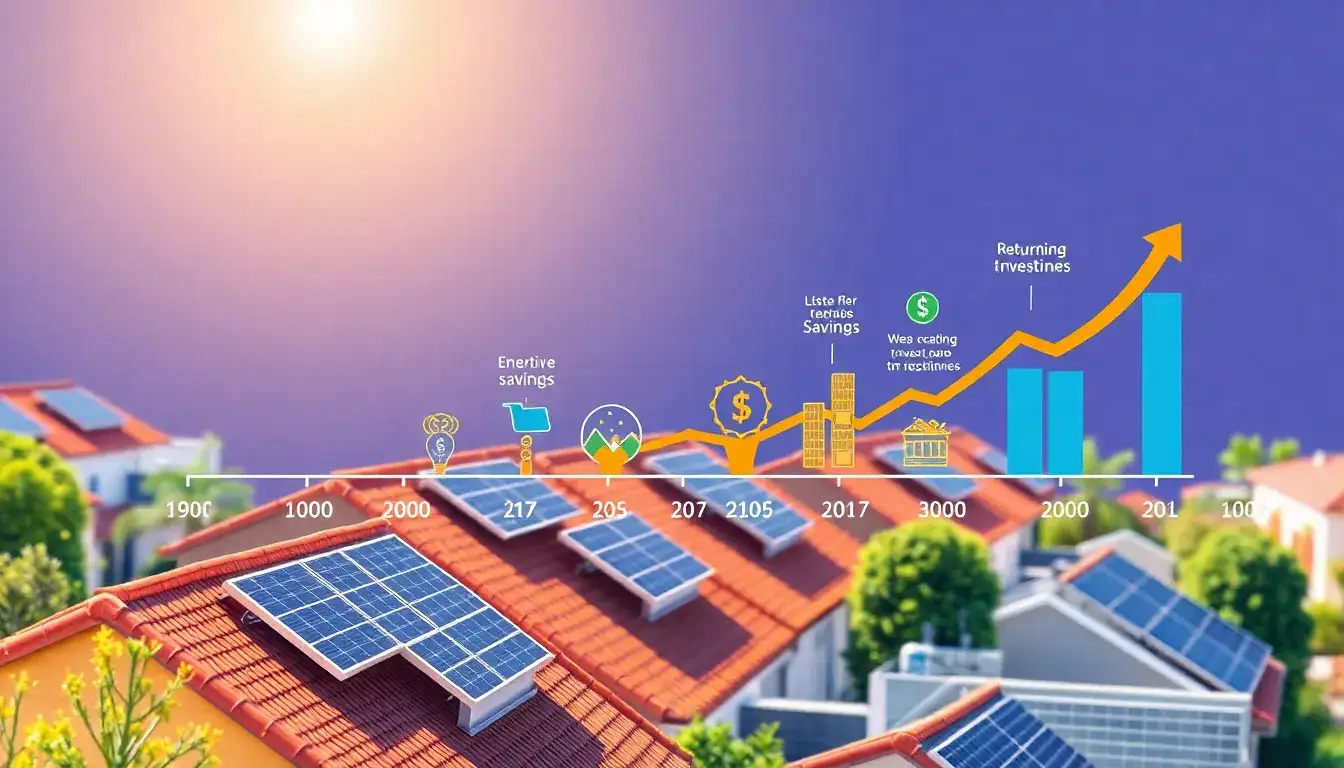
The typical time it takes for home solar panels in the United States to show a return on investment (ROI)—meaning the point where the savings on electricity bills equal the initial cost of installation—ranges between about 7 to 12 years. This payback period varies significantly based on several factors including system cost, local electricity rates, available incentives, and electricity usage.
Typical Solar Panel Payback Periods
- 7 to 10 years: This is a common range observed nationally. Many sources cite that home solar panel systems usually pay for themselves within 7 to 10 years by offsetting utility electricity costs.
- 8 to 12 years: Some reports suggest a slightly longer average payback period, up to 12 years, depending on variables such as system size and local energy costs.
- As little as 5 years: In very favorable conditions—such as high electricity costs, good solar incentives, and efficient system design—some homeowners can break even in as little as 5 years.
Factors Affecting Payback Period
- Initial Installation Cost: The size and complexity of the solar system and whether any roof or electrical upgrades are needed significantly affect upfront costs.
- Electricity Rates: Areas with higher electricity prices see faster returns because solar offsets more expensive power.
- Solar Incentives: The federal solar tax credit (Investment Tax Credit or ITC) reduces installation cost by 30% and substantially shortens payback time. Additional state and local incentives, plus net metering policies, can also improve ROI.
- Energy Usage: Homes with higher electricity consumption need larger systems but also realize larger savings, influencing the payback time.
- System Performance and Lifespan: Solar panels generally last 25 years or more, with warranties commonly covering 25 years, allowing for decades of savings after the payback period.
Calculating Payback Period Example
- Suppose a system costs $28,000, and the homeowner qualifies for the 30% federal tax credit, reducing net cost to $19,600.
- If the home’s annual electricity bill is $1,800, then dividing $19,600 by $1,800 yields about 10.9 years to break even.
Summary
| Factor | Typical Range / Value |
|---|---|
| Solar Payback Period | 7 to 12 years (commonly 7–10) |
| Federal Tax Credit (ITC) | 30% of installation cost |
| Solar Panel Lifespan | 25 years or more |
| ROI After Payback | Savings continue for 10+ years |
Overall, investing in solar panels is usually financially beneficial over the long term. Homeowners generally see their initial expenditure paid back within a decade, followed by many years of reduced or zero electricity costs, yielding positive returns on their investment.
Original article by NenPower, If reposted, please credit the source: https://nenpower.com/blog/how-long-does-it-take-to-see-a-return-on-investment-with-solar-panels/

