

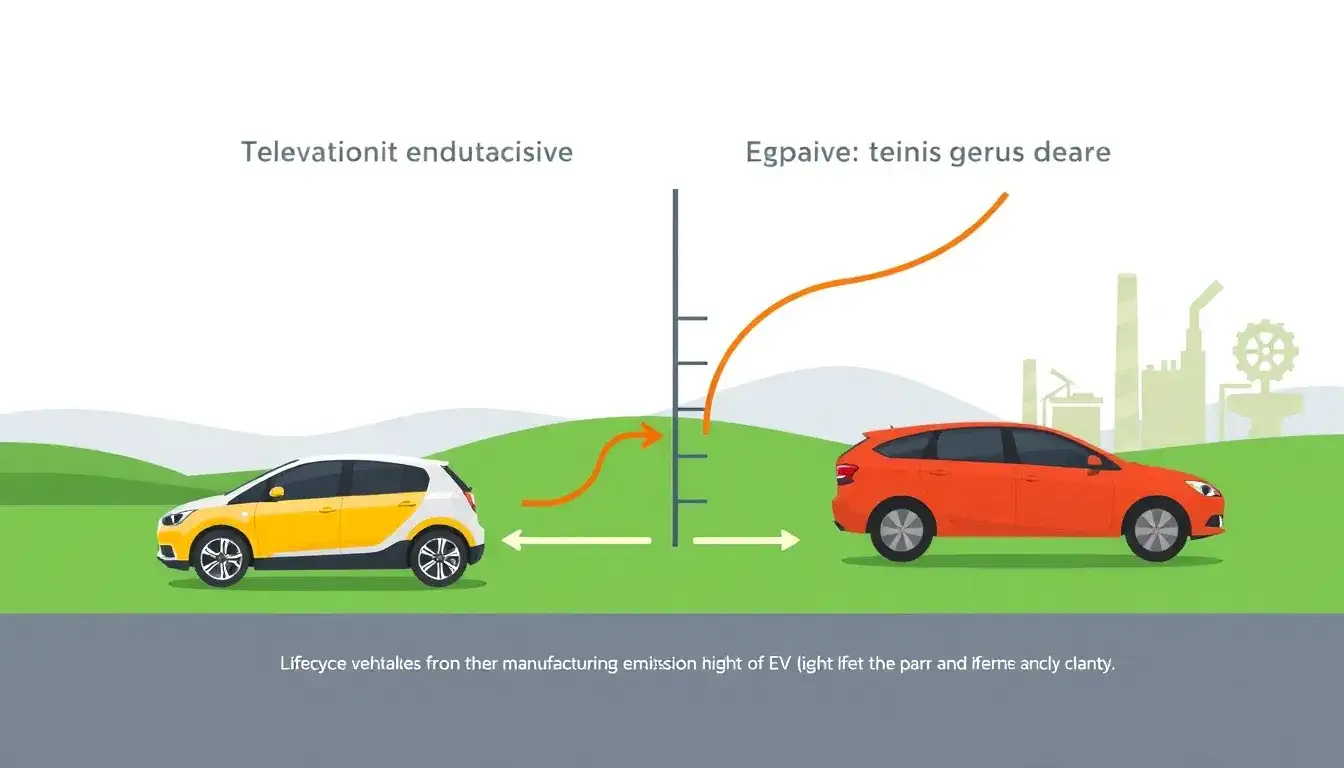
The time it takes for an Electric Vehicle (EV) to offset its higher manufacturing emissions compared to a gasoline-powered Internal Combustion Engine (ICE) vehicle varies. Studies suggest that this payback period can range from about one to two years of typical driving, depending on factors such as where the EV is charged (and thus the carbon intensity of the electricity grid) and where its batteries are produced. As the global electricity grid and manufacturing processes become more environmentally friendly, this payback time is expected to decrease. Generally, EVs must be driven for several years to fully offset their initial higher emissions, with some data indicating that to break even, they need to be used for at least 8 years to offset about 0.5 tonnes of initial emissions annually. However, EVs contribute significantly fewer emissions overall than ICE vehicles over their lifetimes.
Original article by NenPower, If reposted, please credit the source: https://nenpower.com/blog/how-long-does-it-take-for-an-ev-to-offset-its-higher-manufacturing-emissions/

