

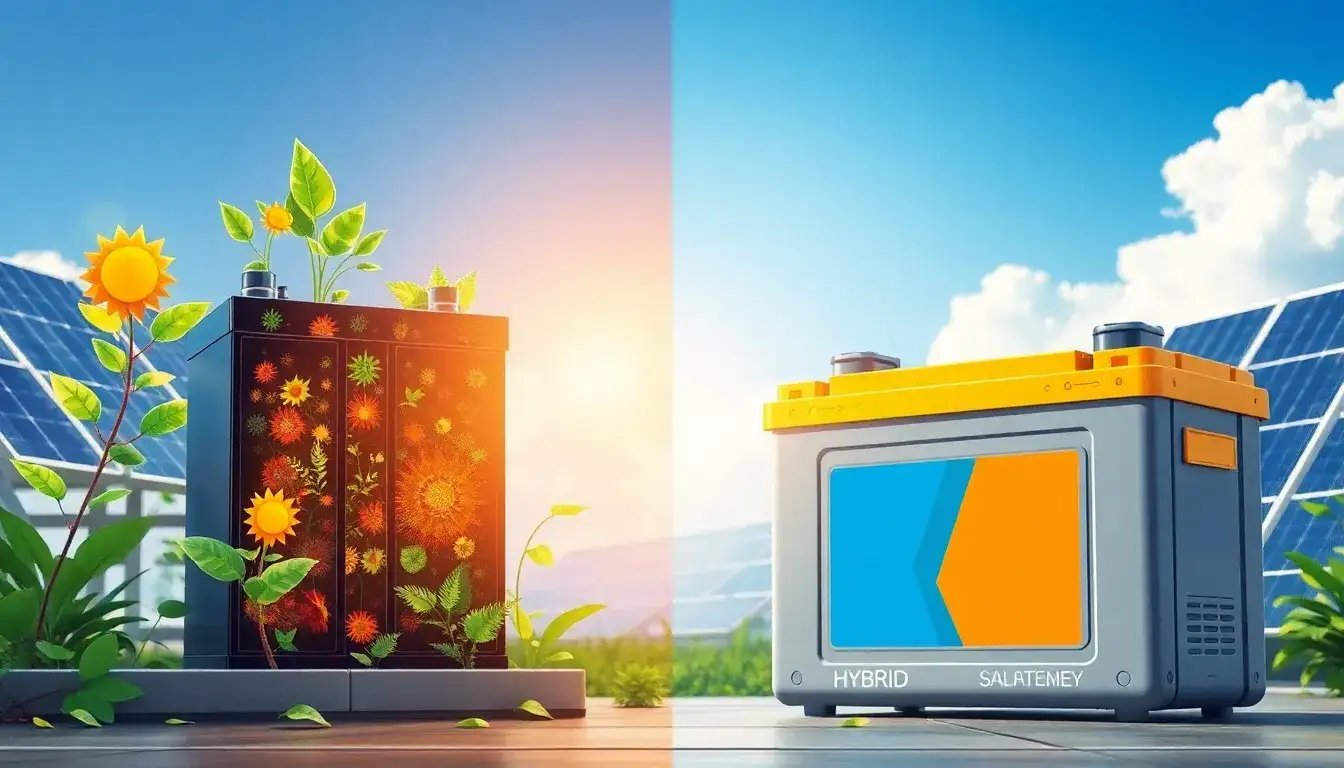
Hybrid solar batteries, which are typically lithium-ion based, generally last significantly longer than lead-acid batteries used in solar energy systems.
Lifespan Comparison
| Battery Type | Typical Lifespan | Notes |
|---|---|---|
| Lithium-ion (Hybrid) Batteries | 10 to 15 years | High efficiency, better capacity retention, lower maintenance. Common in hybrid solar setups. |
| Lead-acid Batteries | Flooded: 4 to 8 years | Requires regular maintenance, shorter lifespan. |
| Sealed (AGM/Gel): 5 to 10 years | Slightly longer life than flooded, but still less durable than lithium-ion. |
Details
- Hybrid Solar Batteries (Lithium-ion): These batteries are known for their durability and can last between 10 to 15 years with proper maintenance. They have higher energy density and better performance under deep cycling conditions, making them ideal for solar energy storage.
- Lead-acid Batteries: Traditionally used in solar systems due to lower upfront cost, lead-acid batteries have a shorter lifespan ranging from 4 to 10 years depending on the type. Flooded lead-acid batteries last about 4 to 8 years, while sealed versions like AGM or Gel types last around 5 to 10 years. They require more frequent maintenance, such as checking electrolyte levels and ensuring proper charging, which impacts their longevity.
Summary
Hybrid (lithium-ion) solar batteries typically last about 2 to 3 times longer than lead-acid batteries. While lead-acid batteries usually last up to about 8 to 10 years at best, hybrid lithium-ion batteries can reliably operate for 10 to 15 years, offering better durability and efficiency for home solar energy systems.
Original article by NenPower, If reposted, please credit the source: https://nenpower.com/blog/how-long-do-hybrid-solar-batteries-typically-last-compared-to-lead-acid-batteries/

