

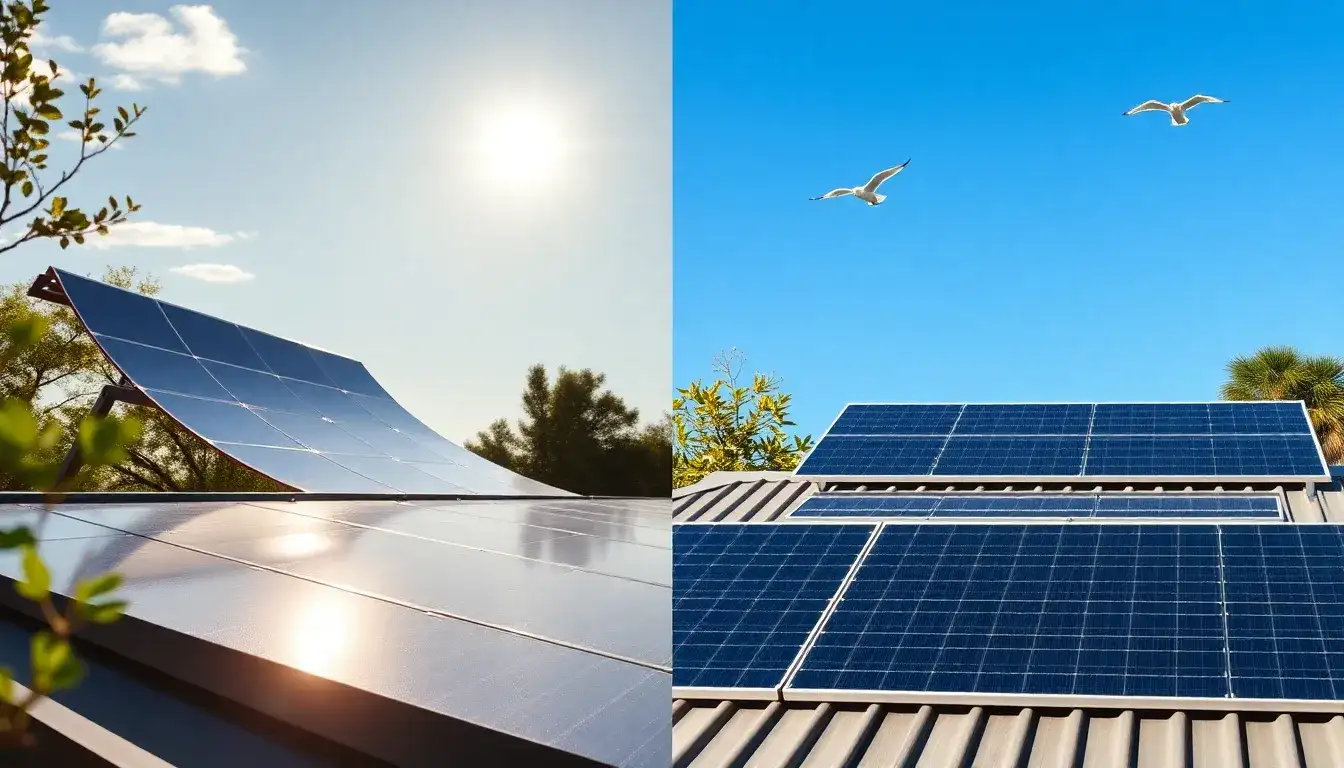
Flexible solar panels typically have a shorter lifespan compared to rigid solar panels. Flexible panels generally last about 5 to 15 years, though some high-quality models and favorable conditions can extend their life up to around 25 years. In contrast, traditional rigid solar panels commonly last 25 years or more, with some lasting up to 40 years under ideal circumstances.
Reasons for Lifespan Differences
- Materials and Construction: Flexible panels are made with lightweight, pliable materials like plastic or polymer substrates and thin-film solar cells, which are less durable than the glass and aluminum used in rigid panels. This makes flexible panels more prone to physical damage, such as cracking or scratching, especially with frequent bending or exposure to harsh conditions.
- Environmental Resistance: Rigid panels have protective glass covers that shield the solar cells from weather elements, UV radiation, and mechanical impacts better than the plastic laminates on flexible panels. Flexible panels are more vulnerable to UV degradation, delamination, and microcracks, which degrade performance over time.
- Usage and Installation: Flexible panels are often used in portable or mobile applications (e.g., on RVs, boats) where they experience more mechanical stress and environmental wear, contributing to shorter lifespans. Proper installation and careful handling can improve their durability and extend their useful life.
Warranty Comparison
- Flexible solar panels usually come with shorter warranties, often 5 to 15 years, reflecting their presumed shorter operational life and higher risk of damage.
- Rigid panels typically have warranties around 25 years, with some premium panels covering even longer periods.
Summary
| Feature | Flexible Solar Panels | Rigid Solar Panels |
|---|---|---|
| Typical Lifespan | 5 to 15 years (up to ~25 years) | 25 to 40 years or more |
| Construction Materials | Plastic/polymer substrates | Glass and aluminum frame |
| Durability | More susceptible to damage | Very durable, weather-resistant |
| Warranty Length | Usually 5 to 15 years | Typically 25 years |
| Efficiency | Lower (15-20%) | Higher (20-25% or more) |
| Suitable Applications | Portable, curved surfaces, RVs | Residential and commercial rooftops |
In conclusion, while flexible solar panels offer advantages in portability, lightweight design, and installation versatility, their lifespan is typically shorter than that of rigid solar panels due to material limitations and environmental susceptibility. Rigid panels remain the longer-lasting choice for fixed, high-efficiency home or commercial solar power installations.
Original article by NenPower, If reposted, please credit the source: https://nenpower.com/blog/how-long-do-flexible-solar-panels-typically-last-compared-to-rigid-solar-panels/

