

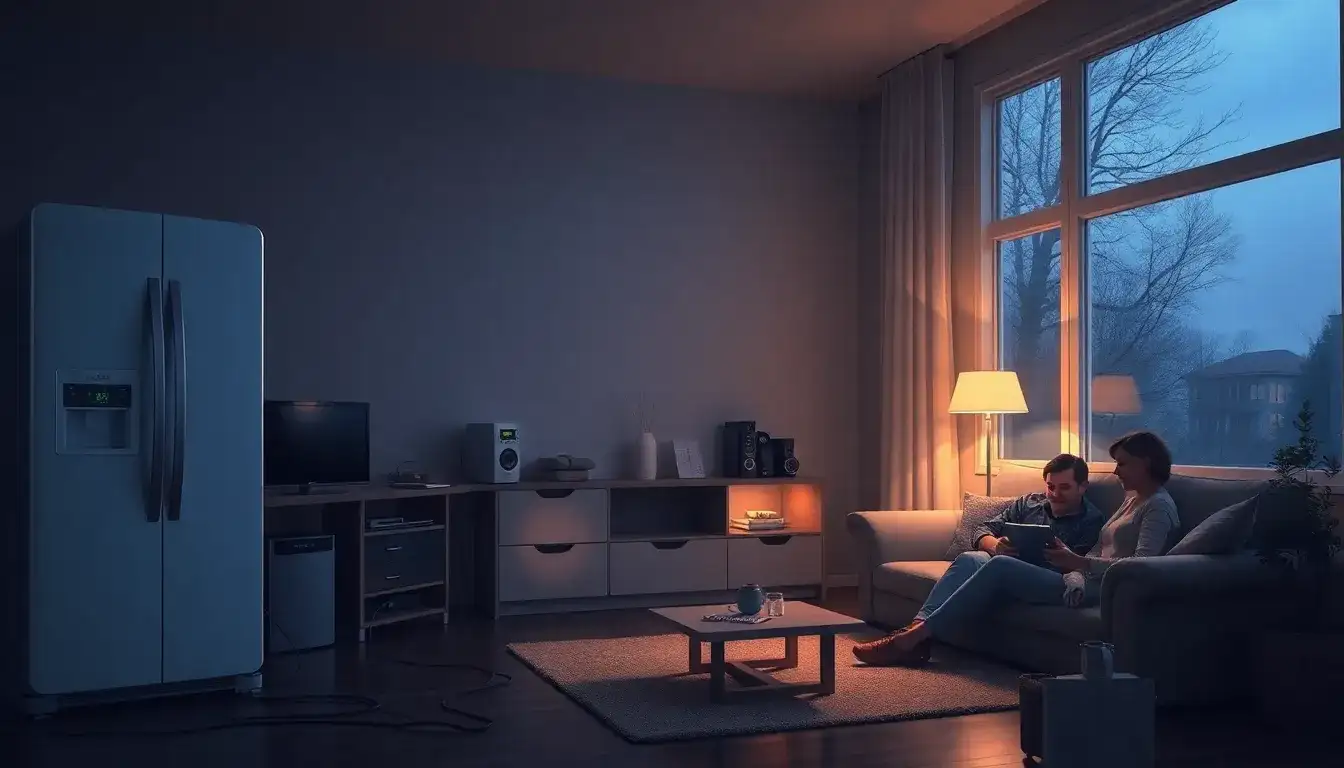
The duration a home battery system can power essential appliances during a blackout depends on several factors, including the battery’s capacity, energy consumption of the appliances, and whether the system is paired with solar panels.
Factors Affecting Battery Duration
- Battery Capacity: Measured in kilowatt-hours (kWh), typical capacities range from 1 kWh to 18 kWh. A 10 kWh battery is common for most homes.
- Energy Consumption: Running only essential appliances like refrigerators, lights, and medical devices extends battery life.
- Solar Panel Output: Solar panels can recharge batteries during daylight, extending the backup duration.
Estimated Backup Times
10 kWh Battery: Can power critical systems for at least 24 hours without air conditioning or heating, and longer with energy management.
| Appliance | Power Usage (Watts) | Hours Powered by 10 kWh Battery |
|---|---|---|
| Refrigerator (Energy Star) | 150 watts | 66 hours |
| LED Light Bulb (10W) | 10 watts | 1000 hours |
| Wi-Fi Router | 10-15 watts | 666-1000 hours |
| Laptop | 50 watts | 200 hours |
For a typical household running only essential loads (e.g., refrigerator, lighting, and device charging), a 10 kWh battery might last 10-24 hours depending on usage.
Tips for Extended Use
- Energy Conservation: Limit use of high-energy appliances to extend battery life.
- Solar Integration: Pairing with solar panels allows for recharging during the day, potentially extending backup duration indefinitely if sunlight is available.
Overall, a well-managed home battery system can effectively support essential appliances during a blackout, especially when paired with solar panels.
Original article by NenPower, If reposted, please credit the source: https://nenpower.com/blog/how-long-can-a-home-battery-system-power-essential-appliances-during-a-blackout/

