

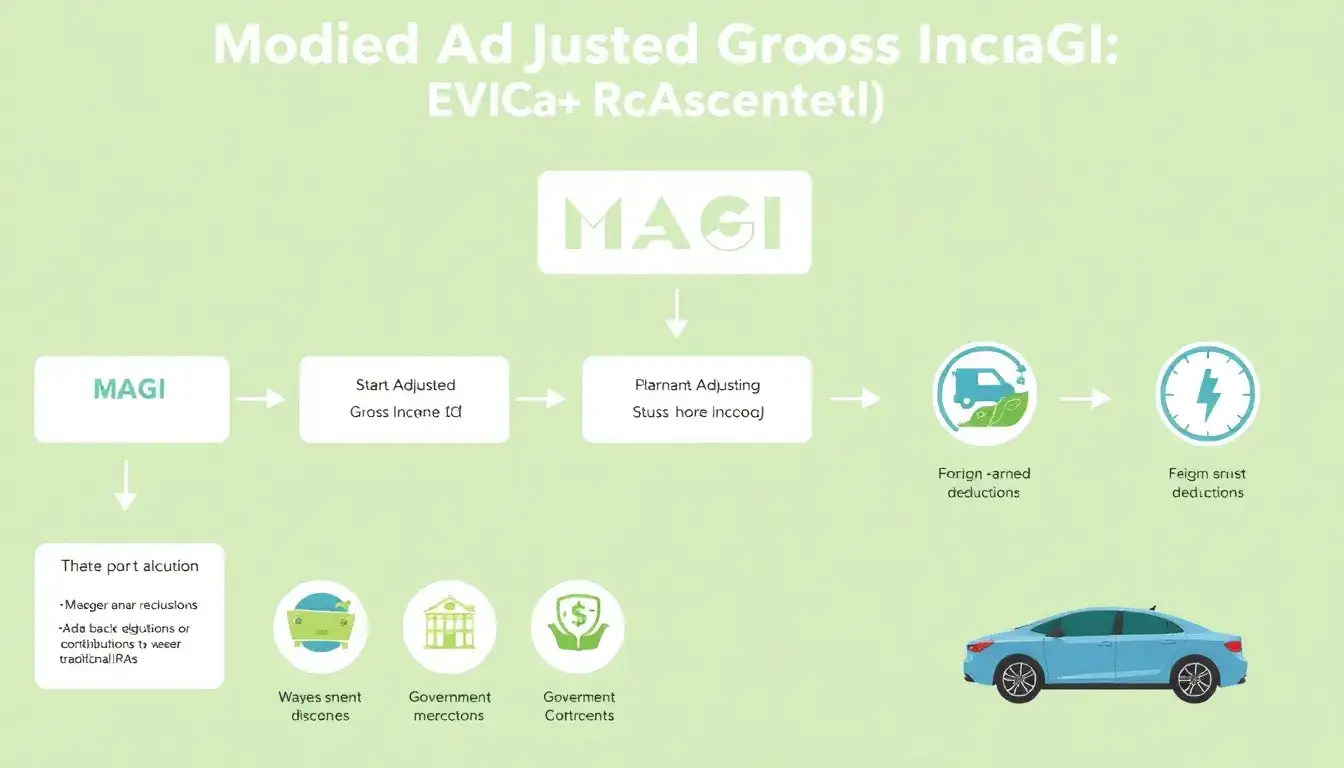
The modified adjusted gross income (MAGI) used to determine eligibility for the EV tax credit is primarily based on your adjusted gross income (AGI) from your federal tax return, specifically Line 11 of IRS Form 1040. To calculate MAGI for this purpose, you start with your AGI and then add back certain deductions or income exclusions—For example, student loan interest deductions may be added back—though the exact adjustments can vary.
For qualifying for the EV tax credit, the IRS allows you to use the lesser of your MAGI from the year you take delivery of the vehicle or from the prior tax year to determine if you meet the income limits.
The income limits for MAGI to qualify for the new clean vehicle tax credit in 2023 and beyond are:
- $300,000 or less for married couples filing jointly (or surviving spouse)
- $225,000 or less for heads of household
- $150,000 or less for single filers and all other filing statuses not mentioned above
For used EV tax credits, the limits are lower:
- $150,000 for married couples filing jointly
- $112,500 for heads of households
- $75,000 for single filers or married filing separately
In summary, MAGI for EV tax credit eligibility is your adjusted gross income with certain additions back, taken from either the current or prior tax year, and must fall below specific income thresholds that depend on your tax filing status and whether the vehicle is new or used to qualify for the credit.
Original article by NenPower, If reposted, please credit the source: https://nenpower.com/blog/how-is-the-modified-adjusted-gross-income-magi-calculated-for-ev-tax-credit-eligibility/

