

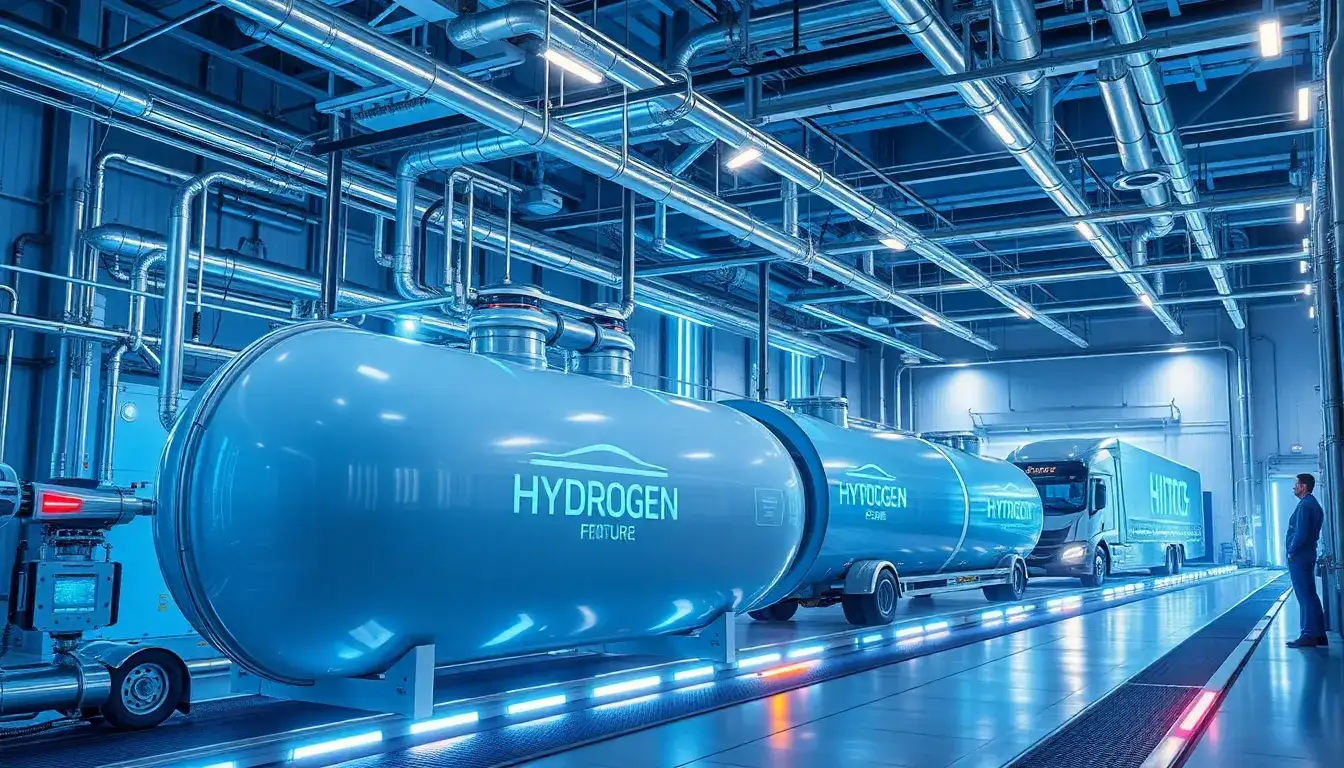
Cryogenic storage for hydrogen transport is being improved through advancements in technology and efficiency. Here are some key developments:
Improvements in Cryogenic Storage
- Cryo-Compression Technology: Companies like Verne are pioneering “cryo-compressed” hydrogen technology, which involves storing hydrogen as a cold, compressed gas. This approach is more modular and energy-efficient compared to traditional liquefaction methods, allowing densification hubs to be built closer to the points of use.
- Efficient Storage and Transport: Cryogenic storage tanks remain a major application for transporting liquid hydrogen due to their high storage capacity in a smaller volume. This method is particularly advantageous for hydrogen trucks, as it reduces the space needed for fuel tanks.
- Energy Efficiency and Cost: While traditional liquefaction requires significant energy, newer methods aim to reduce this energy requirement. Cryo-compression and other approaches are designed to make hydrogen densification more economical for long-distance transportation.
- Overcoming Challenges: Despite its advantages, cryogenic hydrogen storage faces challenges such as boil-off gas during long-term storage and the need for sophisticated insulated tanks to maintain low temperatures. Advances in materials and design are crucial to address these challenges.
Future Developments
- Modularity and Accessibility: The ability to build densification hubs closer to transport routes can enhance the distribution network, making hydrogen more accessible and potentially driving down costs.
- Technological Innovation: Continuing research and development in cryogenic technology could lead to more efficient cooling methods, better insulation, and reduced energy consumption for liquefaction or cryo-compression.
These improvements are crucial for enhancing the feasibility of hydrogen as a fuel source for transportation, balancing efficiency, safety, and environmental benefits.
Original article by NenPower, If reposted, please credit the source: https://nenpower.com/blog/how-is-cryogenic-storage-being-improved-for-hydrogen-transport/

