

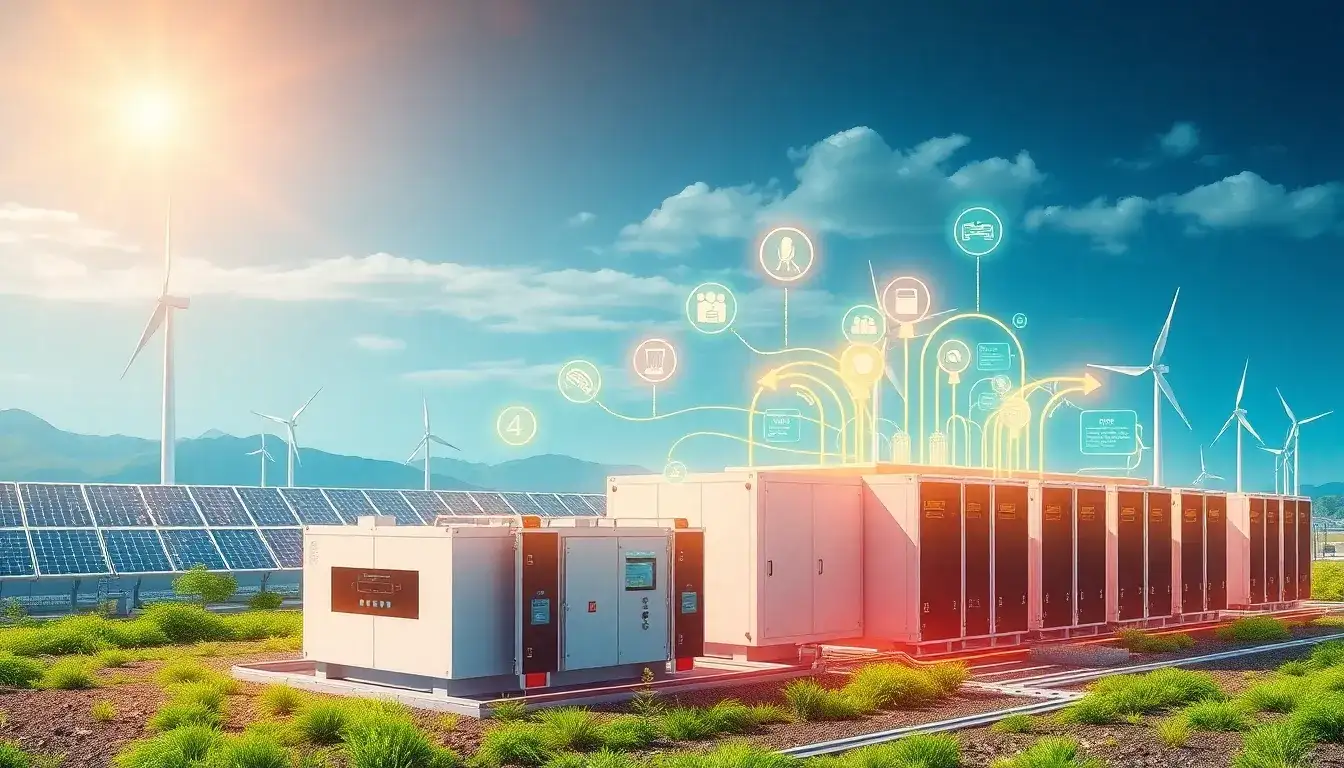
AES is significantly contributing to grid-scale energy storage by deploying advanced battery energy storage systems (BESS) and integrating them with renewable energy sources to enhance grid flexibility, reliability, and decarbonization efforts.
AES Contributions to Grid-Scale Energy Storage
1. Utility-Scale Battery Energy Storage Deployment
AES has heavily invested in utility-scale battery energy storage to provide critical grid services, such as storing clean energy during low demand and discharging it during peak demand, which reduces reliance on fossil fuel peaker plants and stabilizes the grid. AES pairs battery storage with solar projects and develops standalone storage projects to boost grid flexibility and reliability, essential for accommodating the growing share of intermittent renewable energy sources like wind and solar.
2. Notable Projects and Technology Innovation
A landmark AES project is the AES Alamitos Battery Energy Storage System, which was the first battery storage system in the U.S. procured specifically to replace a natural gas peaker plant. This 100 MW system demonstrates that battery energy storage can meet large local capacity needs while reducing greenhouse gas emissions and increasing renewable integration. The system uses advanced lithium-ion battery technology (Advancion 5) from Fluence, a joint venture between AES and Siemens, recognized as the world’s leading grid-scale energy storage integrator.
3. Enhancing Grid Modernization and Efficiency
AES leverages artificial intelligence, machine learning, and big data analytics to digitize the grid and optimize energy storage deployment. This enables a more dynamic, secure, and efficient grid, capable of managing renewable intermittency and demand fluctuations. AES’s innovative energy storage systems act like a “hybrid” for the electric grid, smoothing operations of other generation sources, improving efficiency, and reducing overall system costs and emissions.
4. Advanced Control Systems and Scalability
AES developed a patented Storage Operating System (sOS™), a fast-response control platform that applies sophisticated algorithms to manage energy storage resources effectively. This system supports rapid response capabilities necessary for grid balancing and resiliency. AES’s storage solutions are scalable and designed to integrate with a diverse and distributed energy resource ecosystem, supporting grid stability from local to regional levels.
5. Commitment to Carbon-Free and Renewable Integration
AES is committed to 24/7 carbon-free energy solutions, combining energy storage with renewable generation and exploring emerging technologies such as green hydrogen projects. This holistic approach aims to accelerate the transition to a clean energy future while ensuring security and resilience of the power grid.
In summary, AES plays a pioneering role in advancing grid-scale energy storage through large-scale battery projects, innovative technology integration, and strategic efforts to enable a reliable, flexible, and decarbonized electric grid. Their work not only replaces fossil-fueled peaker plants with clean energy storage but also sets new standards in grid optimization, renewable integration, and sustainable energy infrastructure.
Original article by NenPower, If reposted, please credit the source: https://nenpower.com/blog/how-is-aes-contributing-to-grid-scale-energy-storage/

