

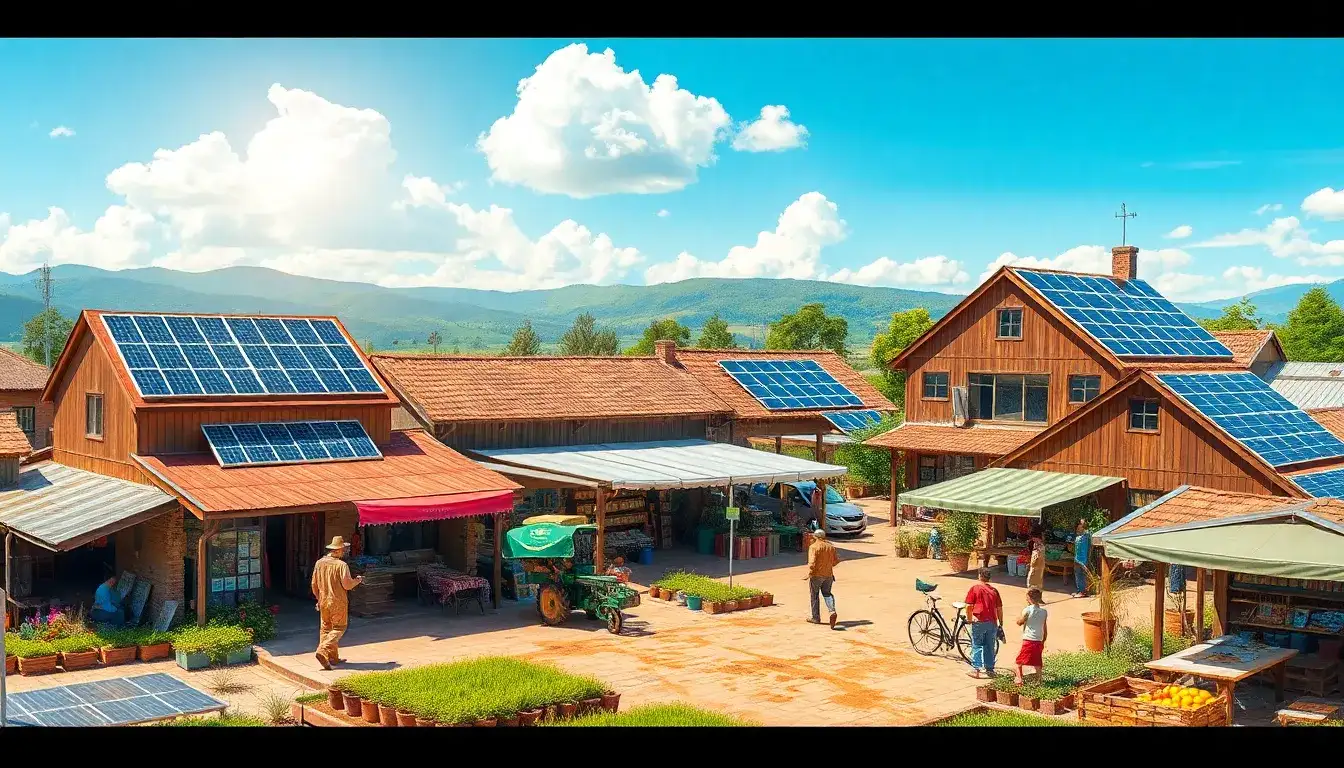
Solar installations have had a notably positive impact on local businesses in rural areas, particularly agricultural producers and small rural enterprises. These impacts span economic, operational, and community dimensions:
Economic Benefits and Cost Savings
- Significant Energy Cost Reductions: Solar energy is now the most cost-effective energy source for rural businesses, allowing them to save thousands annually by reducing reliance on traditional utility power and shielding them from volatile energy prices.
- Attractive Tax Incentives: Businesses can leverage the 30% Federal Investment Tax Credit (ITC), equipment depreciation benefits, and in some cases direct payment options, which make the upfront costs of solar installations more manageable and improve return on investment.
- Federal and State Funding Support: Programs like USDA’s Rural Energy for America Program (REAP) provide grants and guaranteed loans to eligible rural agricultural producers and small businesses, potentially covering up to 85% of solar project costs, thus significantly lowering financial barriers.
Operational and Sustainability Advantages
- Energy Independence and Cost Predictability: By generating their own electricity, rural businesses mitigate the impact of rising and fluctuating utility rates, gaining more control over their operating costs.
- Enhanced Sustainability Profile: Adopting solar helps businesses meet increasing Environmental, Social, and Governance (ESG) or corporate responsibility goals, which can appeal to environmentally conscious customers and improve market positioning.
Job Creation and Community Impact
- Creation of Local Jobs: The construction of solar facilities creates employment opportunities in rural areas, with studies showing a job multiplier effect (e.g., 0.55 jobs per megawatt during installation), contributing to local economic growth and stability.
- Community Solar Initiatives: Collaborative solar projects foster a sense of collective ownership among rural community members, reducing individual costs and enhancing community engagement with renewable energy adoption.
Challenges and Considerations
- Despite these benefits, rural solar projects can face challenges such as limited grid infrastructure and upfront investment costs, which require tailored approaches and financing solutions.
- There are also some concerns about land use changes and impacts on traditional rural landscapes and farming practices, though these are context-specific and can be managed with proper planning.
In summary, solar installations specifically benefit local businesses in rural areas by reducing energy expenses, providing substantial tax and grant incentives, creating jobs, and helping businesses gain energy independence and improve sustainability. These impacts enhance economic resilience and growth opportunities for rural enterprises, especially in agriculture and small business sectors.
Original article by NenPower, If reposted, please credit the source: https://nenpower.com/blog/how-have-solar-installations-specifically-impacted-local-businesses-in-rural-areas/

