

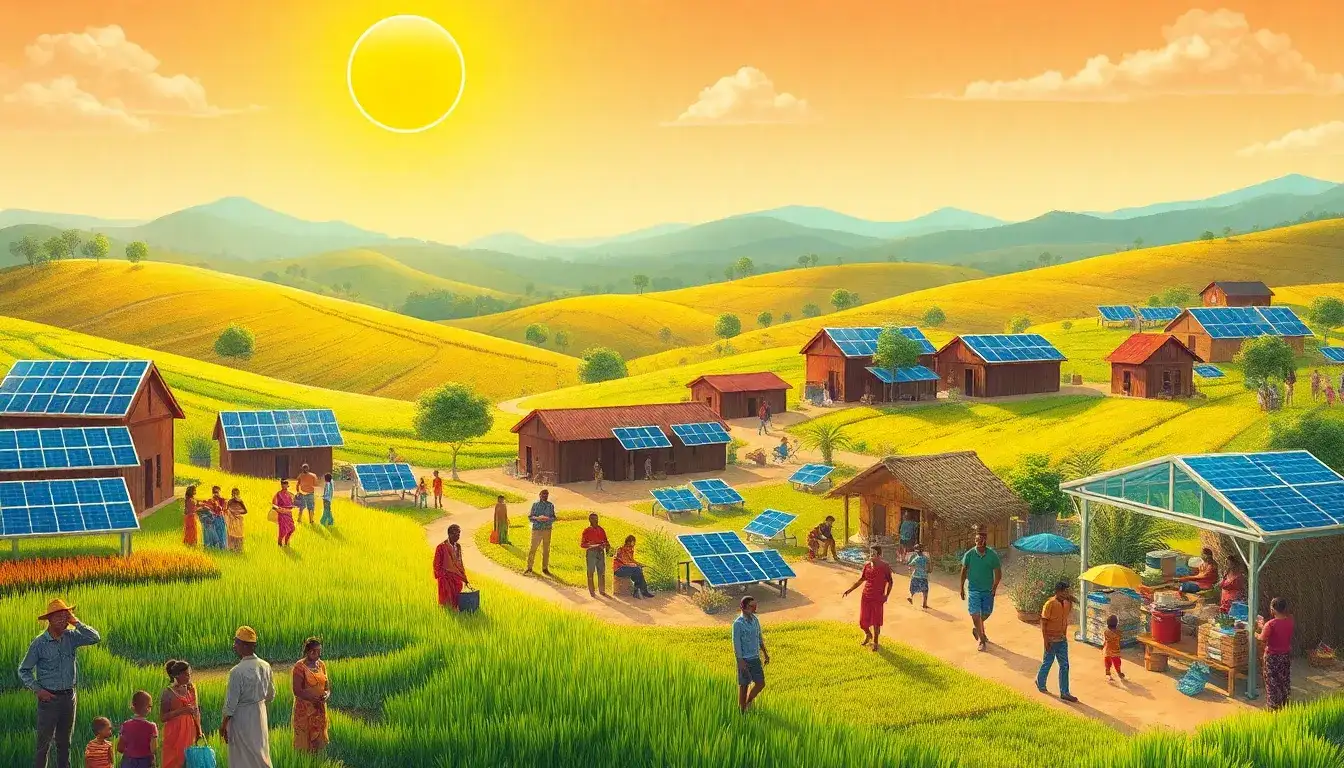
The growth of solar energy jobs has had a substantial and multifaceted impact on rural economies, fostering job creation, economic diversification, and community development.
Job Creation and Economic Growth
Solar energy development in rural areas has led to the creation of numerous jobs, particularly during the construction and maintenance phases of solar projects. For instance, job multipliers can reach around 0.55 jobs per megawatt during construction, which significantly benefits small rural towns by providing accessible employment opportunities. These jobs span various sectors, including infrastructure construction, equipment supply, and ongoing maintenance, stimulating higher local spending and economic activity.
Boost to Local Businesses and Tax Revenue
The influx of solar projects has stimulated local businesses such as construction companies, service providers, and material suppliers. The increased demand for materials (e.g., solar panels, wiring) and services supports business expansion and hiring in rural communities. Additionally, utility-scale solar farms contribute significantly to local tax revenue. For example, a solar farm in Brown County, Ohio, is projected to inject $63 million into the local economy over the lifespan of the project, funding essential services like schools, healthcare, and emergency services.
Diversification of Income for Landowners
Farmers and landowners benefit financially by leasing land for solar development, providing an additional revenue stream that diversifies income sources and helps reduce economic vulnerability in agricultural communities. Moreover, tax incentives such as a 30% investment tax credit (ITC) for rural businesses enhance the economic viability of solar projects, making investments more manageable and stable.
Community and Environmental Benefits
Beyond economic factors, solar energy projects improve environmental quality by reducing pollution and reliance on fossil fuels, which positively impacts community health. Reliable solar power enables better infrastructure for education and healthcare in rural areas, enhancing overall quality of life.
Challenges and Ongoing Efforts
Some rural areas face challenges such as limited funding and infrastructure deficits, including weak grid systems that hamper solar energy distribution. However, government initiatives and policies with incentives, grants, and tax benefits are progressively addressing these barriers to promote solar adoption.
In summary, the expansion of solar energy jobs in rural economies acts as a catalyst for job creation, economic diversification, increased tax revenues, and improved community services. These benefits contribute to the rebirth and long-term sustainability of rural communities while supporting environmental goals.
Original article by NenPower, If reposted, please credit the source: https://nenpower.com/blog/how-has-the-growth-of-solar-energy-jobs-impacted-rural-economies/

