

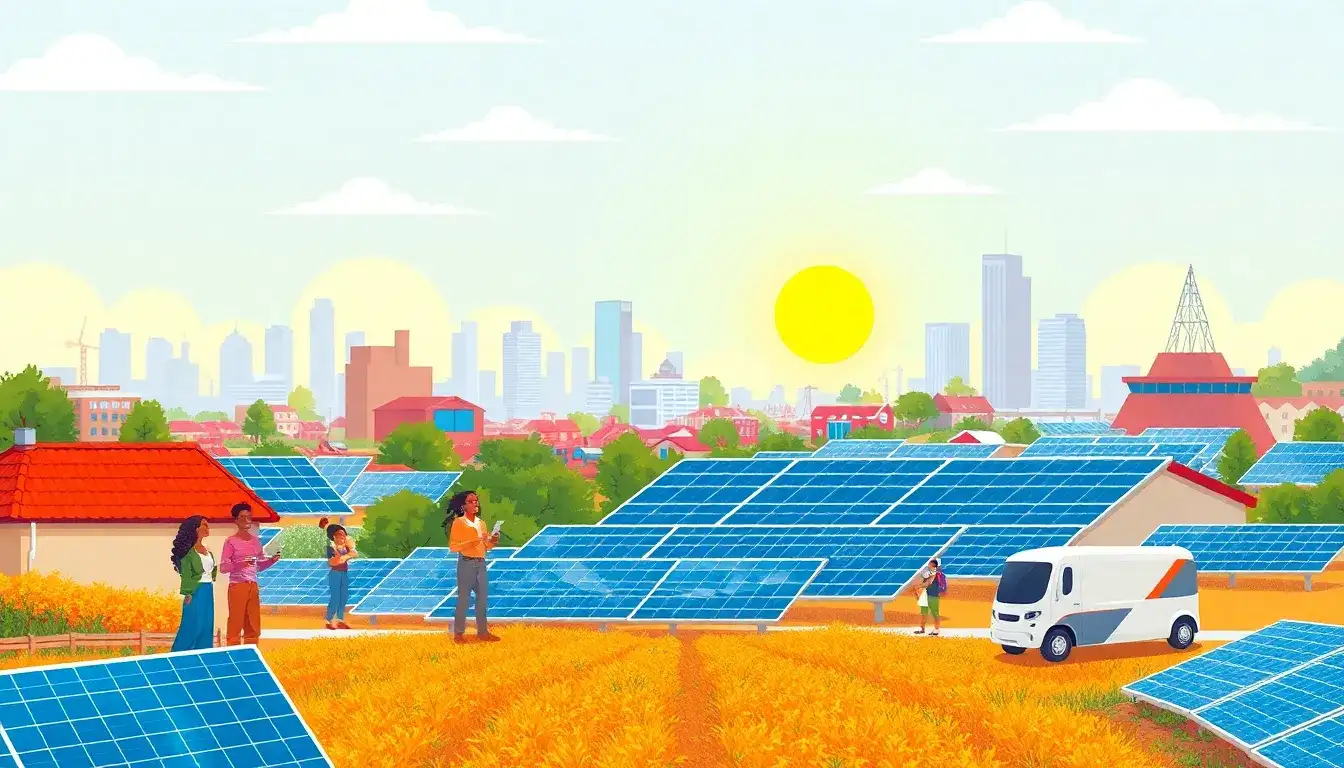
The Future Energy Jobs Act (FEJA)
Enacted in Illinois in 2017, FEJA has had a significant impact on solar energy adoption throughout the state through multiple key measures:
Renewable Energy Expansion and Investment
- FEJA mandates that Illinois’ major utilities, Commonwealth Edison (ComEd) and Ameren Illinois, source 25 percent of their power from renewable sources, spurring billions of dollars in new investments specifically targeted at wind and solar power development within the state.
- The act requires the addition of at least 3,000 megawatts of new solar capacity by 2030 as part of an overall renewable buildout of 4,300 megawatts of new wind and solar capacity, ensuring a large-scale expansion of solar infrastructure and projects across Illinois.
- Incentive programs funded by renewable energy credits (RECs) have been established to support both utility-scale solar projects and distributed/community solar initiatives, with half of the solar target focused on distributed and community solar projects, greatly increasing access to solar energy for residential and commercial customers alike.
Promotion of Community Solar and Equity
- FEJA creates and promotes a community solar program allowing entire neighborhoods, including those without suitable rooftops, to benefit from solar energy. This improves equitable access to solar power, especially for low-income and environmental justice (EJ) communities.
- The Illinois Solar for All program, under FEJA, directs incentives toward solar development serving low-income and EJ communities, allocating substantial portions of solar targets and funding for distributed, community-scale, nonprofit, and pilot program projects to ensure inclusive participation in solar adoption.
Job Creation and Workforce Development
- FEJA has established robust solar energy workforce training programs, apprenticeships, and career pathways that have created thousands of well-paying jobs in the renewable energy sector across Illinois. Over $750 million in funding has been allocated for clean energy development and workforce training, transforming Illinois’ solar industry into a major economic driver.
- These programs particularly benefit economically disadvantaged communities by making clean energy careers more accessible to a diverse workforce, helping to build a skilled labor pool necessary to support the rapid growth of solar installations in the state.
Energy Efficiency Synergies
- Besides solar adoption, FEJA also mandates enhanced energy efficiency programs from ComEd and Ameren, which reduce electricity waste and lower power bills for Illinois residents, complementing the renewable energy goals and making solar investments more cost-effective for customers.
In summary, FEJA has dramatically accelerated solar energy adoption in Illinois by fixing renewable energy mandates with clear solar capacity targets, fostering community solar projects for wider access, supporting workforce development to sustain industry growth, and integrating energy efficiency improvements. These combined efforts have positioned Illinois as a national leader in solar energy deployment and clean energy job creation.
Original article by NenPower, If reposted, please credit the source: https://nenpower.com/blog/how-has-the-future-energy-jobs-act-feja-impacted-solar-energy-adoption-in-illinois/

