

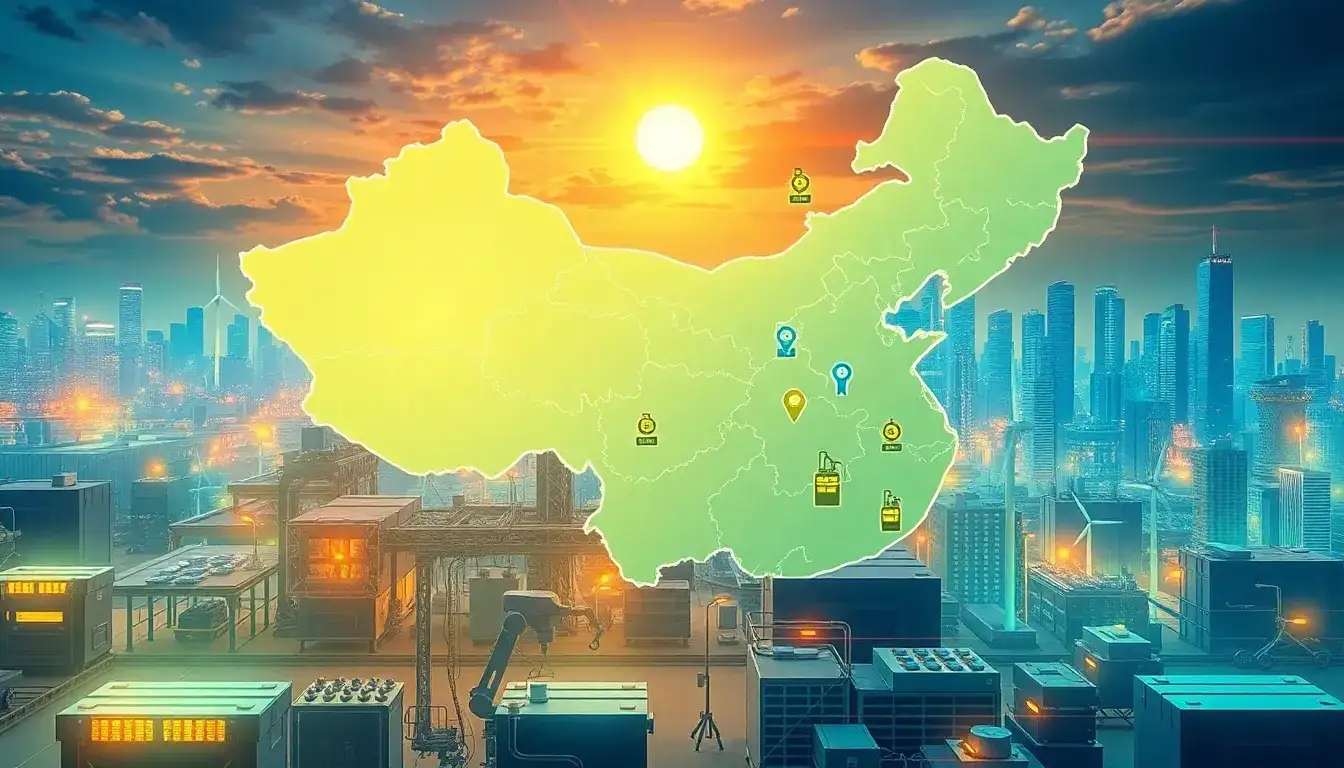
China has dominated the global lithium-ion battery market through a combination of strategic government support, aggressive subsidies, vertical integration of the supply chain, and large-scale manufacturing capacity.
Key Factors Behind China’s Dominance
1. Massive Government Subsidies and Support
Between 2009 and 2019, the Chinese government invested around $100 billion in subsidies, rebates, and tax exemptions aimed at Chinese companies and consumers in the lithium refining and battery production sectors. This financial backing allowed China to build a resilient and expansive lithium-ion battery industry well before global demand dramatically increased. Additionally, China engaged in anti-competitive practices, such as subsidizing production even when demand was low and selling products below market prices internationally, which deterred foreign competitors from entering the market.
2. Vertical Integration and Control of Supply Chain
Despite holding less than 7% of the world’s lithium reserves, China has secured control over approximately 80% of global lithium chemical production, 78% of cathode production, and 70% of lithium-ion cell manufacturing for electric vehicles. Furthermore, China dominates global battery manufacturing capacity with about 75% share in 2022. This vertical integration—from raw material processing to battery cell manufacturing—has ensured China’s dominant position throughout the entire lithium-ion battery supply chain.
3. Scale of Production and Market Share
China leads the world in lithium-ion battery production, with Contemporary Amperex Technology Co. (CATL) alone holding around 35% of the global lithium-ion battery market share as of early 2022. China’s lithium-ion batteries are extensively used domestically in new energy vehicles (NEVs) and solar industries, which drive substantial internal demand and production scale. Moreover, China holds around 71% of the global market share in solar battery modules, further reinforcing its position in clean energy storage technologies.
4. Extensive Capacity Pipeline and Export Model
Looking forward, China is projected to maintain its dominance, with a planned lithium-ion battery production capacity of about 6,300 gigawatt hours (GWh) by 2030, representing approximately 67% of global capacity. China’s production capacity notably exceeds global demand, creating a significant overcapacity driven by subsidy-supported manufacturing and export models. This vast capacity gives China a cost advantage that is difficult for competitors, particularly the United States, to match without substantial and sustained subsidies.
Strategic and Geopolitical Implications
China’s lithium-ion battery dominance is not just an industrial accomplishment but also a geopolitical tool. By controlling critical components of the battery supply chain, China can leverage its position amid the global transition to green technologies and electric vehicles. This monopoly raises concerns among other nations about supply security, price volatility, and geopolitical leverage in the rapidly growing clean energy sector.
In summary, China’s dominance in the lithium-ion battery market stems from strategic government investment, aggressive market tactics, comprehensive control of the supply chain, and massive production capacity, positioning it as the global leader in the sector with no significant competition expected to overtake it by 2030.
Original article by NenPower, If reposted, please credit the source: https://nenpower.com/blog/how-has-china-dominated-the-lithium-ion-battery-market/

