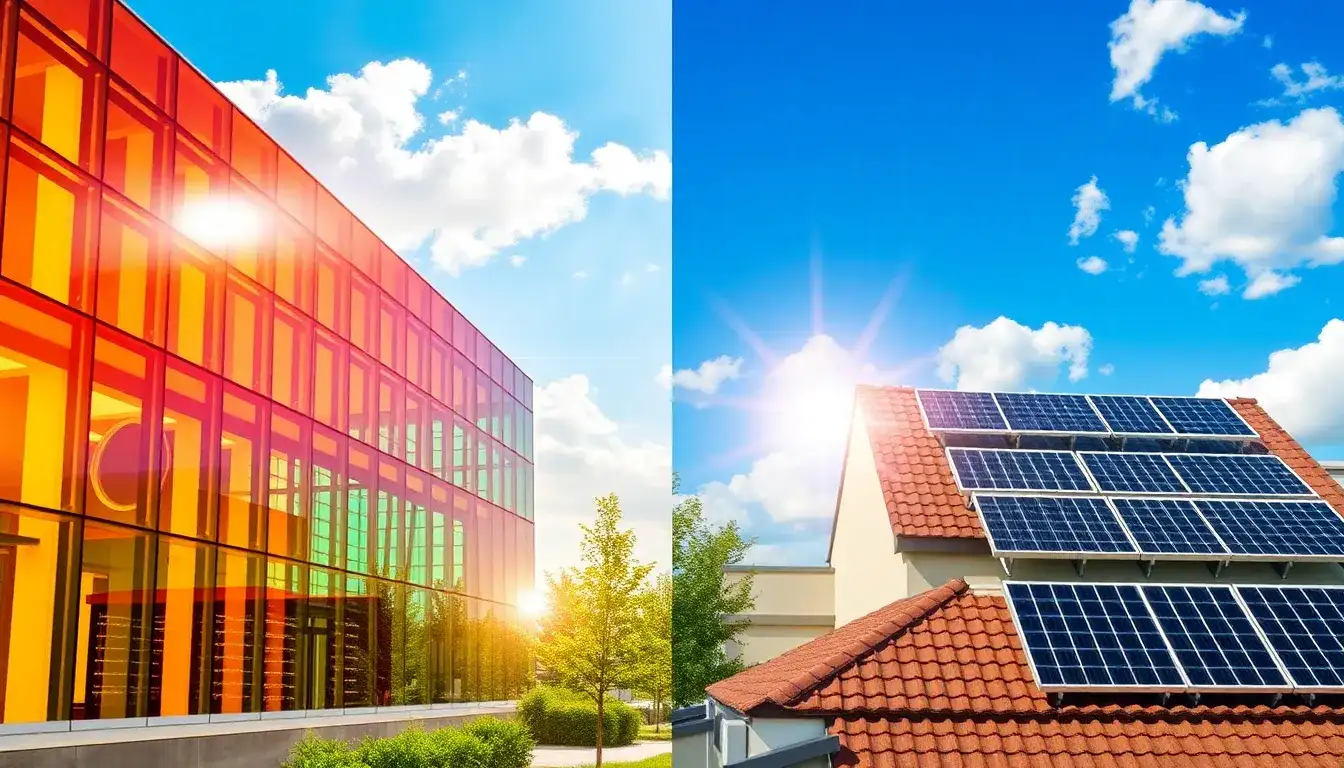
Thermochromic photovoltaic (PV) glass, a next-generation solar window technology primarily based on perovskite materials, offers a dynamic alternative to traditional solar panels by combining solar energy harvesting with smart light and heat modulation. However, their efficiency and energy performance differ notably from conventional solar panels.
Efficiency Comparison of Thermochromic Photovoltaic Glass vs. Traditional Solar Panels
Thermochromic Photovoltaic Glass Efficiency:
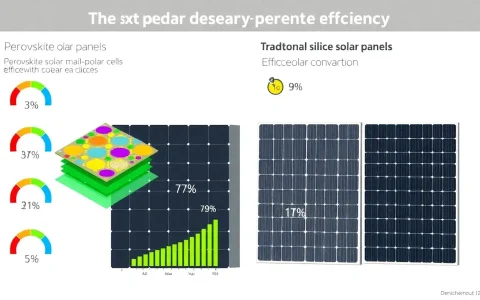
- A proof-of-concept thermochromic PV window developed by the National Renewable Energy Laboratory (NREL) demonstrated a solar power conversion efficiency around 11.3% under 1-sun illumination in laboratory tests.
- These windows can switch between transparent and tinted states in response to heat, generating electricity when tinted by using embedded perovskite films. The window modulates heat gain reducing building cooling needs while simultaneously producing power.
- The windows allow high visible light transmission (~68%) when transparent and significantly reduce it (~3%) when tinted, balancing daylighting and solar energy capture.
- The switching temperature and speed have improved over generations, with current materials operating between roughly 95°F to 115°F (~35°C to 46°C), switching colors (and activating electricity generation) within seconds rather than minutes.
- Durability improvements have been demonstrated, sustaining at least 200 switching cycles without significant degradation, but commercial-scale cycling data and long-term stability remain research topics.
Traditional Solar Panel Efficiency:
- Conventional crystalline silicon solar panels typically have efficiencies in the range of 15-22%, with some advanced panels exceeding 22-24%.
- They are static devices optimized solely for maximum photovoltaic conversion without any dynamic modulation of light or heat.
- Panels generally absorb sunlight continuously during daylight hours without transparency, blocking visible light transmission.
Functional and Energy Efficiency Considerations
| Feature | Thermochromic Photovoltaic Glass | Traditional Solar Panels |
|---|---|---|
| Approximate Power Conversion Efficiency | ~11.3% (lab proof-of-concept prototype) | 15% to 22% typical, up to 24% advanced |
| Dynamic Light Transmission | Transparent (~68%) to tinted (~3%) state switching | Opaque, blocks light |
| Heat and Glare Management | Actively reduces solar heat gain and glare by tinting | No heat modulation |
| Application | Building-integrated windows with dual function | Roof- or ground-mounted dedicated PV arrays |
| Energy savings impact | Reduces building cooling loads, offsets some energy demand | Generates electricity without reducing cooling demand |
| Development stage | Early prototype; commercial viability under development | Mature, commercially widespread |
Summary
Thermochromic photovoltaic glass currently achieves roughly half the solar conversion efficiency of traditional silicon solar panels, with lab-demonstrated efficiencies around 11.3% compared to typical 15-22% efficiencies for commercial panels. Despite lower PV conversion efficiency, thermochromic PV glass adds value by dynamically reducing solar heat gain and glare, improving building energy efficiency across climates, and generating electricity simultaneously. This multifunctionality is not offered by traditional static solar panels.
While efficiency improvements and cycling durability remain areas of research, thermochromic photovoltaic windows could revolutionize energy-efficient building design by integrating renewable power generation with smart solar control, though for maximum electricity generation traditional solar panels remain more efficient at this time.
References:
Tech Briefs, 2021; NREL, 2020; NREL, 2023; Berkeley Lab, 2018; NREL, 2017.
Original article by NenPower, If reposted, please credit the source: https://nenpower.com/blog/how-efficient-are-thermochromic-photovoltaic-glass-compared-to-traditional-solar-panels/