

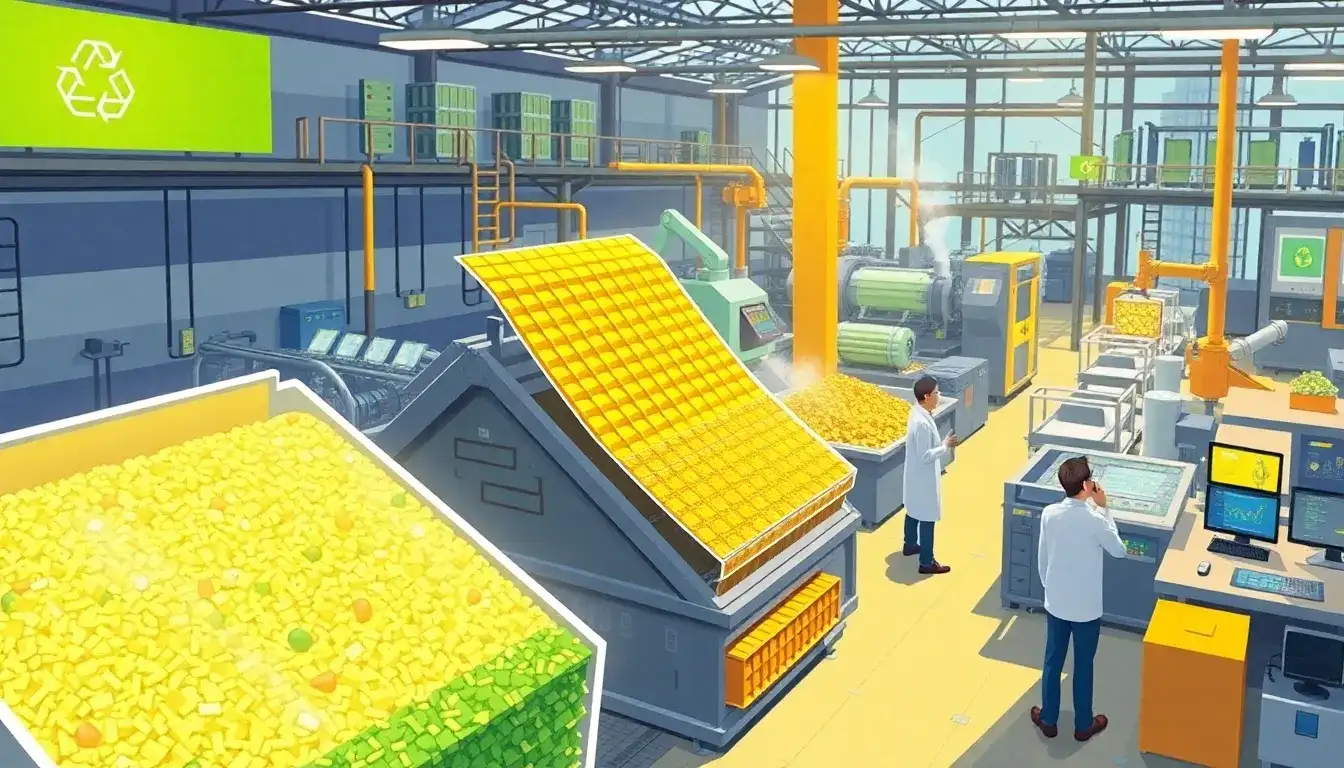
Current methods for recycling polymer layers from solar panels show promising but still developing efficiency, with pyrolysis being the most effective technique currently available.
Efficiency of Current Recycling Methods for Polymer Layers
- Pyrolysis is widely recognized as the most effective method to remove polymer layers such as EVA (ethylene vinyl acetate) from photovoltaic (PV) modules. Studies demonstrate pyrolysis treatments can remove over 99% of polymers from crystalline silicon PV modules, enabling separation of valuable materials like silicon cells and glass.
- However, pyrolysis presents environmental challenges: it can release harmful fluorine compounds from backsheets made of polyvinyl fluoride (PVF) or polyvinylidene fluoride (PVDF), and decomposition hydrocarbons may contaminate glass and silicon cells. This contamination can lower resource recovery rates and complicate the recycling process.
- Alternative delamination methods such as chemical swelling or dissolution are emerging as promising approaches. These methods operate at mild conditions (e.g., 35 °C for under 40 minutes) and enable effective separation of EVA and backsheet polymers without the high energy input of pyrolysis. They also allow recovery of distinct polymers like PVDF and PET from the backsheet layers.
- These chemically based methods facilitate environmentally sustainable recovery of polymers suitable for reuse in PV modules or other industries such as packaging and textiles, which adds a circular economy benefit to their use.
- Despite advances, the polymer layers, designed to seal and protect solar panels from weather exposure, remain a significant challenge in recycling, as they make panel disassembly difficult and require high temperatures or chemicals for separation.
Summary
| Method | Efficiency/Effectiveness | Challenges | Environmental Impact | Notes |
|---|---|---|---|---|
| Pyrolysis | Removes >99% of polymers | Possible contamination of glass/silicon cells | Releases fluorine compounds and hydrocarbons | Most mature and widely studied method |
| Chemical Swelling/Dissolution | High separation rate, lower energy consumption | Requires specific solvents and processing times | More environmentally sustainable | Emerging, promising for polymer recovery |
| Mechanical/Manual Disassembly | Initial stage for panel separation | Labor-intensive, incomplete polymer removal | Minimal direct impact | Prepares panels for chemical or thermal steps |
In conclusion, while pyrolysis currently remains the benchmark for effective polymer layer removal from solar panels, newer chemical methods offer greener and potentially more efficient alternatives that can enhance polymer recovery and reduce environmental risks. Overall, the efficiency of polymer recycling is improving but still constrained by the complexity and durability of the polymer layers used in solar panels.
Original article by NenPower, If reposted, please credit the source: https://nenpower.com/blog/how-efficient-are-current-methods-in-recycling-polymer-layers-from-solar-panels/

