

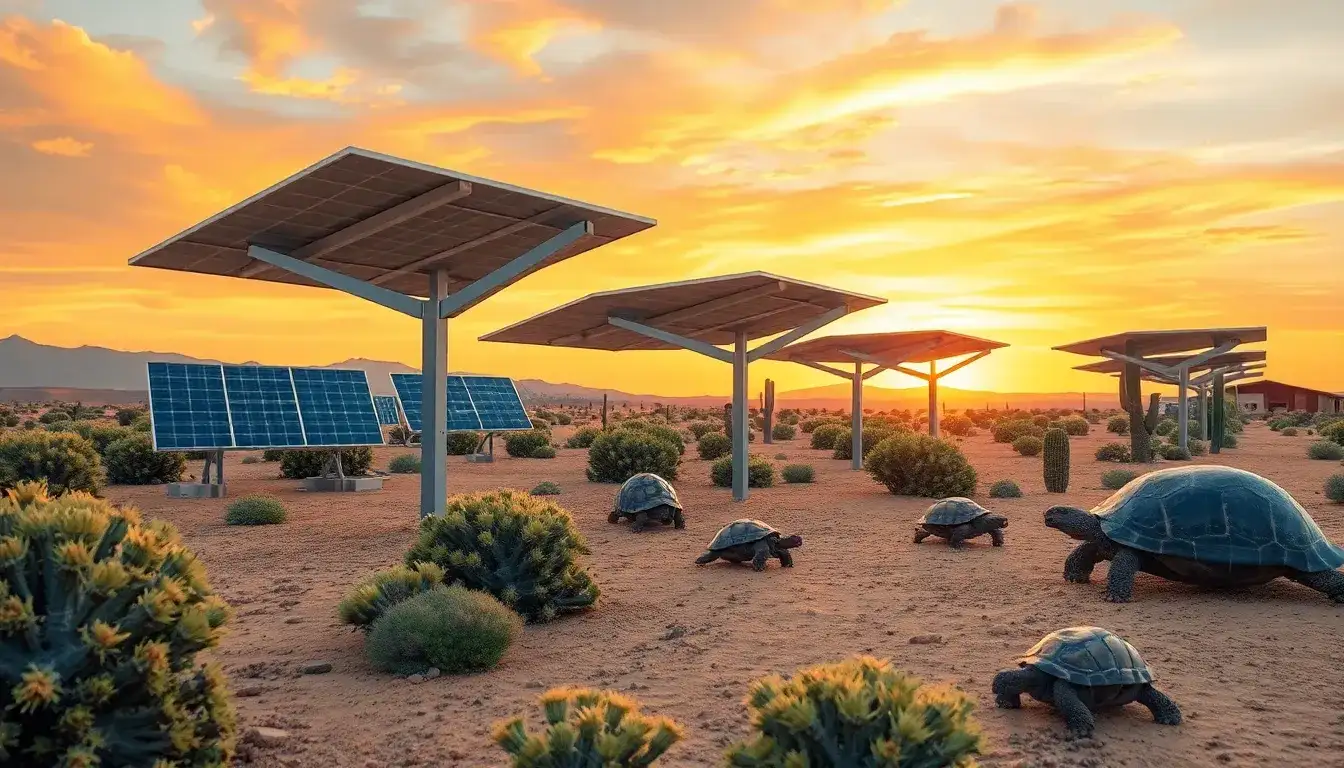
Wildlife-friendly solar energy features have proven to be quite effective in protecting the desert tortoise, a threatened species in the Mojave Desert, while allowing for the coexistence of renewable energy development and wildlife habitat preservation.
Key Wildlife-Friendly Solar Energy Features and Their Effectiveness
1. Elevated Solar Panels and Vegetation Retention
In the Valley Electric Association (VEA) solar facility near Pahrump, Nevada, solar panels were elevated to 42 inches above ground level, significantly higher than the industry standard of 24 inches. This height allowed for the continued growth of native vegetation beneath the panels, maintaining habitat and food resources for desert tortoises and other wildlife. Unlike typical solar projects that require extensive vegetation clearing, this approach preserved natural topography and plants, fostering a power-generating habitat that supports wildlife.
2. Perimeter Fence Openings for Wildlife Passage
The project incorporated multiple openings measuring 10 inches wide by 7 inches tall, spaced approximately every 260 feet along the facility’s fence. These openings allowed desert tortoises and other species, such as rattlesnakes, black-tailed jackrabbits, and kit foxes, to move freely through the solar site without becoming trapped or isolated. Monitoring showed that tortoises used these openings during warm months, demonstrating their effectiveness in maintaining habitat connectivity and reducing the fragmenting impact of fencing.
3. Vehicle Restrictions and Staff Training
To minimize direct harm to desert tortoises from maintenance operations, vehicle speed was limited to 15 miles per hour, and staff received specialized training on desert tortoise awareness. These measures reduced the risk of injury or mortality caused by human activity within the solar site.
4. Temporary Tortoise Relocation and Monitoring
Before construction, desert tortoises were temporarily moved to holding pens to protect them during development. Some tortoises were fitted with radio transmitters to monitor their movements and long-term residency in and around the solar facility. This monitoring confirmed that tortoises continued to use the habitat within the solar array, indicating that the wildlife-friendly design did not exclude them from their home range.
Overall Effectiveness
- The combination of habitat preservation under elevated solar panels, carefully designed fence openings, and operational controls facilitated ongoing use of the site by desert tortoises and other wildlife.
- These design adaptations successfully minimized the typical negative impacts of solar development, such as habitat loss, fragmentation, and direct mortality.
- The pilot project demonstrated that solar energy facilities can function as both renewable energy providers and functional wildlife habitats, especially in ecologically sensitive areas like the Mojave Desert.
Additional Considerations
- Wildlife-friendly solar projects require detailed planning, ongoing monitoring, and a willingness to modify industry standards to meet ecological needs.
- Despite the positive outcomes, large-scale solar development still poses risks to desert tortoise habitat if not carefully managed and mitigated.
- Partnerships between energy developers and wildlife agencies, exemplified by VEA and the U.S. Fish & Wildlife Service collaboration, are crucial to integrate conservation goals with renewable energy expansion.
In summary, wildlife-friendly solar energy features effectively protect the desert tortoise by maintaining habitat connectivity, preserving vegetation, and reducing direct harm, thereby enabling renewable energy projects to coexist with endangered species conservation in desert ecosystems. This approach serves as a valuable model for future solar developments in sensitive wildlife habitats.
Original article by NenPower, If reposted, please credit the source: https://nenpower.com/blog/how-effective-are-wildlife-friendly-solar-energy-features-in-protecting-desert-tortoises/

