

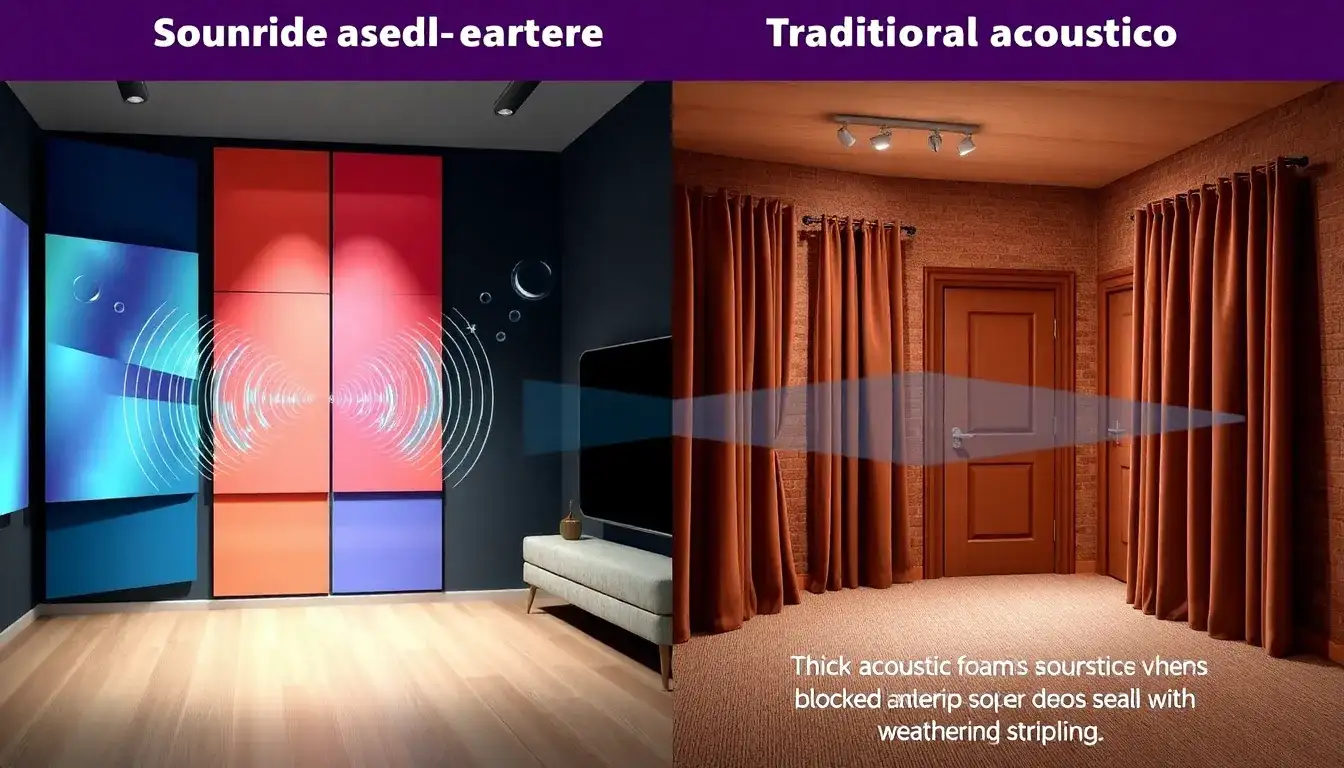
Effectiveness of Sound-Absorbing Panels Compared to Traditional Soundproofing Methods
Sound-absorbing panels and traditional soundproofing methods serve different purposes, making them effective in distinct scenarios.
Sound-Absorbing Panels
Functionality:
- Purpose: Sound-absorbing panels are designed to absorb sound waves, reducing echoes and reverberations within a room. They enhance the internal acoustic environment by minimizing sound reflections and improving speech clarity.
- Effectiveness: These panels are highly effective in spaces where sound reflection is a major issue, such as in dance studios, auditoriums, and recording studios. They help create a clear and pleasant sonic environment.
- Limitations: They do not prevent sound from passing through walls or ceilings, meaning they won’t block noise from entering or leaving a room.
Traditional Soundproofing Methods
Functionality:
- Purpose: Traditional soundproofing methods focus on blocking or reducing sound transmission between rooms or from external sources. Techniques include adding mass to walls (like using mass-loaded vinyl), sealing gaps around doors and windows, and using sound barriers.
- Effectiveness: These methods are more effective for preventing sound leakage between rooms or from outside, making them suitable for environments requiring isolation, such as home theaters or recording studios where external noise needs to be kept out.
- Limitations: Traditional methods can be more expensive and invasive, requiring significant modifications to existing structures.
Comparison Summary
| Feature | Sound-Absorbing Panels | Traditional Soundproofing Methods |
|---|---|---|
| Purpose | Absorb sound waves to reduce echoes and improve internal acoustics. | Block or reduce sound transmission between rooms or from outside. |
| Effectiveness | Highly effective for internal sound clarity. | More effective for blocking external noise. |
| Installation | Easy to install and visually pleasing. | Often requires structural changes, can be more invasive. |
| Use Cases | Dance studios, auditoriums, offices. | Home theaters, recording studios, apartments needing noise isolation. |
In summary, sound-absorbing panels are excellent for enhancing the acoustic quality within a room, while traditional soundproofing methods are better suited for preventing sound leakage between rooms or from outside sources. The choice between these methods depends on the specific needs of the space.
Original article by NenPower, If reposted, please credit the source: https://nenpower.com/blog/how-effective-are-sound-absorbing-panels-compared-to-traditional-soundproofing-methods/

