

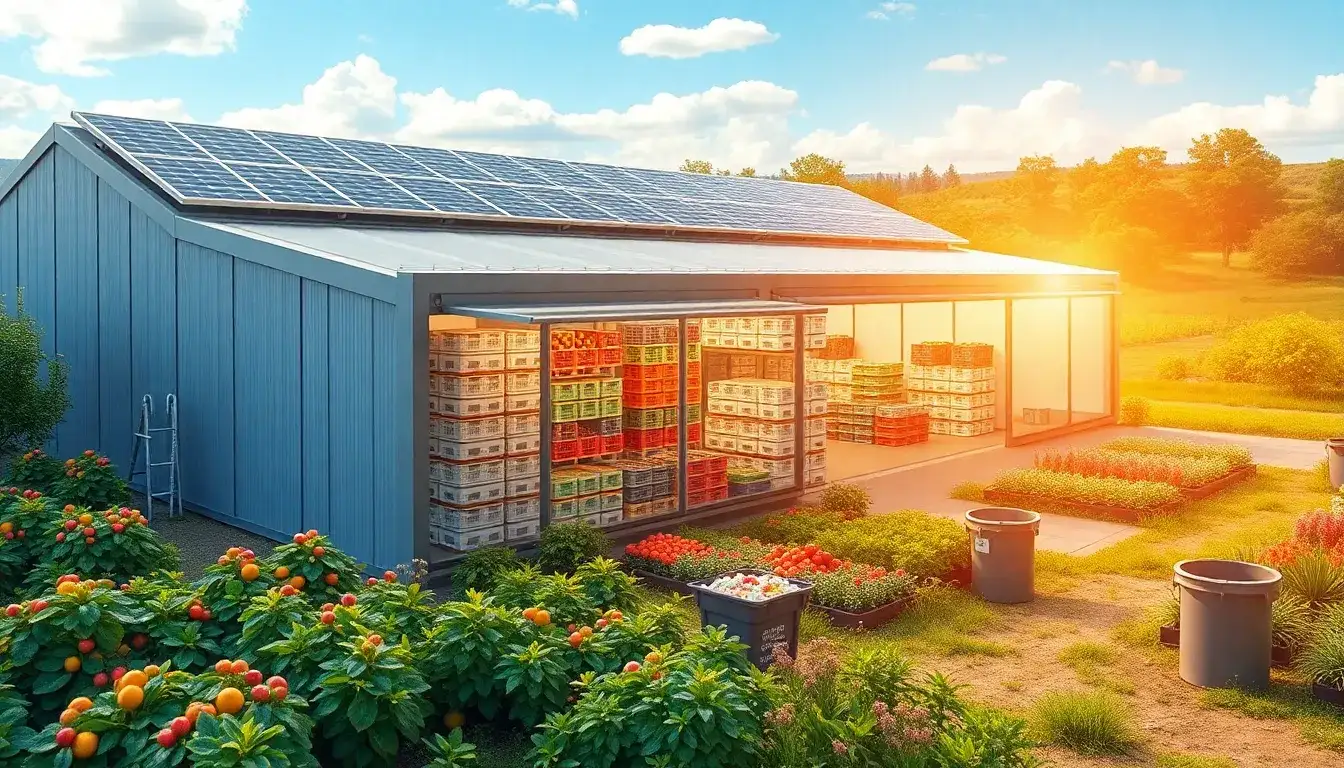
Solar-powered cold storage facilities have proven highly effective in reducing food waste, particularly in regions with limited or unreliable electricity access such as Sub-Saharan Africa. These facilities extend the shelf life of perishable produce from just a few days to up to 21 days, substantially decreasing post-harvest losses and enabling farmers to sell their crops at better prices.
Key effectiveness points include:
- Extended Shelf Life: Solar-powered cold storage units can increase the shelf life of fruits and vegetables from about 2–5 days to up to 21 days. For example, Sokofresh’s units have helped farmers extend produce shelf life by up to 21 days, allowing more time to market their crops and reduce spoilage.
- Reduction in Food Waste: Facilities like ColdHubs reduce post-harvest loss by approximately 80%, significantly cutting the volume of food that would otherwise spoil due to lack of refrigeration.
- Economic Benefits: By preserving produce longer, farmers avoid selling at low prices during peak harvest when markets are oversupplied. This can boost seasonal incomes substantially; AkoFresh in Ghana estimates their solar cold storage solution will increase farmers’ seasonal income by over $10 million and reduce greenhouse gas emissions by 15%.
- Improved Access and Affordability: Many solar cold storage providers offer affordable rental or subscription models, sometimes even accepting payment in produce rather than cash, making refrigeration services accessible to smallholder farmers who usually sell produce at the farm gate due to transportation and storage constraints.
- Environmental Impact: These solutions eliminate or reduce the need for diesel-powered generators, lowering operational costs and carbon footprints, which is critical in off-grid rural areas.
Example Case:
Agnes Wangari, a smallholder fruit farmer in Kenya, used to lose a substantial portion of her harvest to spoilage without refrigeration. After using Sokofresh’s solar-powered cold storage, she was able to keep her produce fresh longer and access better market prices, significantly reducing food loss and increasing profitability.
In summary, solar-powered cold storage facilities are a transformative solution in reducing food waste by extending shelf life, improving farmer incomes, lowering emissions, and offering affordable, sustainable refrigeration in off-grid and developing areas.
Original article by NenPower, If reposted, please credit the source: https://nenpower.com/blog/how-effective-are-solar-powered-cold-storage-facilities-in-reducing-food-waste/

