

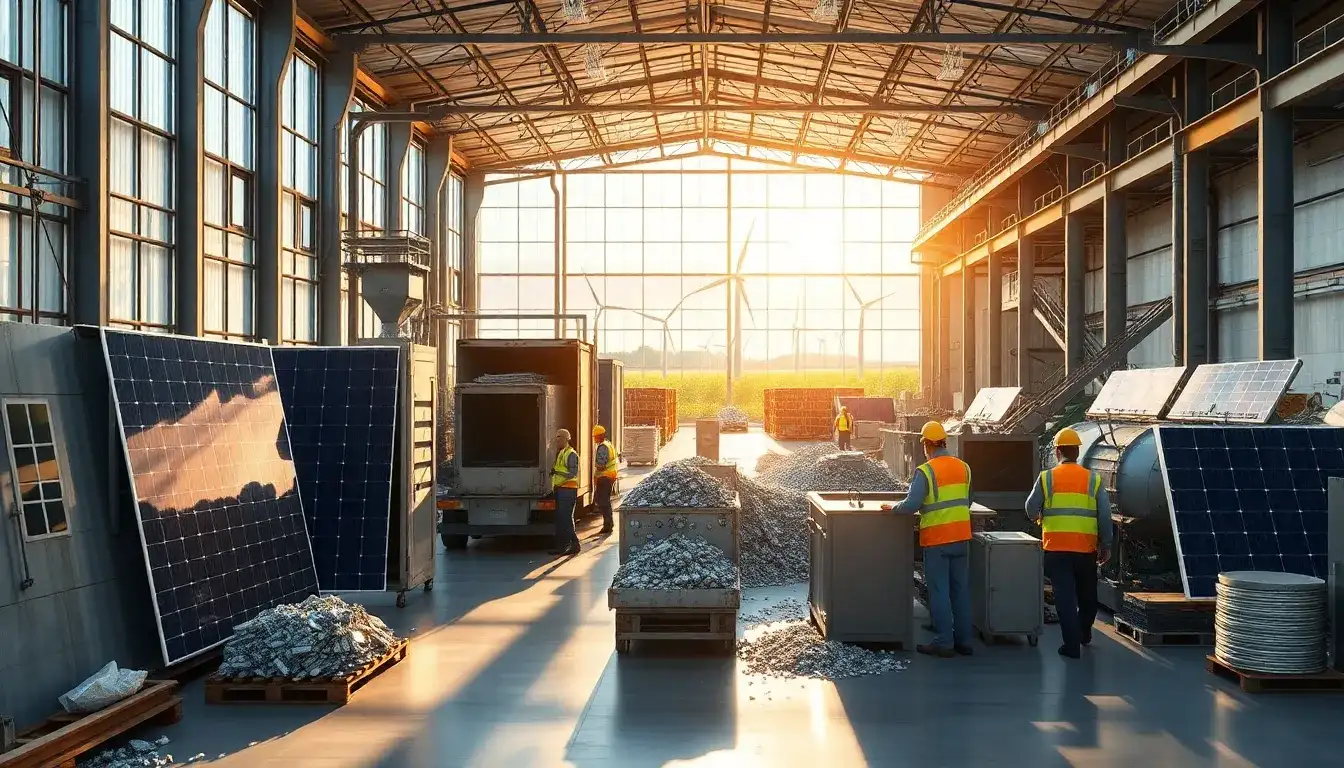
Effectiveness of Recycling Facilities
- Material Recovery Rates: U.S. recycling processes can recover up to 95% of semiconductor materials and 90% of the glass content from solar panels, substantially reducing demand for virgin materials and resource extraction. This indicates that, when panels are properly recycled, the facilities can efficiently reclaim valuable components.
- Industry Development: The solar recycling industry is developing rapidly, with increasing infrastructure and technological advancements improving material recovery and cost-effectiveness. Collaborative efforts between manufacturers, recyclers, and research institutions are fostering better recycling solutions and moving towards a circular economy approach in the solar sector.
Challenges and Limitations
- Low Recycling Rates: Despite these technical capabilities, actual recycling rates remain very low, with less than 10% of solar panels reaching end-of-life currently being recycled in the U.S. This gap is partly due to the economic non-viability of recycling—costs of recycling ($20 to $30 per panel) greatly exceed landfill disposal costs ($1 to $2 per panel), discouraging proper recycling practices.
- Limited Recycling Facilities: The U.S. has very few specialized recycling companies—only about five listed by the Solar Energy Industries Association (SEIA)—to handle the growing volume of solar panel waste. This limited capacity is a bottleneck given the massive increase in solar installations and the projected wave of panels retiring by 2030.
- Collection and Logistics: Solar panels are widely distributed in diverse locations from rooftops to large solar farms. This decentralized installation pattern complicates efficient collection and transportation to recycling centers. Some states lack local recycling options, requiring long-distance transport that adds cost and environmental impact.
- Lack of Standardization: Variability in panel designs and materials across manufacturers hinders the development of standardized recycling processes, leading to inefficiencies and increased costs.
Outlook
With supportive regulatory frameworks emerging at state and federal levels, such as extended producer responsibility programs, and advancing recycling technologies, the effectiveness of U.S. solar panel recycling is expected to improve significantly in the coming years. However, scaling the infrastructure, standardizing processes, and improving economic incentives remain essential to handle the expected surge in solar panel waste sustainably.
Summary: Current U.S. solar panel recycling facilities are technologically capable of recovering most valuable materials efficiently, but actual recycling rates are very low due to high costs, limited recycling infrastructure, logistical challenges, and lack of standardization. Efforts are underway to expand and improve these facilities, which will be crucial as millions of panels reach end-of-life in the near future.
Original article by NenPower, If reposted, please credit the source: https://nenpower.com/blog/how-effective-are-current-recycling-facilities-in-the-us-in-handling-solar-panel-waste/

