

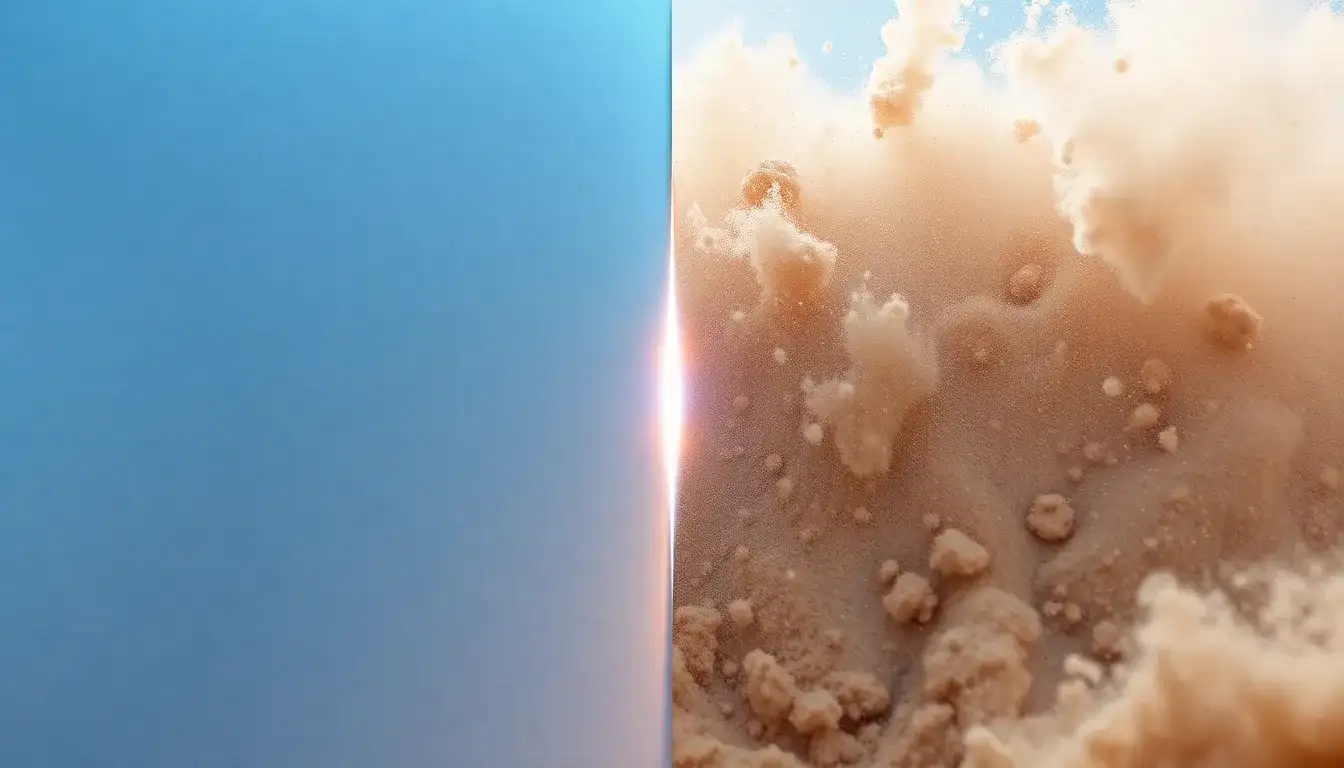
Anti-dust coatings have proven to be quite effective in reducing dust accumulation in high-dust environments, thereby maintaining surface cleanliness, protecting surfaces, and improving operational efficiency, especially for sensitive applications such as solar panels and electronics.
How Anti-Dust Coatings Work
- Surface Modification: These coatings create a microscopic layer or modify the surface at the nano- or micro-scale to make it superhydrophobic or superhydrophilic, significantly lowering surface energy and reducing dust adhesion.
- Barrier Formation: They often include anti-static agents and silicones that neutralize static electricity and create slick barriers, preventing dust particles from sticking.
- Self-Cleaning Effects: Superhydrophobic coatings cause water droplets to roll off the surface, carrying dust away, while superhydrophilic surfaces allow dust to be removed by forming uniform water films.
Effectiveness in High-Dust Environments
- Dust Reduction: Anti-dust coatings can markedly reduce the amount of dust that settles on surfaces, which is crucial in dusty or desert-like conditions where dust accumulation is severe.
- Performance Improvement: For example, in photovoltaic (PV) panels, dust deposition can reduce sunlight absorption by up to 51%, dramatically lowering energy conversion efficiency. Anti-dust coatings can increase light transmission by about 20% and improve PV module output performance by around 3.9% in field tests.
- Durability and Longevity: High-quality coatings can last several years if properly applied and maintained. Some coatings have been tested for over 3.5 years without significant degradation, even under intense UV and dust exposure.
- Economic and Practical Benefits: These coatings reduce cleaning frequency and effort, lower maintenance costs, and protect surfaces from corrosion, oxidation, and UV damage. This is particularly advantageous in large-scale or remote installations where manual cleaning is costly or impractical.
Limitations and Considerations
- Environmental Factors: Extremely dusty or humid environments can reduce coating effectiveness, necessitating periodic reapplication or complementary cleaning methods.
- Surface Type: Effectiveness is higher on smooth, non-porous surfaces where coatings can form uniform layers.
- Cost and Application: Some advanced coatings can be expensive and require precise application processes, although their long-term benefits may offset initial costs.
Summary Table of Anti-Dust Coating Benefits and Challenges
| Benefits | Challenges |
|---|---|
| Reduces dust accumulation, maintaining cleanliness for longer periods | Effectiveness can diminish in very harsh dusty/humid conditions |
| Improves performance of solar panels and delicate electronics | May require periodic reapplication |
| Decreases cleaning frequency, reducing maintenance labor and costs | Some coatings involve higher initial costs and complex application |
| Protects surfaces from UV damage, corrosion, and oxidation | Variability in performance depending on coating formulation and surface type |
In conclusion, anti-dust coatings are a highly effective solution in high-dust environments for reducing dust accumulation and its adverse impacts, especially on sensitive surfaces like solar panels. Their ability to maintain surface cleanliness, improve device performance, and reduce maintenance efforts makes them an advantageous choice despite some limitations in extreme conditions or the need for occasional reapplication.
Original article by NenPower, If reposted, please credit the source: https://nenpower.com/blog/how-effective-are-anti-dust-coatings-in-high-dust-environments/

