

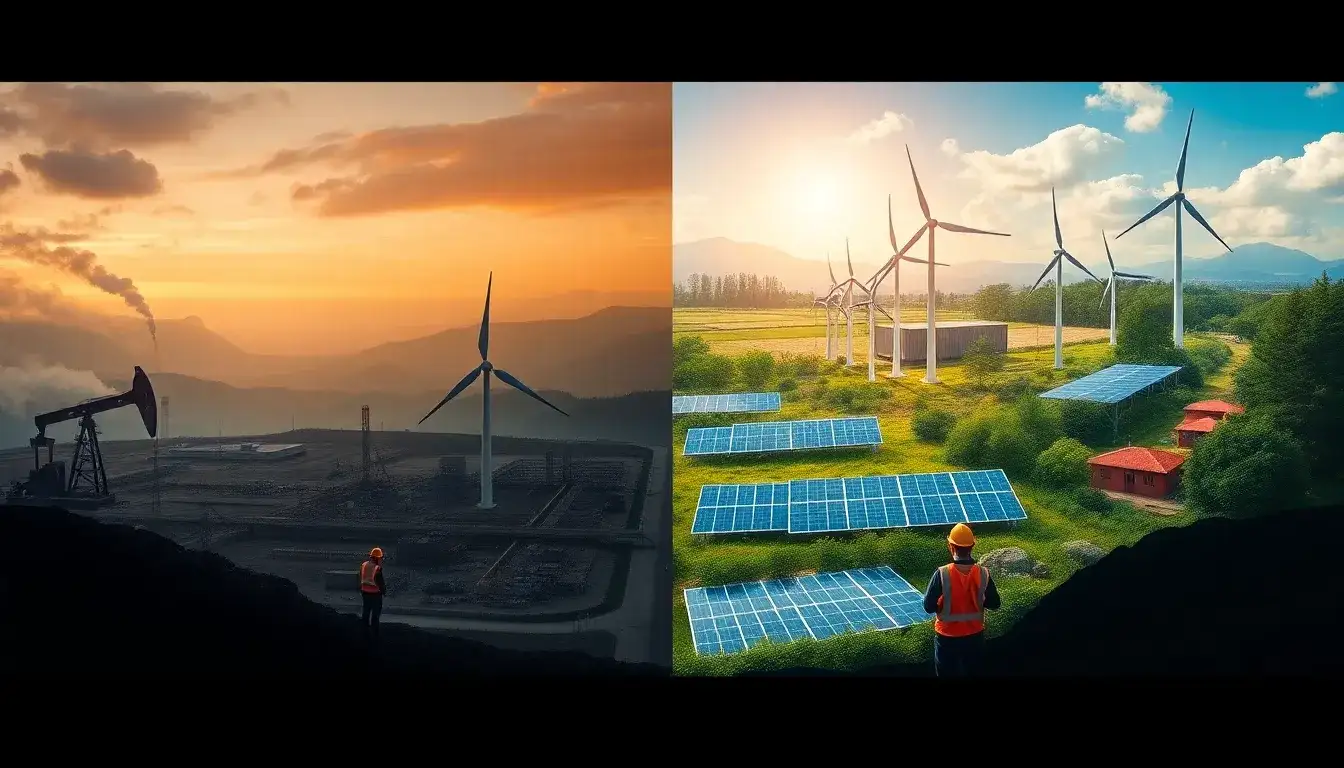
Transitioning from a fossil fuel job to a renewable energy job is a complex process that depends on several factors such as skill transferability, geographic location, availability of training, and the nature of the renewable energy roles.
Skill Transferability
Many fossil fuel workers possess skills relevant to renewable energy jobs. For example, petroleum engineering skills often translate to geothermal energy; chemical engineering skills used in oil refining can apply to producing clean fuels and hydrogen; and offshore petroleum skills can transition to offshore wind energy operations. However, while some skills are transferable, others require additional training or reskilling, especially for jobs in emerging sectors like carbon capture, utilization, and storage (CCUS) or critical minerals extraction, where the required technological or mechanization skills may not be common among fossil fuel workers, especially coal miners in developing countries.
Geographic and Location Barriers
One of the biggest challenges is the geographic mismatch between where fossil fuel jobs are located and where renewable energy jobs are growing. Many fossil fuel extraction workers tend not to relocate far for work historically, but renewable energy jobs are often regionally concentrated in different areas. This mismatch means that even if workers have the right skills, they might not be able to easily access new renewable opportunities without relocation assistance. Without targeted policies and planning to create green jobs in fossil-fuel regions or to support relocation, only a small percentage of fossil fuel extraction workers (around 2%) are likely to transition to green jobs in the near term.
Job Duration and Stability
Another factor complicating the transition is that many green energy jobs, particularly in construction of renewable energy facilities, are temporary. Once a facility is built, far fewer workers are needed for maintenance and operations, which limits the availability of long-term job opportunities compared to fossil fuel jobs.
Economic and Social Considerations
Beyond skills and location, social factors and worker preferences influence the ability to transition. Workers might resist relocation due to family ties or community connections. Policymakers may find it easier to help fossil fuel workers transition to related industries like construction or manufacturing that require similar physical and technical skills and are more regionally accessible.
Policy and Training Needs
Smooth transitions will require careful policymaking, including:
- Targeted job creation in fossil fuel regions
- Skill development and retraining programs tailored to fossil fuel workers
- Relocation assistance or incentives
- Support for alternative industries beyond renewables, such as construction and manufacturing as bridging options
Scale of the Transition
An estimated 1.7 million U.S. fossil fuel workers are at risk of job loss as the energy system shifts to renewables, underscoring the scale of the transition challenge and the urgent need for just transition planning.
Summary:
Transitioning from fossil fuel to renewable energy jobs is moderately feasible due to transferable skills, but it is made difficult primarily by geographic mismatch, the need for retraining, and the temporary nature of many green jobs. Only a small fraction of fossil fuel workers can transition easily without relocation or significant job creation in their regions. Successful transition depends strongly on supportive policies, targeted investments, and training programs that address both skill gaps and location barriers.
Original article by NenPower, If reposted, please credit the source: https://nenpower.com/blog/how-easy-is-it-to-transition-from-a-fossil-fuel-job-to-a-renewable-energy-job/

