

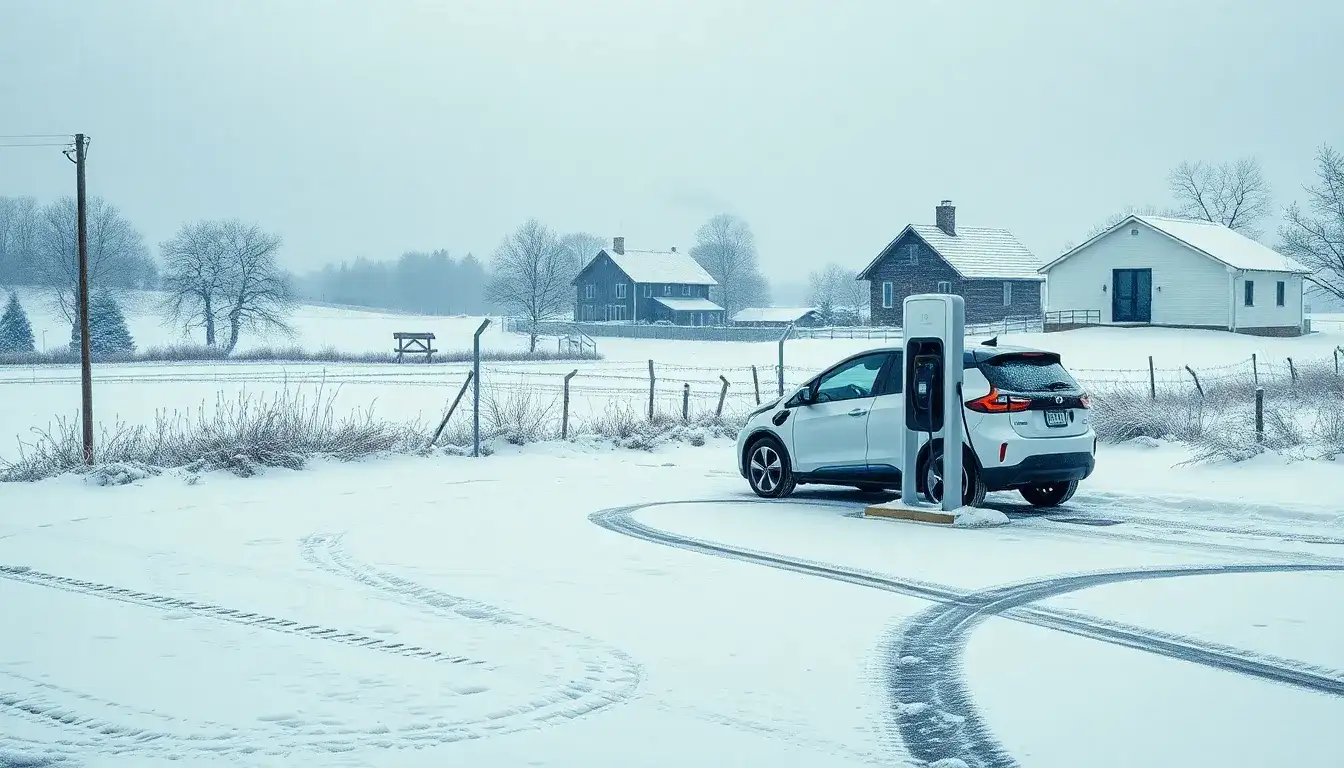
Winter weather significantly impacts electric vehicle (EV) charging in rural areas in several ways:
Key Challenges
- Reduced Battery Efficiency and Range: Cold temperatures decrease the efficiency of EV batteries, reducing their range by as much as 10 to 36 percent. This necessitates more frequent charging, which can be particularly challenging in rural areas where charging stations are sparse.
- Slower Charging Times: Cold weather slows down the charging process. For instance, studies show that DC fast charging can be substantially slower in cold temperatures—about three times slower than at warmer temperatures. This prolongs the time spent at charging stations, which may not be sheltered or comfortable for drivers.
- Limited Charging Infrastructure: Rural areas often lack extensive and reliable charging infrastructure, making long-distance travel difficult during winter months. The absence of sheltered charging stations exposes drivers to harsh weather conditions while they wait for their vehicles to charge.
- User Experience and Safety Concerns: The lack of shelter and the prevalence of outdoor charging stations in rural areas can make the charging experience uncomfortable and impractical during extreme weather conditions. Moreover, technical issues with charging stations can further complicate travel.
Addressing These Challenges
To mitigate these issues, initiatives focus on expanding charging infrastructure along rural travel corridors and implementing more user-friendly, accessible charging solutions. Additionally, educating drivers about planning charging stops and managing vehicle performance in cold weather can help alleviate some of the challenges.
Original article by NenPower, If reposted, please credit the source: https://nenpower.com/blog/how-does-winter-weather-impact-ev-charging-in-rural-areas/

