

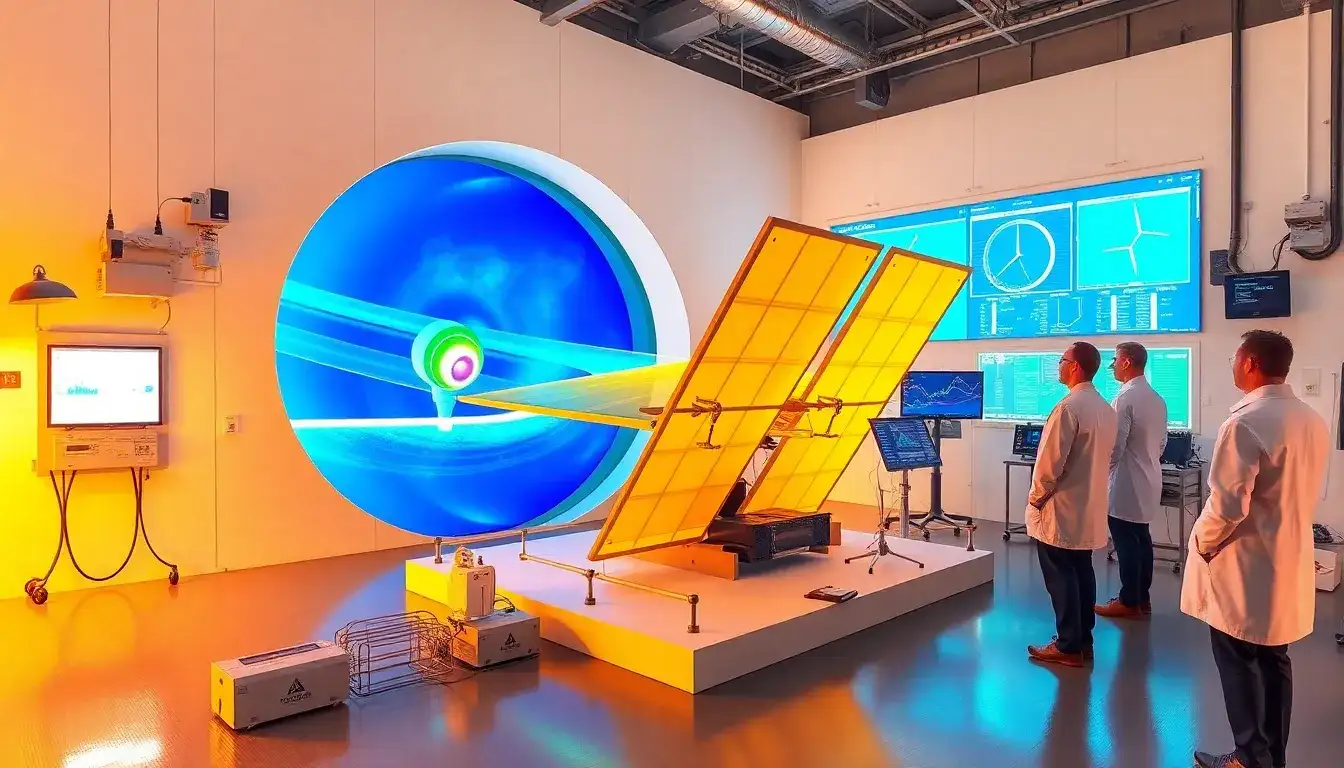
Improvements Through Wind Tunnel Testing
Early Design Validation
- Assessing Wind Loads: Wind tunnel tests allow developers to simulate various wind conditions, including high wind speeds, hurricanes, and tornadoes. This helps identify design limitations and potential vulnerabilities early in the development process, ensuring that necessary adjustments can be made before full-scale production.
- Real-World Simulations: Wind tunnel testing can replicate real-world obstructions like trees, buildings, or other solar tracker rows, providing a comprehensive understanding of how wind forces interact with the tracker design.
Enhanced Structural Stability
- Aeroelastic Effects: Testing focuses on aeroelastic effects, which involve assessing how wind forces interact with the tracker’s movement and flexibility. This helps in designing trackers that are stable under various wind conditions.
- Torsional Instability: Wind tunnel tests help identify and address torsional instability issues in single-axis trackers, which can fail at wind speeds below the design threshold.
Optimization Through Testing
- Optimal Configurations: Wind tunnel tests allow for the exploration of different tracker configurations, such as wing lengths and tilt angles, to determine the most effective setup for minimizing wind loads and maintaining structural stability.
- Cost-Effectiveness: By identifying optimal designs through testing, developers can balance structural integrity with cost-effectiveness, ensuring that solar trackers are both stable and viable economic investments.
Advanced Testing Techniques
- Sensors and Monitoring: Recent advancements include the use of sensors to monitor rotation, torque, and wind loading in real-time during tests, providing detailed insights into the tracker’s performance under various conditions.
Overall, wind tunnel testing enhances solar tracker design by identifying vulnerabilities, optimizing structural stability, and ensuring that trackers can withstand a range of wind conditions while maintaining cost-effectiveness.
Original article by NenPower, If reposted, please credit the source: https://nenpower.com/blog/how-does-wind-tunnel-testing-improve-solar-tracker-design/

