

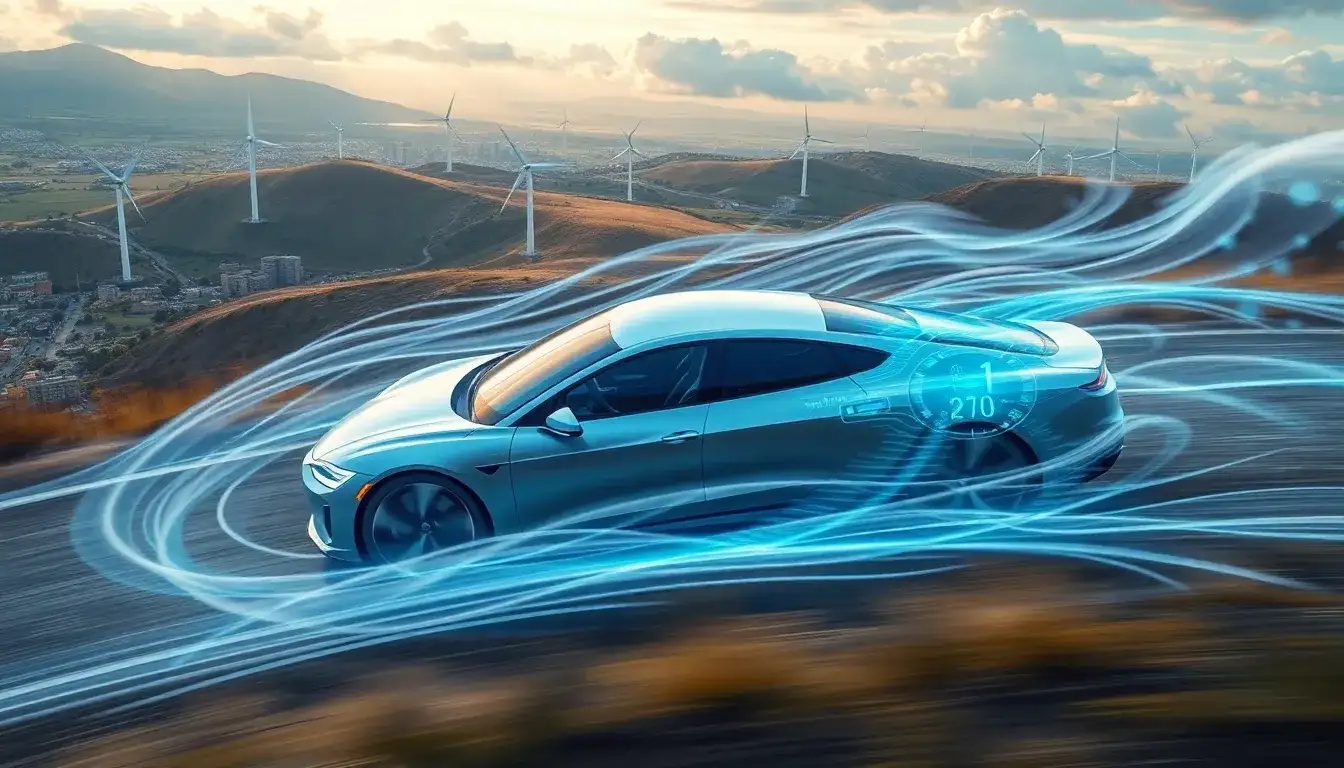
Wind has a significant impact on the range of electric vehicles (EVs), primarily due to increased aerodynamic resistance. Here are the key effects of wind on EVs:
- Headwind Resistance: A headwind increases the drag faced by an EV, forcing the vehicle’s motor to work harder to maintain speed. This results in higher energy consumption and reduced range. For instance, a headwind of 10 m/s can decrease an EV’s highway range by approximately 19%.
- Sidewind Impact: Sidewinds also affect EVs, though their impact is generally less severe than headwinds. A sidewind of similar strength to a headwind tends to have a slightly lesser effect on range reduction.
- Tailwind Benefits: Conversely, a tailwind can improve an EV’s range by reducing aerodynamic resistance, but it must be direct to have the most significant positive effect. This can potentially increase range by about 6-7%.
In general, understanding and managing wind conditions is crucial for maximizing EV efficiency, especially for fleet managers operating in windy regions.
Original article by NenPower, If reposted, please credit the source: https://nenpower.com/blog/how-does-wind-affect-the-range-of-electric-vehicles/

