

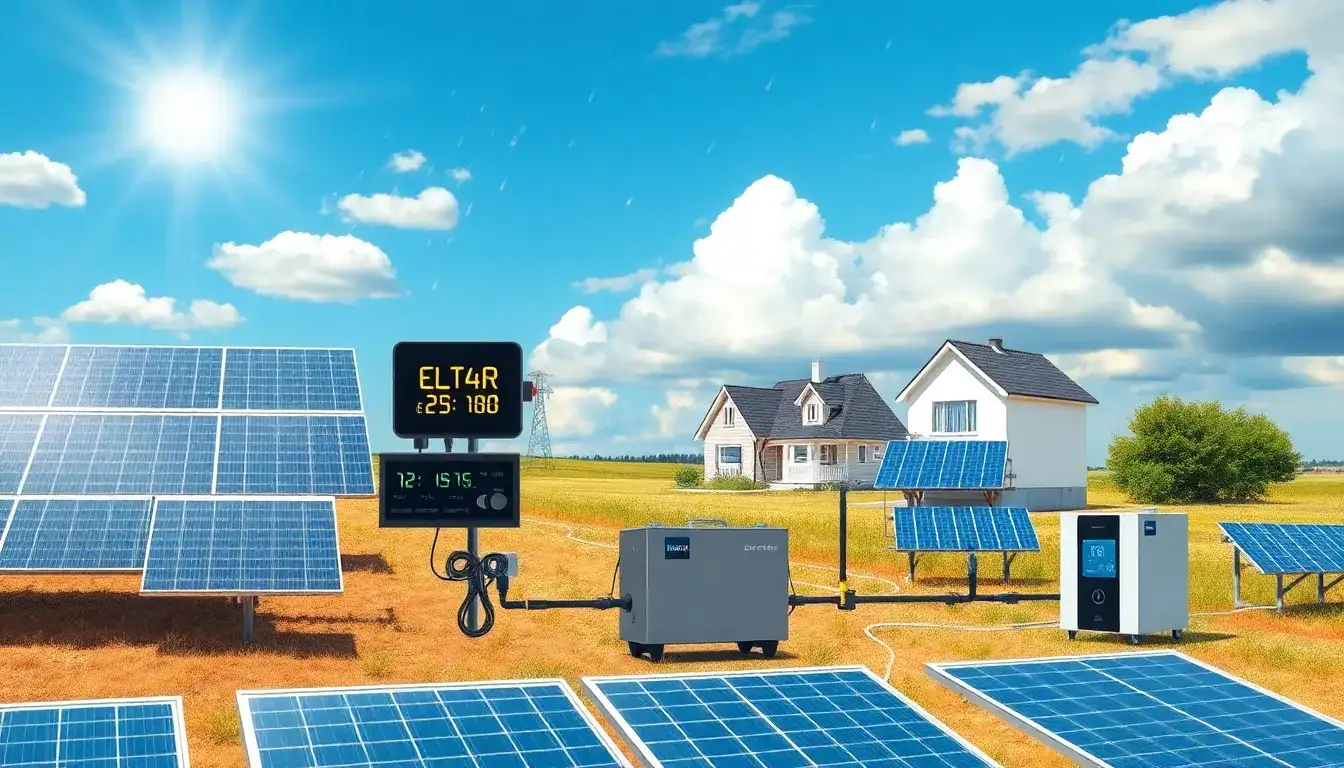
Weather significantly impacts the efficiency of solar power systems, including those with storage. Understanding these impacts is crucial for optimizing system performance.
Impact of Weather on Solar Power Systems
- Temperature: Solar panels are more efficient in cooler temperatures. High temperatures can reduce efficiency by up to 0.38% per degree Celsius above 25°C (77°F). However, cooler temperatures can enhance the efficiency of photovoltaic cells.
- Cloud Cover: Clouds and shade can significantly reduce energy output. Solar panels may produce between 10% to 25% of their normal capacity on cloudy days, depending on cloud thickness.
- Rain and Snow: Rain doesn’t affect panels directly but can clean them, improving efficiency over time. However, heavy snow can block sunlight and add structural stress to panels.
- Extreme Weather: Events like hail and strong winds can damage panels and reduce long-term performance.
Impact on Solar Power Systems with Storage
- Battery Storage: This can mitigate weather impacts by storing excess energy generated on sunny days for use during less favorable conditions. It ensures a steady supply of electricity even when solar production is reduced.
- Optimization Strategies: Proper installation, regular maintenance, and optimal placement of solar panels (e.g., using solar tracking systems) can help maximize energy output despite weather conditions.
Overall, while weather affects solar power efficiency, integrating storage systems and employing best practices can optimize performance under various conditions.
Original article by NenPower, If reposted, please credit the source: https://nenpower.com/blog/how-does-weather-impact-the-efficiency-of-solar-power-systems-with-storage/

