

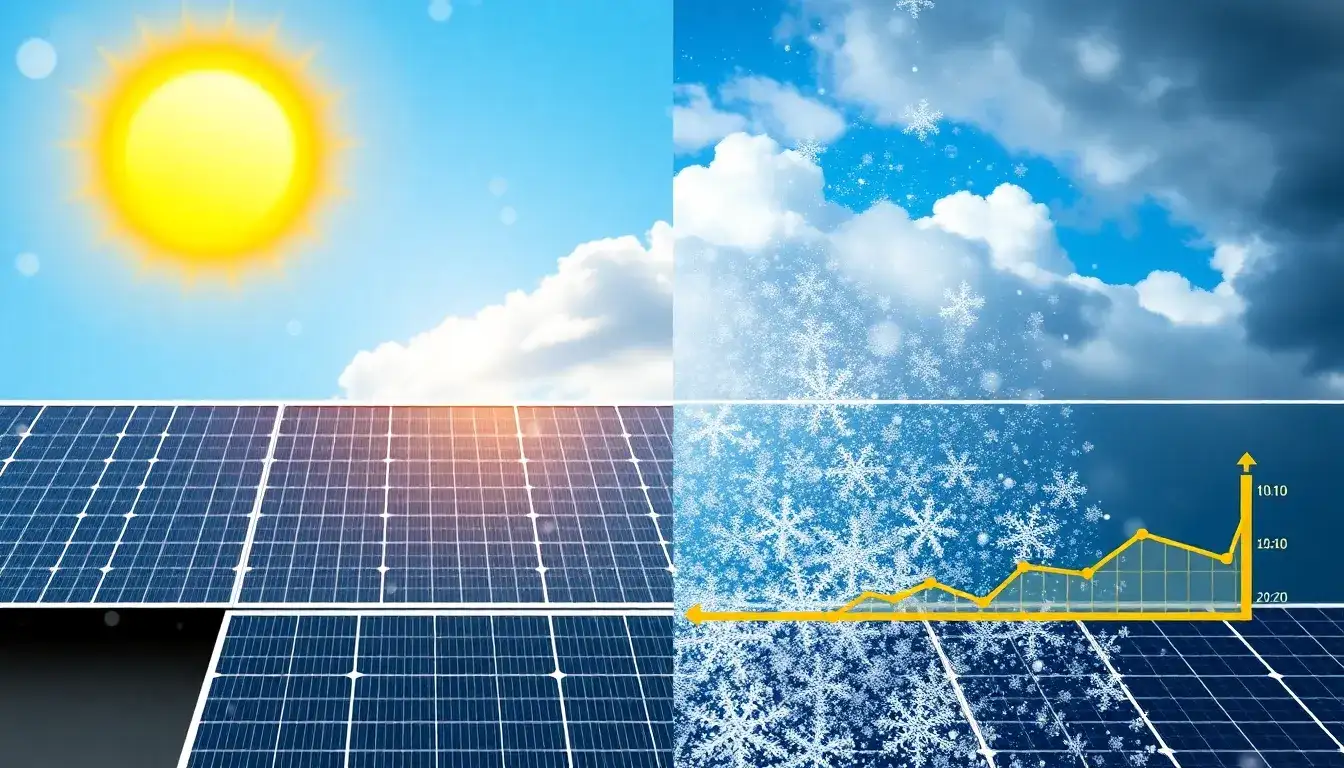
Weather impacts solar panel degradation rates through a combination of temperature effects, extreme weather events, and climate-driven factors, which together influence both short-term performance and long-term durability.
Temperature and Climate Influence on Degradation
- Higher temperatures accelerate degradation: Solar panels degrade faster in hotter climates. Data from the U.S. shows that systems in hotter temperature zones lose performance at about 0.88% per year, nearly twice the rate of those in cooler climates (about 0.48% per year). This is mainly due to thermal degradation mechanisms that cause damage within the panels over time.
- Heat is the dominant degradation driver: Research from Australia highlights thermal degradation as the primary cause of faster power loss in PV modules, particularly under climate change scenarios where future temperatures are expected to rise. Heat leads to physical damage such as delamination (separation of layers) and internal circuit failures, increasing degradation rates.
- Climate-specific degradation rates: Degradation rates vary significantly based on local climate conditions like temperature, humidity, and UV exposure. For example, hot and humid regions cause higher degradation than dry desert areas. This means identical panels degrade differently depending on their installation environment.
Extreme Weather Effects on Degradation
- Mechanical stress from storms: Extreme weather events such as hail (larger than 25 mm diameter), wind gusts over 56 mph, and heavy snow loads (over 1 meter) can cause physical damage to solar modules, including cracked cells and frame damage, leading to accelerated long-term degradation.
- Short-term outages vs. long-term damage: Short-term production losses due to weather-related outages like flooding or wind damage generally cause minimal performance loss (median outage length 2-4 days, about 1% annual performance impact). However, when extreme weather exceeds certain thresholds, it contributes to increased annual degradation rates beyond normal expectations.
- Testing and resilience: Current IEC standards for hail resistance (impact from 25 mm hail stones) may underestimate real-world damage since panels tested to this standard still show higher degradation when exposed to similar hail sizes in the field. More rigorous testing standards for hail, wind, and snow are needed to improve panel resilience.
Additional Factors
- Material and design considerations: Recent trends to use thinner cells, thinner glass, and larger panels can increase vulnerability to weather-related degradation unless designs are adapted to withstand these stresses.
- Shade and temperature effects on efficiency (not degradation): While temporary shading reduces energy output significantly, its impact on long-term degradation is less direct. Temperature has a more continuous effect; for every degree Celsius increase above 25°C, panel efficiency drops slightly (around 0.38% per degree), which contributes indirectly to overall performance decline but not necessarily structural degradation.
Summary Table
| Weather Factor | Impact Type | Effect on Solar Panels |
|---|---|---|
| High temperature | Thermal degradation | Accelerates power loss, causes delamination, circuit failures; ~0.88%/year loss in hot climates |
| Hail (>25 mm diameter) | Mechanical damage | Cracked cells, fractures, increased degradation |
| High winds (>56 mph) | Mechanical damage | Stress on frames and modules, potential cracks |
| Heavy snow (>1 meter depth) | Mechanical loading | Causes physical stress, cell cracking |
| Flooding and rain | Short-term outages | Inverter damage causes brief outages, minimal long-term impact |
| Shade | Efficiency loss | Reduces power output but minimal direct degradation |
Conclusion
Weather impacts solar panel degradation rates primarily through heat-induced thermal degradation and physical stresses from extreme weather conditions such as hail, wind, and snow. Hotter and more humid climates accelerate degradation significantly, with climate change expected to increase these effects in the future. Extreme weather events above certain thresholds cause mechanical damage that leads to faster long-term degradation. Current testing standards may not fully capture these realistic stresses, calling for improved design and resilience strategies to mitigate weather-related degradation.
This understanding is crucial for selecting, designing, and maintaining PV systems to optimize longevity and performance under varying and changing climate conditions.
Original article by NenPower, If reposted, please credit the source: https://nenpower.com/blog/how-does-weather-impact-solar-panel-degradation-rates/

