

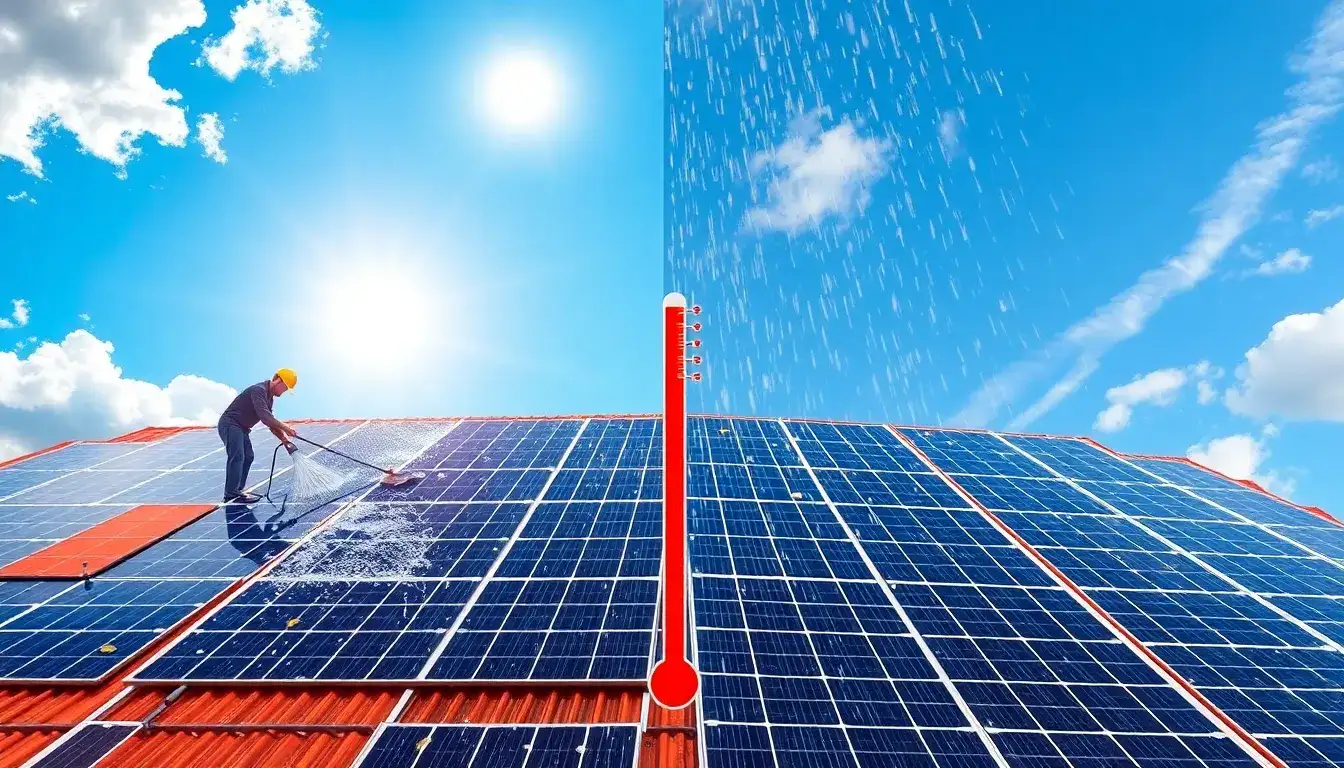
Weather Conditions and Solar Panel Cleaning
1. Rainfall
- Natural Cleaning Effect: Rain acts as a natural cleaner, washing away dust, pollen, and debris. Light to moderate rain can enhance the panels’ ability to absorb sunlight by removing accumulated contaminants.
- Heavy Rain: While beneficial for cleaning, heavy rain can leave mineral deposits behind, potentially diminishing panel transparency over time.
2. Snow and Ice
- Reduced Efficiency and Risk: Snow and ice reduce sunlight exposure and can cause structural damage due to weight. Regular cleaning is crucial in these conditions, but it should be done carefully to avoid scratching the surface.
- Cleaning Frequency: In snowy months, cleaning frequency should be reduced to avoid risks associated with ice and snow on the panels.
3. Wind
- Wind-Driven Rain: Can naturally clean panels, reducing the need for frequent manual cleaning. However, high winds may carry abrasive particles that pose a risk to the panels.
- Adaptive Systems: Emerging technologies include wind-adaptive systems that adjust panel angles based on wind speed to optimize efficiency and minimize stress.
4. Seasonal Variations
- Spring: Pollen accumulation may require more frequent cleaning.
- Summer: Increased evaporation can lead to salt and mineral deposits, necessitating specialized cleaning methods.
- Autumn and Winter: Regular cleaning is essential to ensure optimal performance despite reduced sunlight.
5. Humidity
- Impact on Efficiency: High humidity can lead to increased cloud cover and water droplets on the panels, affecting performance. However, water vapor can also increase irradiance by scattering sunlight.
Adjusting Cleaning Schedules
To optimize solar panel efficiency, cleaning schedules should be adjusted based on weather patterns:
- Frequent Cleaning in Dry Conditions: Regular cleaning is essential in dry, windy, or dusty environments to remove accumulated dust.
- Reduced Cleaning in Wet Conditions: In regions with frequent rain, manual cleaning may be less necessary, but inspections should remain regular to ensure no debris remains.
- Seasonal Adaptations: Clean less frequently during snowy months and more often during pollen-heavy seasons like spring.
Overall, understanding local weather patterns is crucial for establishing an effective solar panel cleaning schedule, ensuring optimal performance and longevity.
Original article by NenPower, If reposted, please credit the source: https://nenpower.com/blog/how-does-weather-affect-the-cleaning-schedule-of-solar-panels/

