

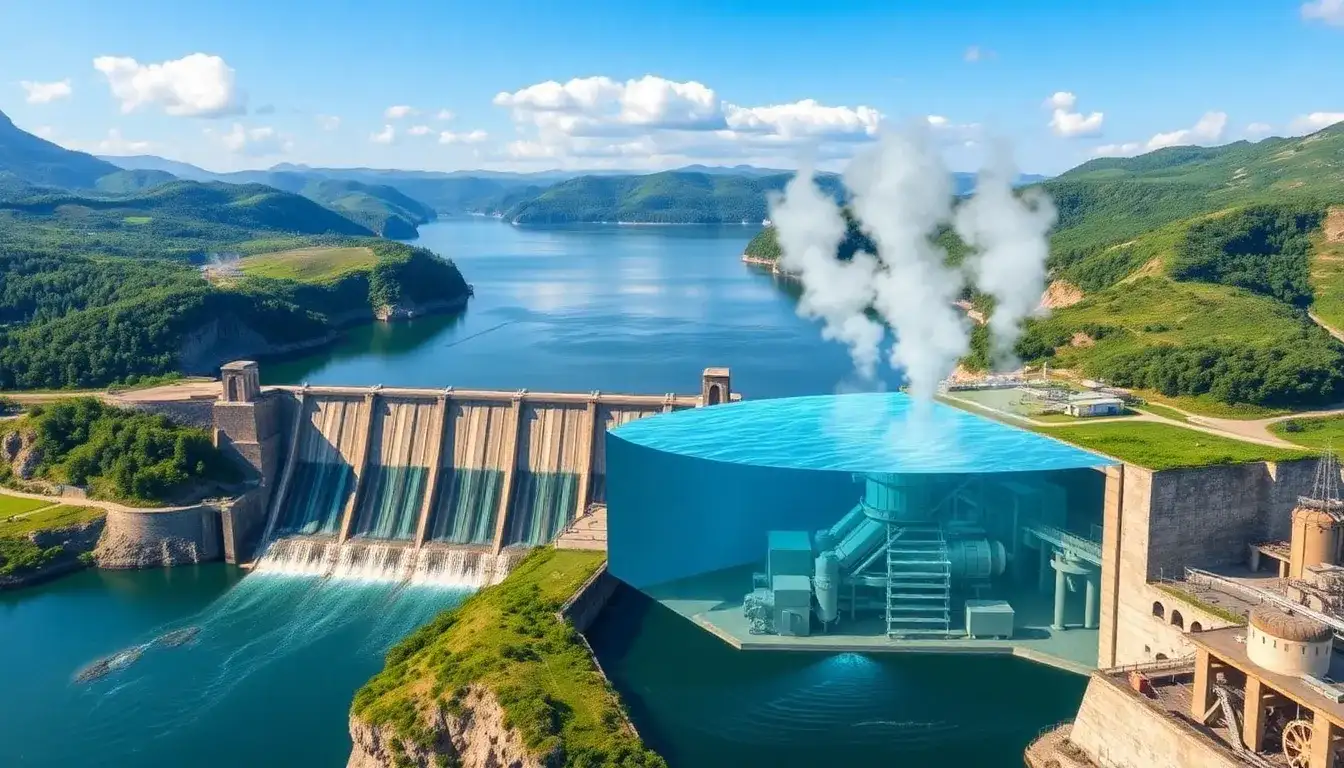
Water evaporation impacts the efficiency of pumped hydro storage primarily by causing water loss from the exposed surfaces of the reservoirs, which in turn reduces the total volume of water available for energy generation and storage. However, this effect, while real, is relatively small compared to the overall efficiency and energy capacity of such systems.
Impact on Efficiency
- Energy Recovery Efficiency: Pumped hydro storage systems typically achieve an energy recovery efficiency of about 70–80% or more, which already accounts for conversion losses as well as evaporation losses from exposed water surfaces. This means that evaporation is factored into the overall round-trip efficiency calculation, though it is not usually a dominant loss factor.
- Water Loss Magnitude: Evaporation losses vary significantly depending on geographical location, climate, and whether the system uses natural or artificial reservoirs. In some wet environments, evaporation might be minimal or offset by rainfall, while in arid regions, it can be more substantial.
- Typical Evaporation Estimates: For instance, evaporative loss might be on the order of a couple hundred acre-feet per year in large US projects, which is small relative to the total water volume managed in pumped hydro storage systems. This loss is considered manageable within system design and water sourcing strategies.
Additional Considerations
- Closed Loop Systems: Some pumped hydro systems are “closed loop,” meaning both reservoirs are man-made and isolated from natural inflows. In such systems, evaporation losses are more directly relevant because there is no natural replenishment from inflowing water. Managing evaporation through sealed reservoirs or other methods can be important in these cases.
- Environmental and Operational Context: Water for pumped hydro is often sourced from local water districts, which assess the impact of water use on local resources. The economic and environmental sustainability of pumped hydro includes managing evaporation losses within acceptable limits.
Summary
While evaporation from reservoir surfaces does reduce the volume of water available for pumped hydro storage, its impact on overall system efficiency is relatively small and already included in the typical 70–80% round-trip efficiency figures. Effective site selection, climate considerations, and reservoir management help minimize the significance of evaporation losses in the operational and economic viability of pumped hydro storage projects.
In conclusion, water evaporation slightly lowers the effective energy storage capacity but does not substantially compromise the high efficiency and cost-effectiveness that pumped hydro storage systems provide.
Original article by NenPower, If reposted, please credit the source: https://nenpower.com/blog/how-does-water-evaporation-impact-the-efficiency-of-pumped-hydro-storage/

