

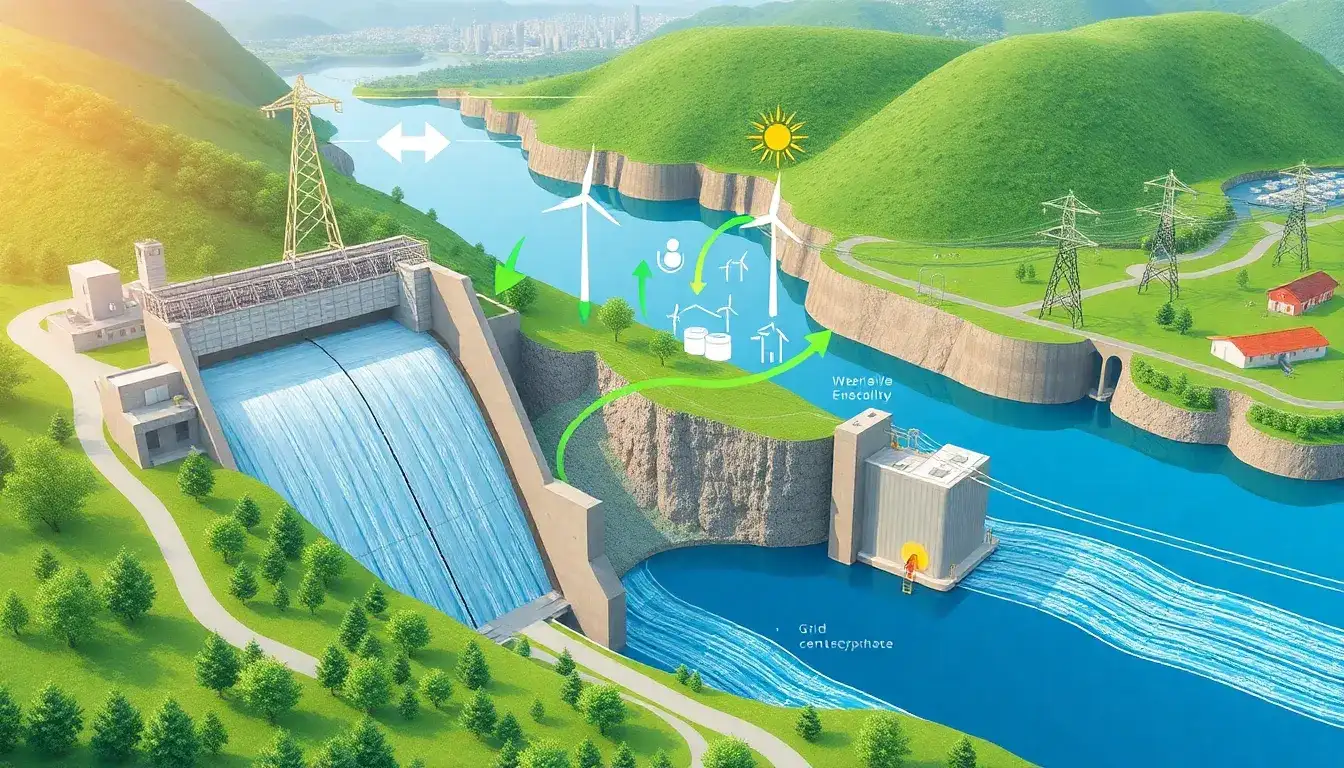
Key Ways Variable-Speed Pumped Storage Enhances Grid Stability
1. Operational Flexibility and Fast Response
Variable-speed pumped hydro units use power converter-fed synchronous machines (CFSMs) that enable rapid switching between pumping (energy storage) and generation modes without the need for dewatering. This capability minimizes startup times and allows the plant to respond very quickly to grid demands — often in seconds or milliseconds. Such fast reactivity is critical for balancing supply and demand fluctuations on the grid caused by variable renewables.
2. Ancillary Grid Services
VS-PSH can operate in multiple ancillary service modes, such as synchronous condenser and static synchronous compensator (STATCOM) operations. These modes allow the plant to provide grid voltage regulation, reactive power support, and frequency control, which enhance overall grid stability and power quality.
3. Inertia and Frequency Support
Traditional hydropower units contribute mechanical inertia that helps resist rapid frequency changes on the grid. Variable-speed technology enhances this by providing synthetic inertia and more nuanced frequency support, which is increasingly important as renewable penetration reduces system inertia. This helps prevent grid instability and blackouts.
4. Large-Scale and Long-Duration Energy Storage
Pump storage hydropower is well-suited for large-scale, long-duration energy storage, capable of balancing daily and even weekly fluctuations in energy supply and demand. This capacity allows it to smooth out the variable output of renewables effectively, maintaining grid reliability over extended periods.
5. Cost-Effective Upgrades and Longevity
Using CFSMs allows cost-effective modernization of existing hydropower infrastructure, improving efficiency and grid support capabilities without building entirely new facilities. Pumped storage plants also have very long asset lifetimes (40+ years for machinery, 100+ years for dams), making them a sustainable and reliable backbone for grid stability.
Summary Table of Benefits for Grid Stability
| Feature | Contribution to Grid Stability |
|---|---|
| Fast start/stop & mode switching | Rapid response to grid fluctuations and emergencies |
| Ancillary services (STATCOM, etc.) | Voltage & reactive power support; frequency regulation |
| Synthetic and mechanical inertia | Frequency stability and blackout prevention |
| Large-scale energy storage | Balances variable renewable output over hours/days |
| Cost-effective modernization | Enhances grid services using existing infrastructure |
| Long operational lifetime | Reliable, sustainable grid support over decades |
In conclusion, variable-speed pumped storage hydropower enhances grid stability by providing quick, flexible, and multi-functional support services that address the intermittency and variability of renewable energy generation, ensuring a more reliable and resilient electric grid.
Original article by NenPower, If reposted, please credit the source: https://nenpower.com/blog/how-does-variable-speed-pumped-storage-hydropower-enhance-grid-stability/

