

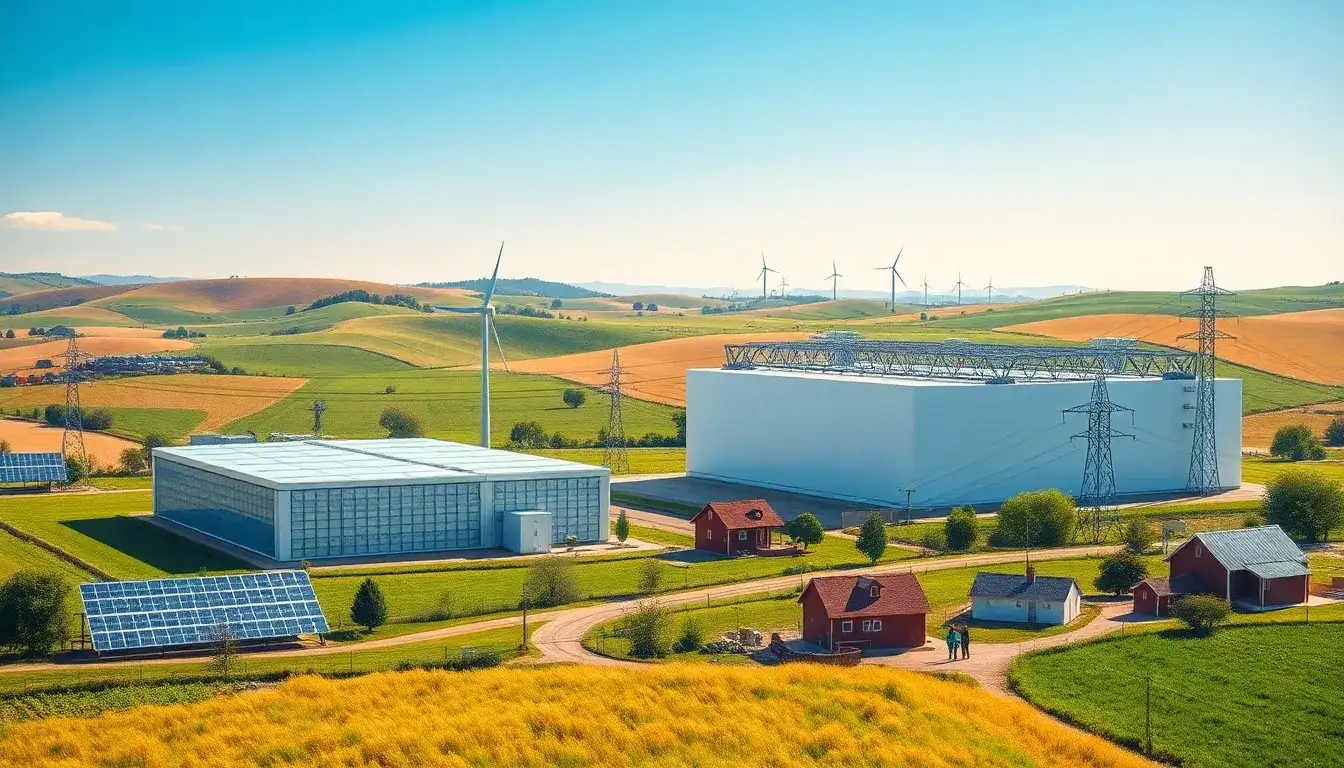
Utility-scale energy storage significantly enhances grid resilience in rural areas by providing a reliable, flexible, and rapid response energy source that supports the power system in withstanding and quickly recovering from disruptions. Here are the key ways it improves grid resilience:
How Utility-Scale Energy Storage Improves Grid Resilience in Rural Areas
-
Rapid Recovery from Disruptions
Utility-scale energy storage systems (such as large battery energy storage systems, BESS) enable the grid to rapidly recover from severe weather events, equipment failures, cyberattacks, and other emergencies by storing excess energy and dispatching it immediately when needed. This capability reduces outage durations and frequency, enhancing reliability for rural customers who are often vulnerable due to less redundant infrastructure. -
Support for Islanded or Remote Grid Sections
Rural areas often have isolated or “islanded” portions of the grid lacking backup interconnections (tie-lines). Energy storage supports these sections by providing backup power and reducing dependency on long-distance transmission. This local energy reserve improves power availability and reduces vulnerability caused by transmission line failures or extreme weather. -
Integration with Renewable Energy and Load Shifting
Energy storage preserves renewable energy (e.g., solar power) generated during off-peak times or sunny periods, making it available during peak demand or outages. This capability is especially beneficial in rural areas where renewable penetration is high but energy demand fluctuates. It smooths power supply, reduces reliance on fossil-fueled peaker plants, and decreases blackout risk. -
Enhancing Grid Stability and Frequency Regulation
Utility-scale storage absorbs excess energy during low demand and supplies it during high demand, helping stabilize voltage and frequency on the grid. This grid balancing is critical in rural grids that may experience large fluctuations due to variable renewable generation and low grid inertia. -
Enabling Value Stacking for Economic Feasibility
While the initial investment in energy storage can be high, rural utilities can balance multiple uses for storage—such as peak shaving, outage backup, and renewable integration—to maximize economic return. This multi-use “value stacking” approach allows utilities to justify and optimize storage deployment for resilience purposes. -
Supporting Critical Infrastructure and Community Safety
During outages, stored energy can power critical infrastructure such as water treatment, medical facilities, and communication networks in rural communities, safeguarding public health and safety.
Summary Table
| Benefit | Description | Rural Impact |
|---|---|---|
| Rapid Outage Recovery | Instant dispatch of stored energy after disruptions | Reduced downtime in remote areas |
| Backup for Islanded Grid Sections | Supports isolated grid segments lacking redundancy | Improved reliability in remote zones |
| Renewable Energy Integration | Stores excess renewable output for later use | Makes renewable power dependable |
| Grid Stability Support | Regulates voltage and frequency by smoothing supply-demand imbalances | Stabilizes rural grid with renewables |
| Economic Value Stacking | Combines multiple use cases like peak shaving and resilience | Makes projects financially feasible |
| Critical Infrastructure Support | Powers essential services during blackouts | Protects safety and health |
In conclusion, utility-scale energy storage is a vital technology for enhancing the resilience of rural electric grids by enabling local energy backup, supporting renewable integration, stabilizing the grid, and enabling quick recovery from disruptions. Its deployment helps rural communities maintain reliable power access, reducing outage impacts and supporting critical services even under adverse conditions.
Original article by NenPower, If reposted, please credit the source: https://nenpower.com/blog/how-does-utility-scale-energy-storage-improve-grid-resilience-in-rural-areas/

