

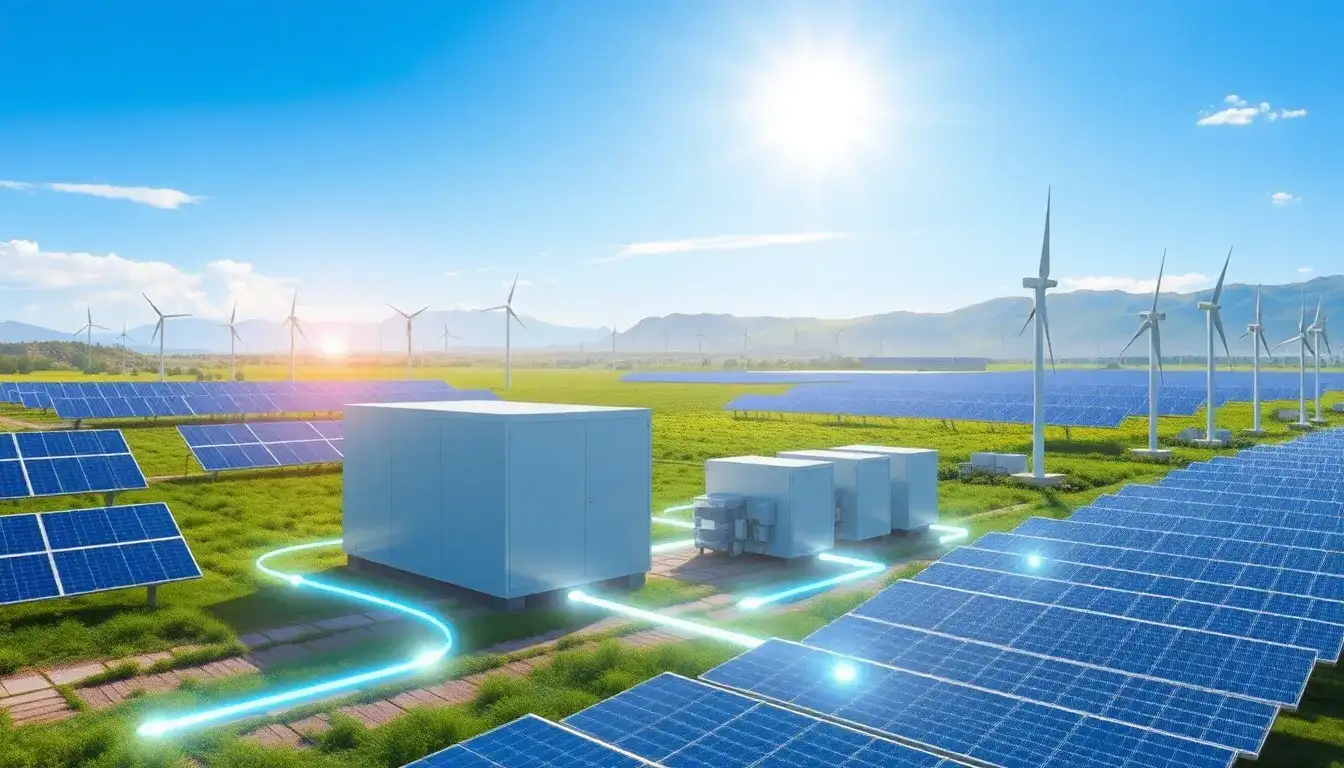
Utility-scale energy storage plays a crucial role in integrating renewable energy sources such as solar and wind into the electricity grid by addressing their inherent variability and intermittency. Here is how utility-scale energy storage helps in this integration:
Balancing Supply and Demand
Renewable energy sources like solar and wind produce electricity intermittently—solar depends on sunlight, and wind depends on wind speed—which can cause mismatches between electricity supply and consumer demand. Utility-scale energy storage systems store excess energy generated during times of high renewable output and release it when generation drops or demand peaks, thus balancing supply and demand in real time. This capability ensures a continuous and reliable power supply despite fluctuations in renewable generation.
Reducing Curtailment and Enhancing Grid Stability
Without storage, excess renewable energy might be wasted or “curtailed” when generation exceeds demand or grid capacity. Energy storage reduces this waste by capturing and storing surplus energy for later use. Additionally, energy storage systems provide fast response capabilities to inject or withdraw power rapidly, helping maintain grid stability and prevent outages.
Replacing Fossil Fuel Peaking Plants
Utility-scale storage can substitute for traditional fossil fuel “peaker” plants, which are typically used to meet sudden spikes in electricity demand. By discharging stored energy during peak demand, storage reduces reliance on polluting gas plants, which lowers emissions and supports a cleaner energy grid.
Enabling Higher Renewable Penetration and Facilitating Hybrid Systems
Storage enables greater integration of renewables by smoothing out their variable output, allowing higher percentages of solar and wind power in the energy mix without compromising grid reliability. Some energy storage systems are hybridized with renewable plants, such as pairing batteries directly with solar PV or wind farms, or even conventional gas turbines, to enhance flexibility and operational efficiency.
Economic and Grid Benefits
Utility-scale energy storage helps utilities manage grid stability and peak shaving more efficiently, improving overall grid economics. It supports renewables integration while providing ancillary services such as frequency regulation and voltage support, which are critical for a resilient electric grid.
Summary Table: How Utility-Scale Energy Storage Supports Renewable Integration
| Function | Benefit | Impact on Grid/Renewables |
|---|---|---|
| Balances supply and demand | Stores excess renewable energy for later use | Ensures continuous power despite variable renewable output |
| Reduces curtailment | Minimizes wasted renewable energy | Maximizes utilization of renewables |
| Provides fast grid response | Maintains grid stability during disturbances | Prevents outages and frequency deviations |
| Replaces fossil peaker plants | Discharges stored energy during peak demand | Cuts emissions by reducing fossil fuel use |
| Enables hybrid systems | Couples storage with renewables for flexibility | Improves plant efficiency and renewable penetration |
| Offers economic benefits | Supports peak shaving and ancillary services | Enhances grid reliability and lowers operational costs |
In conclusion, utility-scale energy storage is an essential enabler for integrating renewable energy into the grid by compensating for variability, improving reliability, reducing emissions, and supporting a more sustainable electricity system.
Original article by NenPower, If reposted, please credit the source: https://nenpower.com/blog/how-does-utility-scale-energy-storage-help-integrate-renewable-energy-sources/

